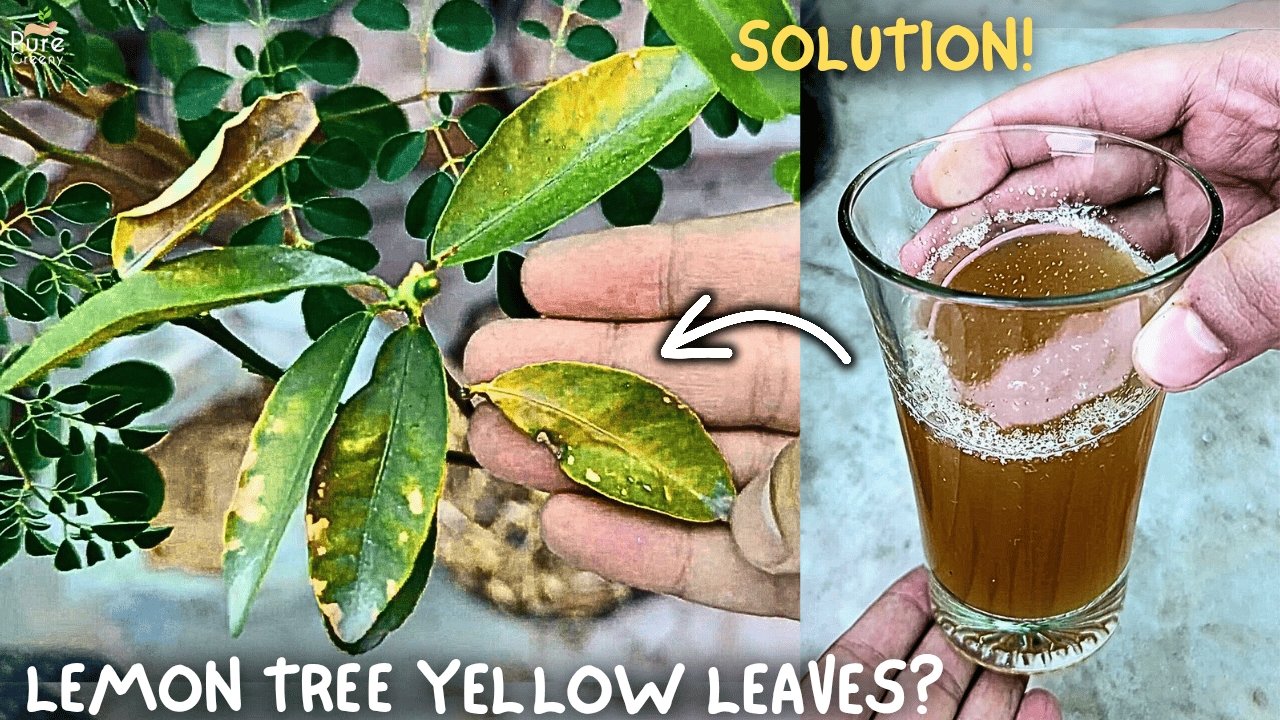
Why Are the Leaves on My Lemon Tree Turning Yellow? 4 Causes and Solutions
Why Are the Leaves on My Lemon Tree Turning Yellow?
If you’re asking why the leaves on your lemon tree are turning yellow, the cause is usually one of four things: sudden stress or shock, compact soil, low light, or low nutrition. Each one has a simple fix. Below, you’ll learn how to spot the cause and correct it so your lemon tree grows healthy green leaves again.
Why Are the Leaves on My Lemon Tree Turning Yellow?
There are four main reasons for yellow leaves on a lemon tree:
- Sudden stress or shock
- Compact, poorly draining soil
- Not enough light
- Low nutrition
1. Sudden Stress or Shock
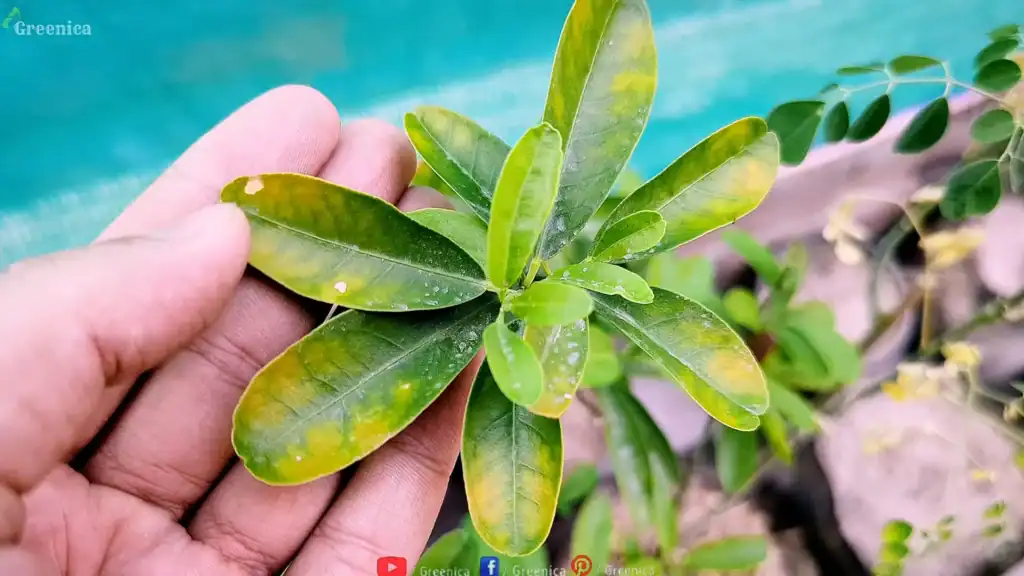
The first cause of yellow leaves on a lemon tree is sudden stress. A quick change of season or a recent transplant often makes a lemon tree show yellowing leaves, because the environment around the plant has changed suddenly.
There is usually nothing to worry about. The plant adjusts to its new surroundings in a few days. If new leaves are coming in green, your lemon tree is fine.
Overwatering and Overfertilizing
Overwatering and overfertilizing can both cause stress, which leads to yellow lemon tree leaves. Avoid both. I faced these issues at the beginning. To prevent overwatering, I prepared a well-draining soil mix, and for feeding I always use organic fertilizers. Both are covered below.
If your lemon plant has yellow leaves, check whether it is under any kind of stress. Correcting the stress can cure the yellowing.
2. Compact Soil
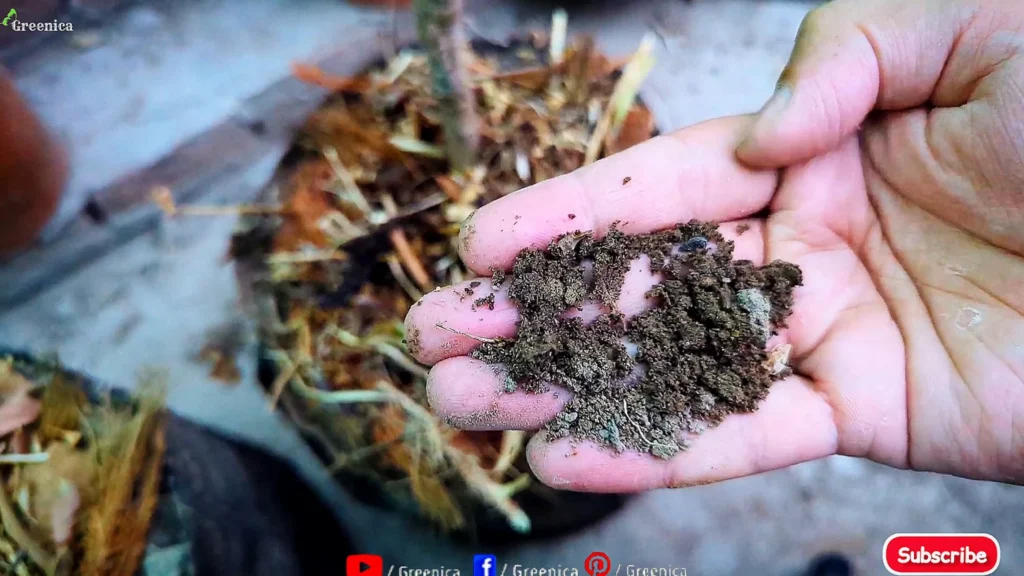
One of the most common reasons for yellowing leaves on a lemon tree is the soil media. Beginners often grow plants in hard, compact soil mixes. At first the leaves may grow, but after some time you’ll notice stunted growth, yellowing leaves, and no flowers or fruit.
Soil is extremely important for fruiting trees. A lemon tree likes a well-draining, loose mix, and a fertile one is even better. In compact soil, roots can’t spread, and that makes the leaves turn yellow.
Best Soil Mix for a Lemon Tree
If your soil is too compact, replace it with a loose mix of:
I prepared this soil mix at home, and you can see the growth and fruiting on my lemon tree. Change the soil in the evening and follow a proper repotting method to reduce shock.
3. Low Light
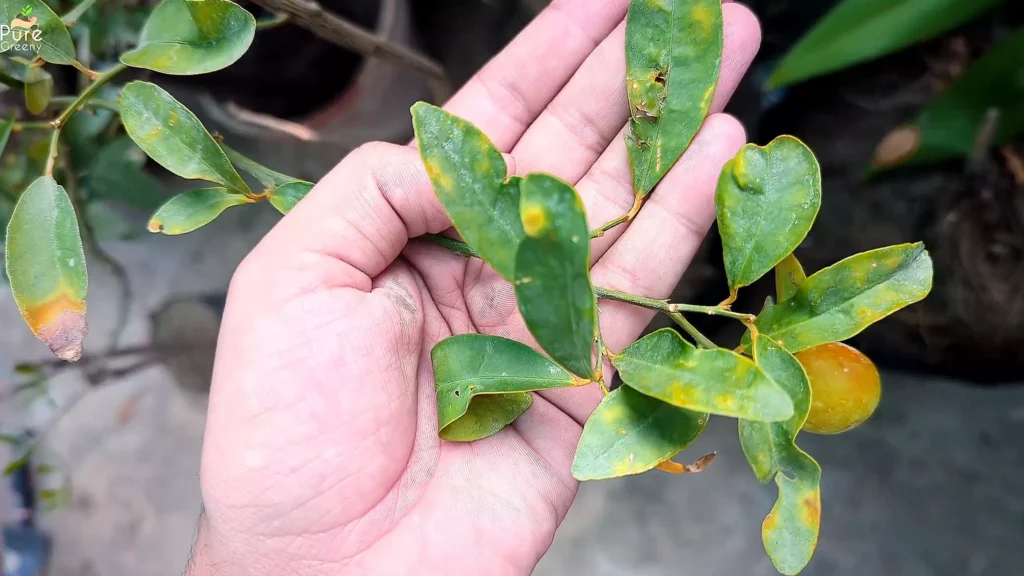
Pale yellow leaves on a lemon tree can be a sign of low light. You may notice green, healthy growth at the top of the plant while the lower leaves turn yellow and fall off. That is also a light problem.
A lemon tree needs at least 2 to 4 hours of direct sunlight daily. If yours sits in a low-light spot, move it somewhere brighter. Too little sunlight also causes fewer flowers, more pests, and yellowing leaves.
4. Low Nutrition (Nutrient Deficiency)
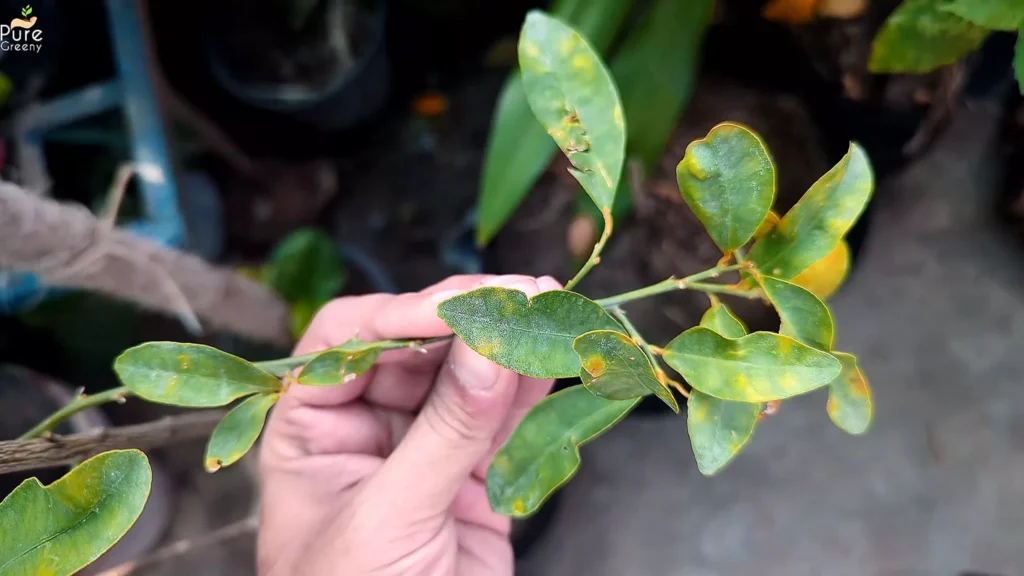
Yellow patches on the leaves, along with fewer flowers and stunted growth, point to low nutrition. This is one of the most common causes of yellow leaves on a lemon tree, because lemon trees are heavy feeders. Healthy growth and flowering need very fertile soil.
You may be using a low-dose fertilizer. You may also see brown, dry, or black patches on the leaves, which signal a deficiency of a particular nutrient. A lemon tree needs a wide range of nutrients, and leaves turn yellow especially when nitrogen or magnesium is missing from the soil.
How to Fix Nutrient Deficiency in a Lemon Tree
The fix is easy: supply the nutrients again, and don’t simply repeat the fertilizer you were using before.
- A few yellow leaves: Apply well-made compost tea. New growth should turn green within a few weeks. Make Compost Tea At Home.
- All leaves turning yellow: Use seaweed fertilizer. It contains hundreds of trace elements, so you don’t need to pinpoint the exact missing nutrient. The plant absorbs it within days, and healthy green leaves return.
Conclusion
Yellow leaves on a lemon tree are a signal, not a death sentence. Check for stress or shock first, then look at your soil, light, and feeding. Once you correct the cause, your lemon tree should grow healthy green leaves again. If you’re still wondering why the leaves on your lemon tree are turning yellow after trying these fixes, review each of the four causes again, as more than one can be at work at the same time.
