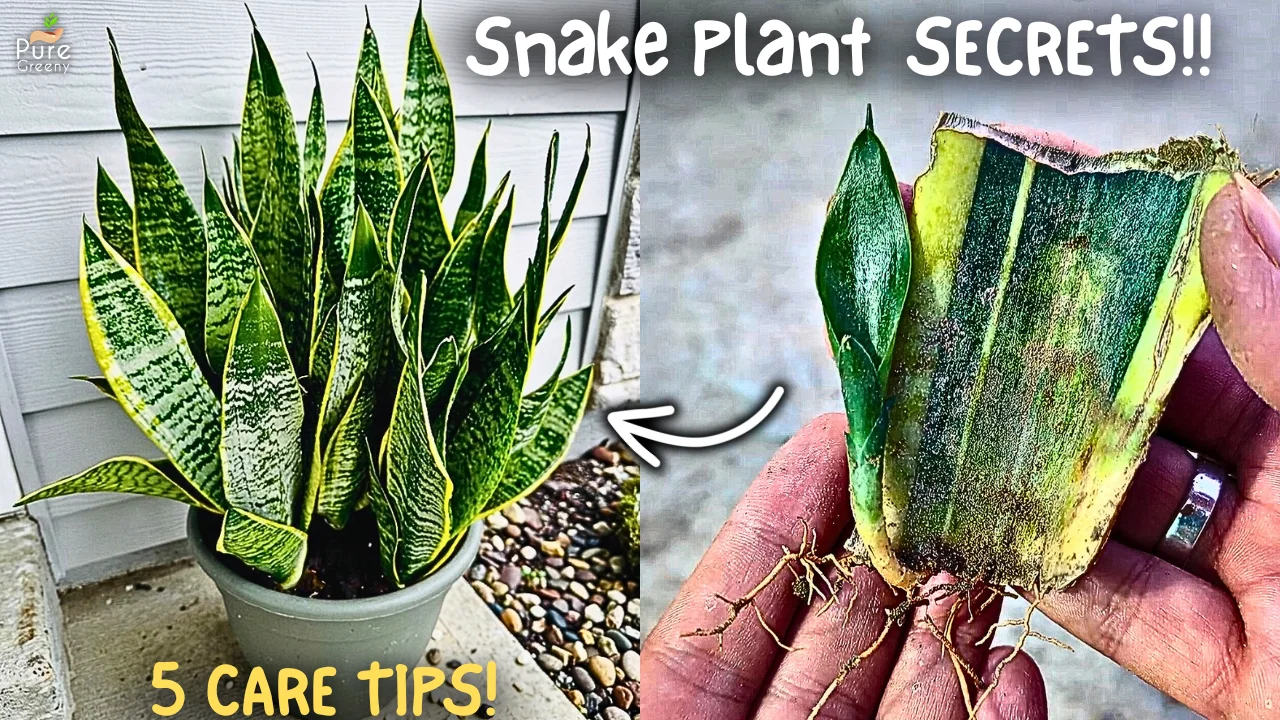
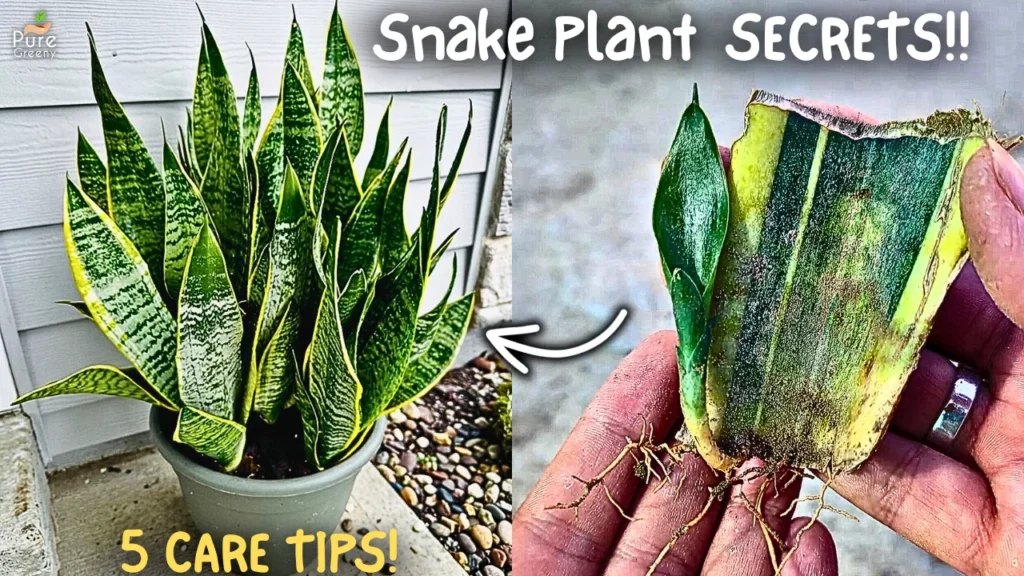
5 Snake Plant Secret Care Tips!
If your snake plant is not growing properly, it’s usually the care method, not the plant. Mostly, overwatering and improper fertilization both stop plant growth completely.
But in this post, I’ll tell you exactly how you need to care for your snake plant, with an amazing fertilizer recipe at the end and a few tips on how to grow more baby pups.
1-The Growing Season?
One thing that plays a crucial role and is often missed by beginners is the correct season. If you know the exact growing season for a Sansevieria plant, you are already halfway there.
When I started growing snake plants, I didn’t know their exact growing season. My plants struggled. Sometimes the leaves started curling, and growth slowed down a lot.
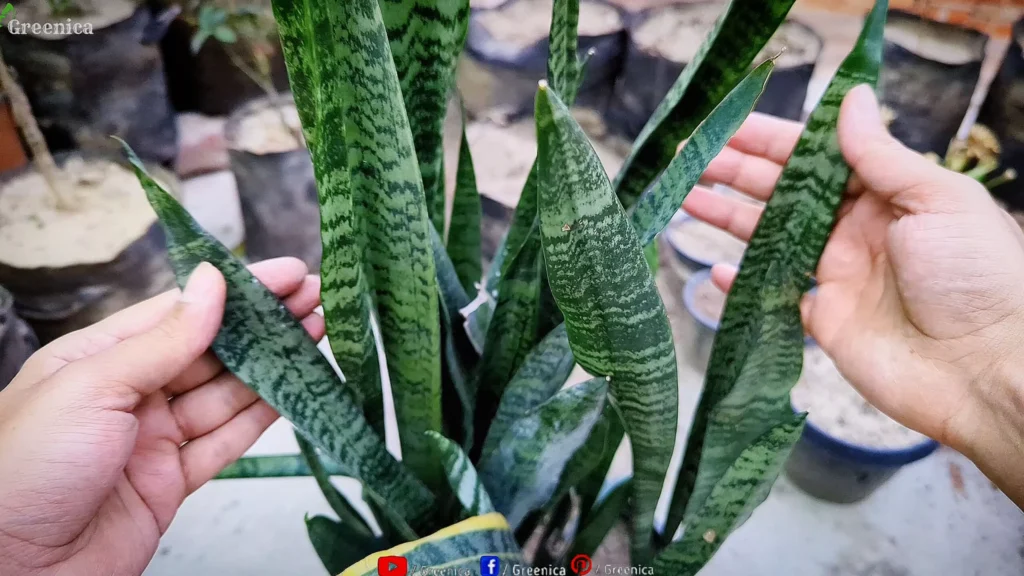
But one thing I’ve noticed over the years is that as soon as the temperature becomes ideal, snake plants burst with new growth, more baby plants, and long leaves like these.
Before I tell you the growing season for snake plants, here’s another interesting part. When we grow snake plant cuttings, they usually start rooting very well during the growing season.
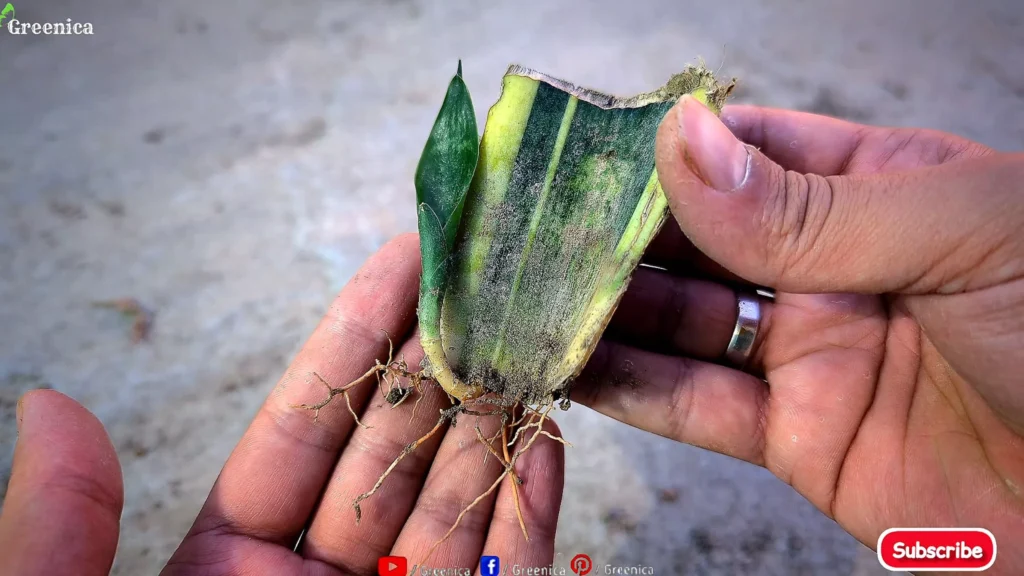
I did this last year. You can see the cutting produced a baby plant when the season was right, but there was no growth just a few weeks earlier.
So here is the growing season for snake plants that you should follow. It’s a moderate climate plant that likes a temperature range of 20 to 30°C, not too hot and not too cold.
This temperature is naturally maintained during spring as well as early winter. If you live in a colder climate, you might experience this temperature throughout the summer, and you will definitely see much better growth during this time.
So, make sure you grow and keep your snake plant in a moderate-temperature environment.
2-Soil Media for Baby Plants?
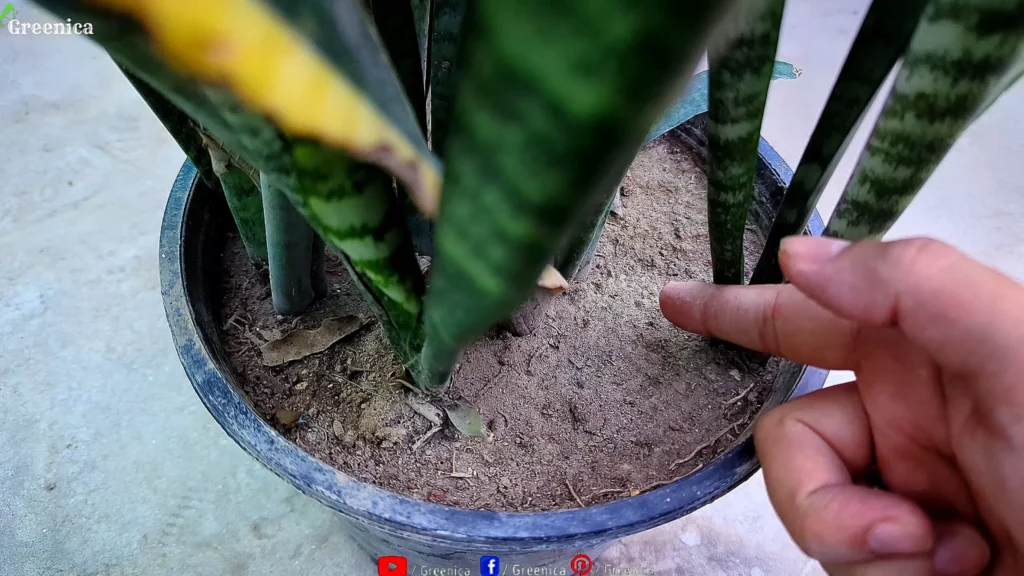
One thing I learned while growing snake plants in pots is that the soil media is extremely important if you want to see more baby plants. When the soil is either compact or water-retaining, you may see the plant struggle to grow.
At the same time, you won’t see many new baby plants. On the other hand, in a well-draining media, snake plants suddenly burst with new growth.
The leaves get very long within a couple of weeks, and at the same time, the baby plants also grow. An ideal soil media and the right spot for a snake plant result in abundant growth. The ideal soil media is a well-draining mixture, and we’ll talk about the ideal spot in just a bit.
I made the mistake of growing this indoor plant in a compact soil mixture, which ended badly. But here is the recipe that I used, and it worked amazingly well. You can see how many plants are growing in this pot. There are so many of them.
Watering is one thing that beginners often struggle with. I also faced this issue in the beginning, and here’s what actually works.
Snake plants hold a lot of moisture inside their leaves, so you don’t need to worry about watering too often. Whenever you see that the top layer of soil is dry, only then water the plant.
But if your snake plant is struggling and you suspect the issue is the soil media, I suggest you use this simple recipe. It’s a mix of garden soil, sand, cocopeat, etc.
- Sand – 1 part:
- Garden Soil – 2 Parts:
- Cocopeat – 1 part:
- Compost – 1/2part:
- Cow dung – 1 bowl:
No special ingredients at all—exactly how nurseries do it. If you’d like to learn even more about this soil recipe, Here is the linked Guide.
3-Where to Keep a Snake Plant for Maximum Growth?
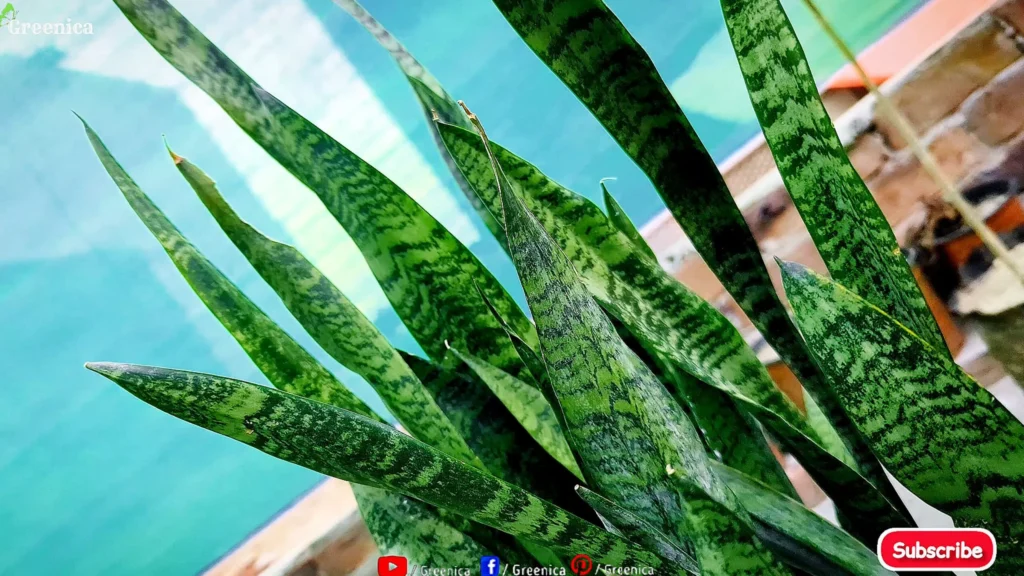
Another important thing for growing a lot of snake plants is the ideal spot. We all know it’s an indoor plant that requires less light than many other plants.
You can indeed keep this plant in a very well-lit and bright room. But here is the actual ideal spot that results in maximum growth and healthier plants.
Find a spot that receives partial or filtered sunlight.
Direct sunlight is not good for a snake plant at all. You can also keep the plant under the shade of a bigger plant. Too much sunlight stunts plant growth. A cool, shaded, but very well-lit spot is ideal for Sansevieria plants.
You might have seen most indoor plants, including snake plants, placed under green shade nets at nurseries. That’s because they know snake plants don’t like direct sunlight, which is exactly how they achieve such good growth.
I had the chance to learn a lot about nursery methods over the years, and now I’ve tried to compile these secret methods for home gardeners like you and me. The book is linked Here, if you’d like to buy it.
4-How to Get More Baby Snake Plants?
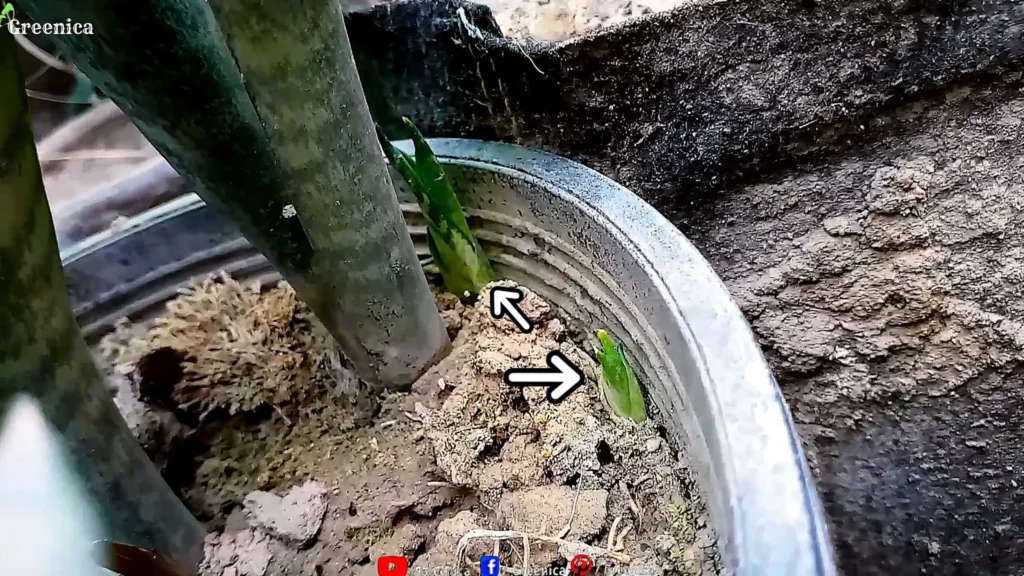
Here are a few simple yet effective tricks to increase baby pup production in snake plants. Snake plants usually produce a lot of baby plants when they are healthy and actively growing. A stressed plant rarely produces many baby plants.
First of all, take good care of your snake plant by providing a bright spot and, most importantly, a properly sized pot.
If your snake plants are growing too close together in a small pot, the space is already congested. Providing a slightly bigger pot helps a lot. Some good pots are also linked Here, if you’d like to browse.
A good soil media also promotes better growth as well as more baby plants. And most importantly, this fertilizer. It contains all the nutrients a snake plant requires.
5-The Fertilizer That Changes Everything?
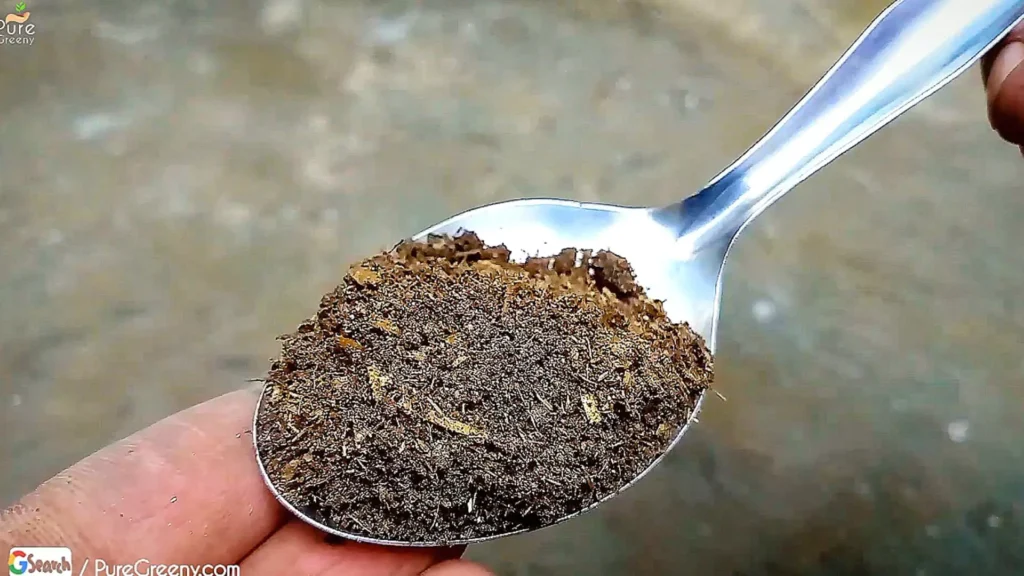
So let’s talk about this amazing fertilizer for snake plants. To produce more baby plants, snake plants usually require more phosphorus along with a healthy growing environment. This fertilizer provides ideal nutrition, which results in more baby plants.
Before I tell you the fertilizer ingredients, one thing that’s most important is the ideal fertilizing time. When you see the plant is actively growing, getting bigger, and the season is also ideal, that’s the perfect time to provide extra nutrition and boost growth even more.
So, fertilize your snake plant once a month during the growing season. This fertilizer is a mix of cow dung for nitrogen, compost for balanced nutrients, and rock phosphate for pure phosphorus. A complete guide on making this fertilizer is also linked Here, if you’d like to learn more about it.