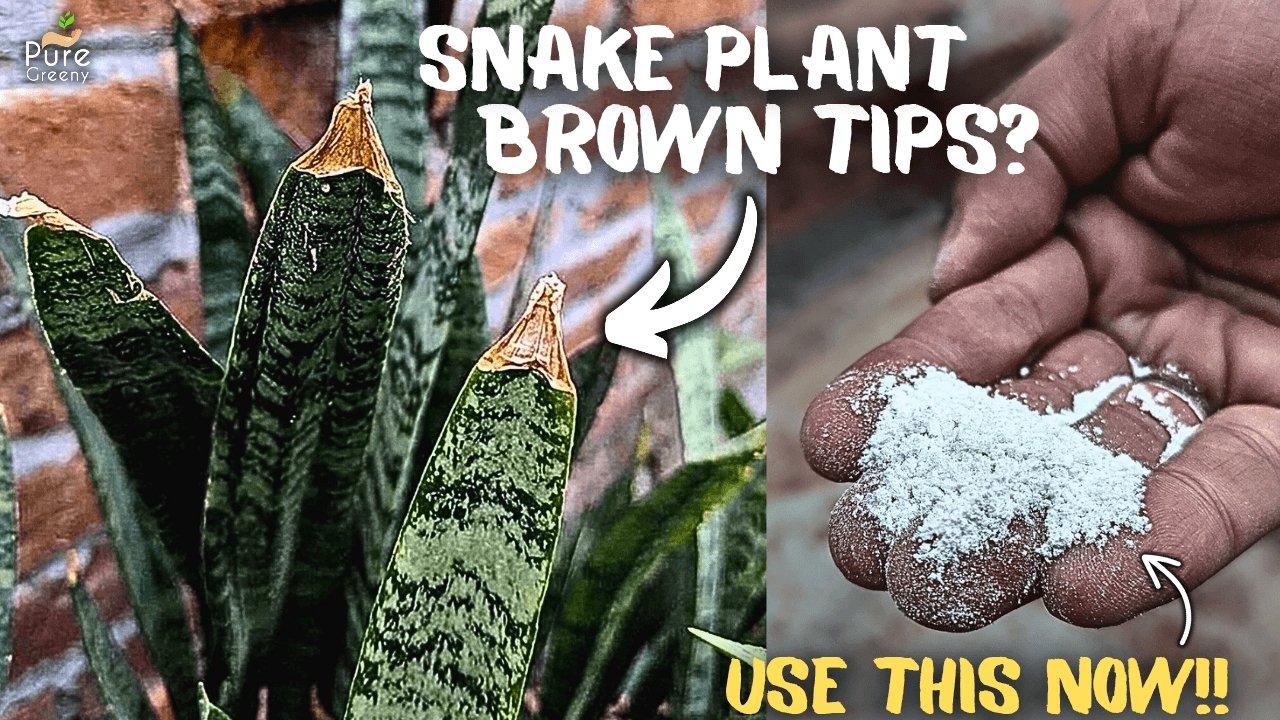
Snake Plant Leaves Turning Brown? 4 Causes & Fixes
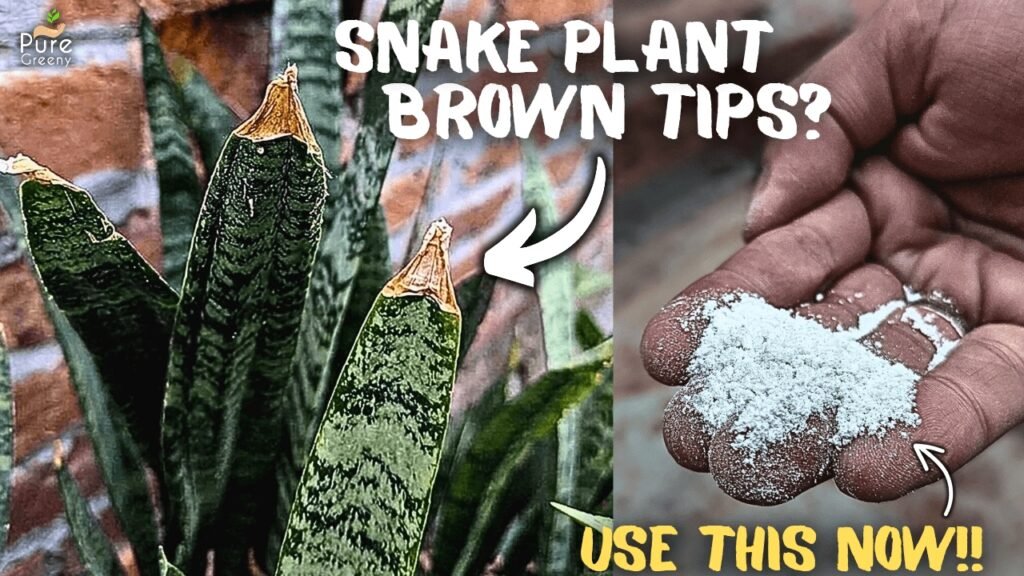
Snake Plant Leaves Turning Brown: 4 Causes and How to Fix Them
If your snake plant leaves are turning brown, the cause is usually one of four things: inconsistent watering, harsh direct sunlight, seasonal stress, or salty water. Watering and sunlight are the most common culprits. Below, you’ll learn how to spot each cause and fix the brown tips on your snake plant.
Quick Answer: Why Are Snake Plant Leaves Turning Brown?
| Cause | What Happens | Quick Fix |
|---|---|---|
| Inconsistent watering | Brown, drying tips, stunted growth, possible root rot | Water only when the soil surface is completely dry, and use well-draining soil |
| Harsh direct sunlight | Leaf tips brown and dry out | Move the plant to a bright but shaded spot |
| Seasonal stress | Brown tips and growth stops | Move the plant indoors or to a shaded area in cold weather |
| Salty water | White, powdery buildup on soil, browning leaves | Use rainwater or filtered water, flush the soil, or add gypsum |
1. Inconsistent Watering
Inconsistent watering is the most common reason snake plant leaves turn brown. In roughly 80 to 90% of cases, this is the cause. Beginners often water indoor plants incorrectly, which leads to stunted growth and leaf tips that brown and dry out.
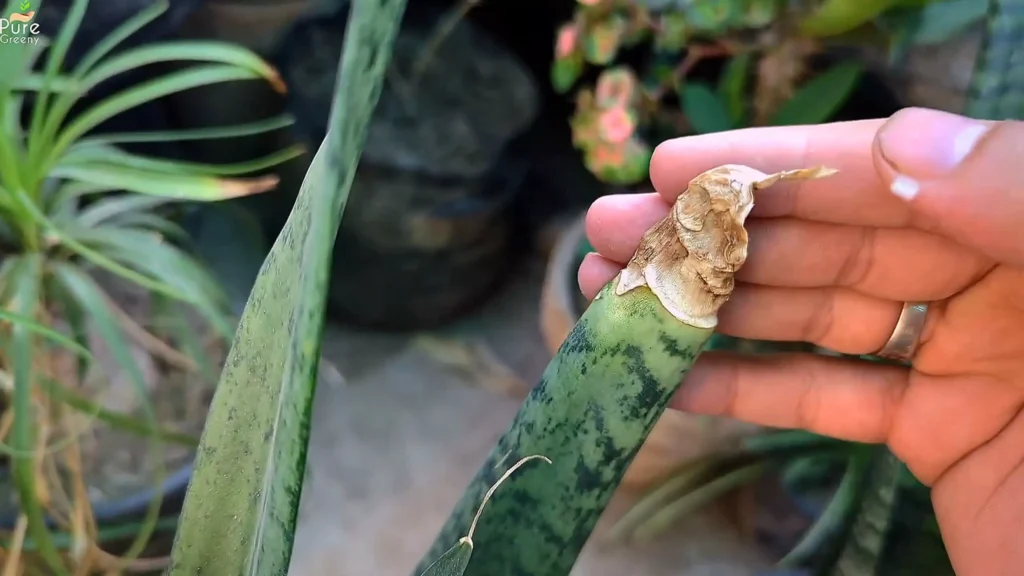
My own snake plant had brown tips for the same reason. In my case, it was underwatered for some time. Snake plants store a lot of moisture inside their leaves, so they can survive a few days without water. Overwatering is much more serious. Too much moisture in the soil often leads to root rot, stem rot, stunted growth, and eventually brown leaf tips.
Check your soil. If it looks wet, act quickly, or the plant can die.
How to Water a Snake Plant Correctly
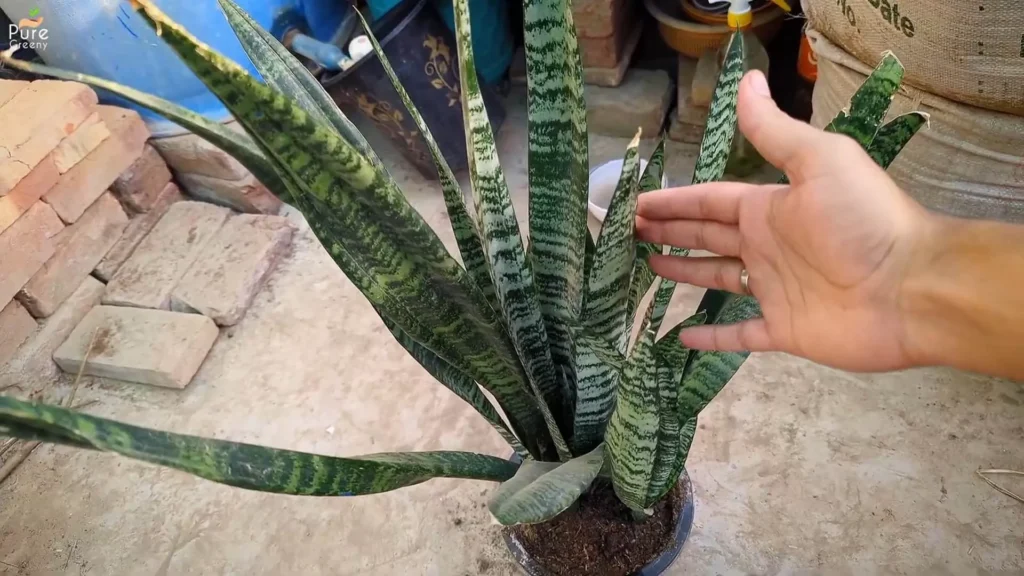
- Make sure the soil surface looks completely dry before watering.
- Water a little at a time. Never water heavily.
- Avoid both overwatering and underwatering.
Best Soil Mix to Prevent Brown Leaves
A well-draining mix is the best protection against overwatering. I use a mixture of garden soil, sand, and compost, and it drains very well. I have never had an overwatering issue with it.
2. Harsh Direct Sunlight
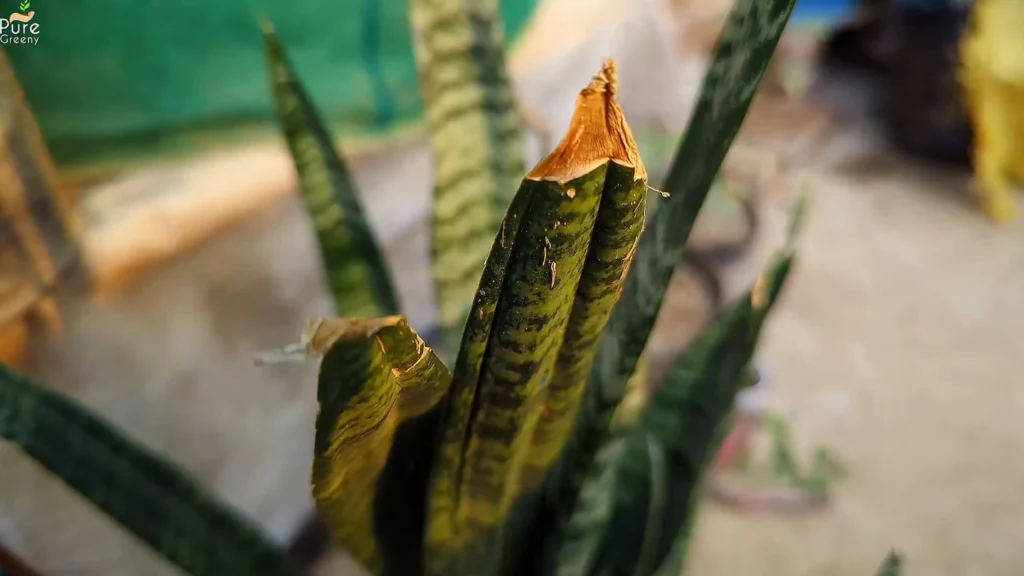
Direct sun is another common reason for brown and drying tips on a snake plant. Snake plants are indoor plants that prefer bright, indirect light. In a sunny spot, harsh direct sunlight can burn the leaf tips.
The fix: Move the plant back to a bright but shaded area. Once it is out of direct sun, you should see it growing again with green leaves.
3. Seasonal Stress and Cold Weather
If you keep your snake plant outdoors, a change in weather can stress it. The leaf tips turn brown and the plant stops growing. Low temperatures mostly cause this problem.
The fix: Don’t leave your plant outdoors in harsh weather. Move it indoors, or at least to a shaded spot. If temperatures in your region drop significantly, moving the plant indoors is the best choice.
4. Salty Water and Salt Buildup in Soil

Water quality can also cause snake plant leaves to turn brown. Tap water often contains salts, and over time these accumulate in the soil.
How to spot it: A white, powdery substance on the soil surface usually means salt buildup.
How to fix it:

- Use rainwater or filtered water. These are the best options for your plants.
- Flush the soil by watering very heavily once. This usually reduces the salt buildup.
- Alternatively, add quarter of Gypsum tablespoon to the soil. It softens the soil and helps reduce salt buildup. Use half a tablespoon for an 8 to 10-inch pot, mix it in really well, and water thoroughly.
Final Thoughts on Snake Plant Leaves Turning Brown
When snake plant leaves turn brown, start with watering, then check sunlight, temperature, and water quality. Fixing the cause early lets the plant recover and grow healthy green leaves again.