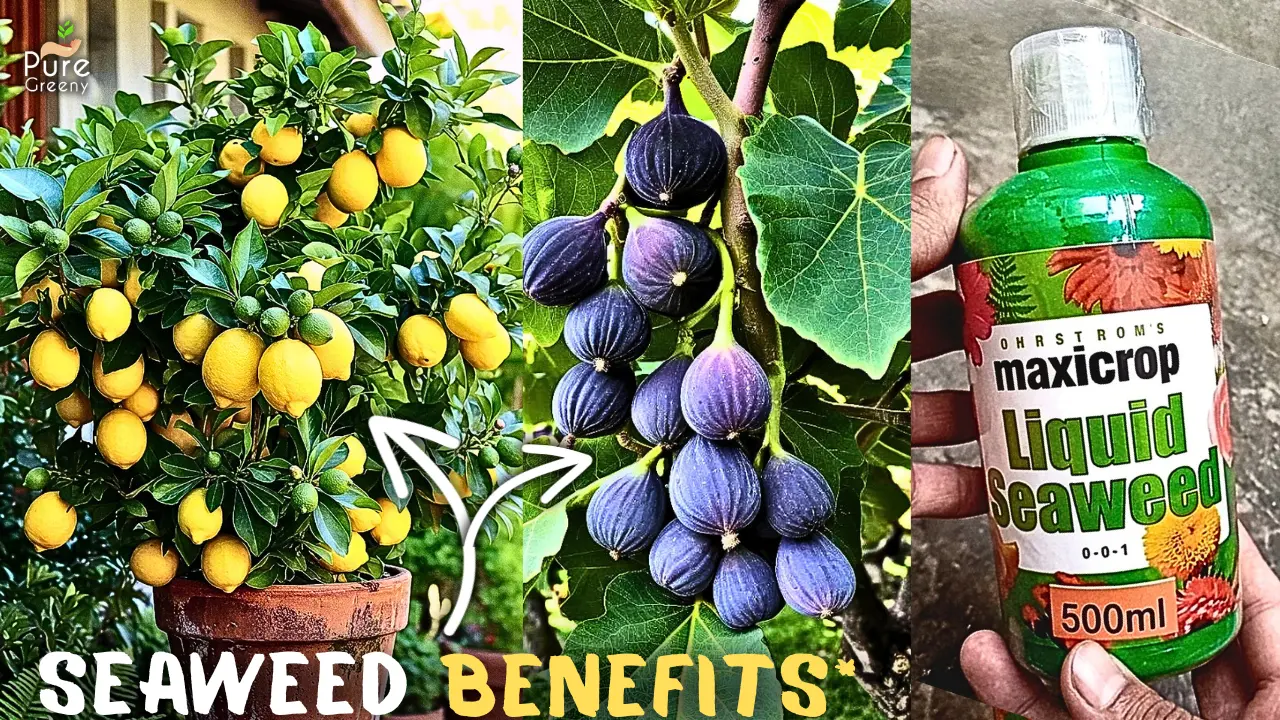
HIDDEN Benefits Of Seaweed Fertilizer For Plants! But Use This Way….
If your plants are growing slowly even after fertilization, the problem may not be NPK at all. Most beginners completely ignore trace elements, and that limits proper growth and fruiting. In this Post, I’ll show you how seaweed fertilizer helps and how to use it correctly.
What’s Seaweed? & Why It’s Useful?
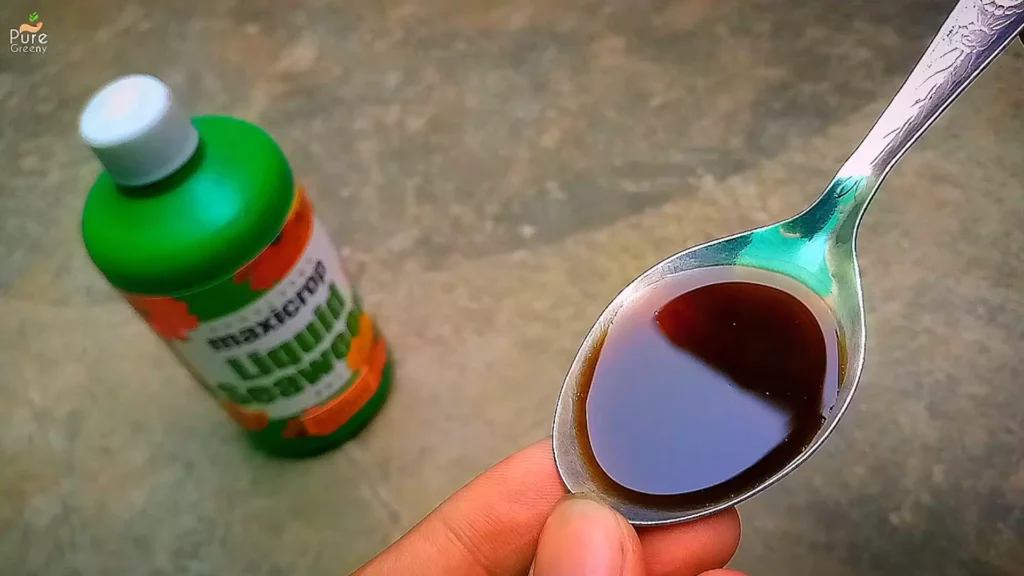
Seaweed fertilizer is a liquid fertilizer made from the extract of sea plants and algae found in the ocean. It is highly rich in trace elements like calcium, magnesium, iron, sulfur, manganese, and zinc.
Most beginners completely ignore the role of these trace elements, and that is one reason plants struggle even after fertilization. Many leaf problems actually appear due to the deficiency of a certain nutrient.
With the correct use of seaweed fertilizer, we can not only reduce these issues but also improve overall plant growth and health.
Hidden Benefits of Seaweed Fertilizer?
There are a lot of benefits of using seaweed fertilizer for plants. It contains many trace elements that help feed the plant regularly and support faster, healthier growth. NPK fertilizers do provide nutrition, but sometimes plant growth still lags behind.
That usually happens because nutrition is incomplete. Along with macro nutrients like NPK, plants also need trace elements for proper development.
The availability of these trace elements in the soil helps plants grow faster, produce more leaves and branches, and even improve fruit quality and size.
If your plant flowers are not turning into fruit properly, one possible reason could be the lack of trace elements in the soil. Seaweed fertilizer doesn’t just promote growth—it also supports proper flowering and fruit setting.

Instead of just talking about it, let me show you the results. I used seaweed liquid fertilizer consistently on my radishes, and here were the results.
The plants treated with seaweed became fuller and much bigger in size, while the others remained underdeveloped. But all of this depends on the correct usage of seaweed fertilizer—more on that in a moment.
Another benefit of seaweed fertilizer is that it helps strengthen the plant’s immune system. Plants become more resistant to minor stresses like drought, heat stress, transplant shock, and even small pest attacks. Beginners struggle with these problems a lot, and proper nutrition can help reduce many of them.
Since seaweed fertilizer is in liquid form, it works very quickly. The roots absorb it fast, and plants often respond with fresh growth.
We all know how important healthy soil is, especially for vegetables and fruiting plants. Seaweed fertilizer also helps improve soil fertility and structure over time. Since it is organic, it supports microbial activity as well, which improves soil texture and aeration.
In recent years, I’ve grown turnips, tomatoes, peppers, cauliflowers, spinach, beetroot, radishes, and many other vegetables. All of them require fertile soil, and along with NPK nutrients, seaweed fertilizer has been very helpful for me. guides on growing all these vegetables in pots are added Here.
How to Correctly Use Seaweed Fertilizer for Plants?
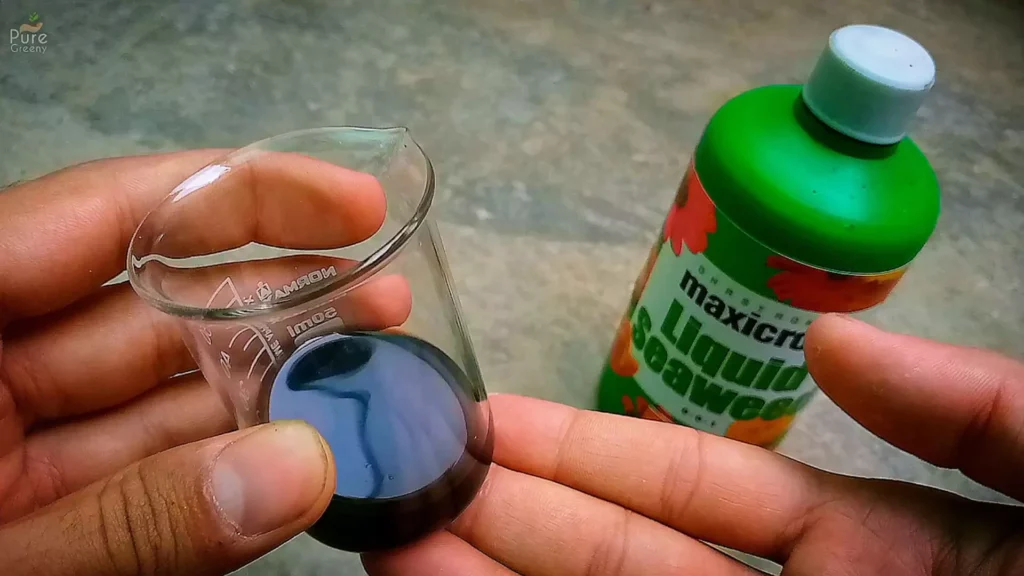
Now let’s know how we can use a seaweed fertilizer accurately on our plants.
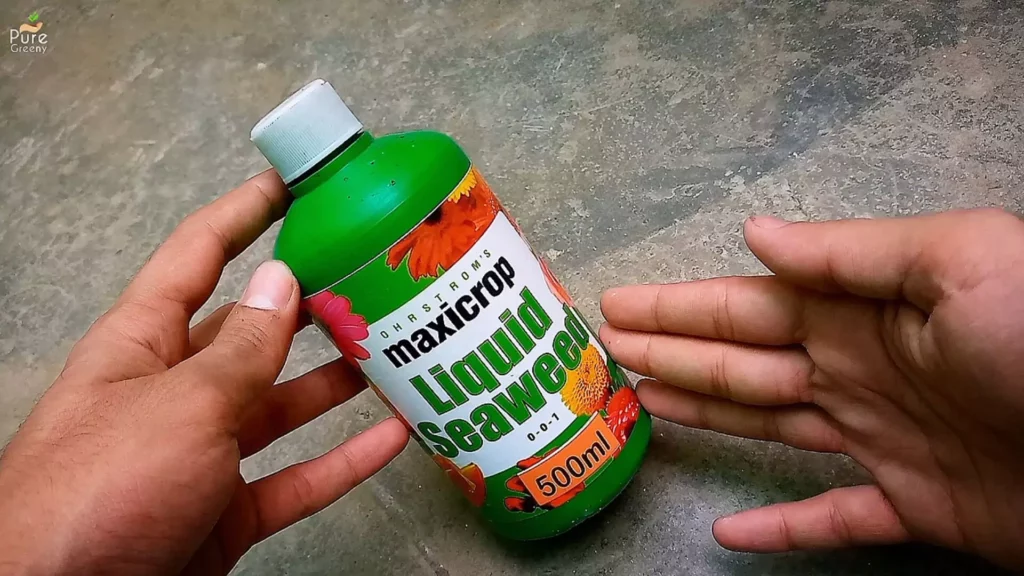
First of all, make sure you are using a good-quality seaweed fertilizer. I am using the liquid form, and it works really well. One is also added Here if you would like to buy it.
Before using it on plants, we first have to make a usable solution out of it. Beginners sometimes use seaweed fertilizer directly, and that can immediately shock the plant.
Seaweed fertilizer is already highly concentrated, so direct usage can harm your plants. Here is the correct way to make it usable.

Take one liter of water in a bottle and add around 10 to 15 mL of seaweed liquid into it. Mix it evenly, and now our usable seaweed solution is ready.
Before applying seaweed fertilizer, first loosen up the soil a little. Also make sure the soil surface is slightly dry. You should not use it on already wet soil, as excessive moisture can stress the roots.

Use around 100 mL of this diluted seaweed solution for a 10 to 12-inch grow bag. But one thing that is even more important than the correct usage of seaweed fertilizer is its timing. The timing of fertilization often determines whether the plant responds properly or not.
Fertilization is actually not complicated. It’s simple science—you just need to understand it once. But before I tell you the best time to use seaweed fertilizer for maximum results, here is one more important thing.
Always apply seaweed fertilizer in the evening time so the roots can absorb it throughout the night. During hot sunny hours, much of the moisture evaporates quickly, reducing its effectiveness.
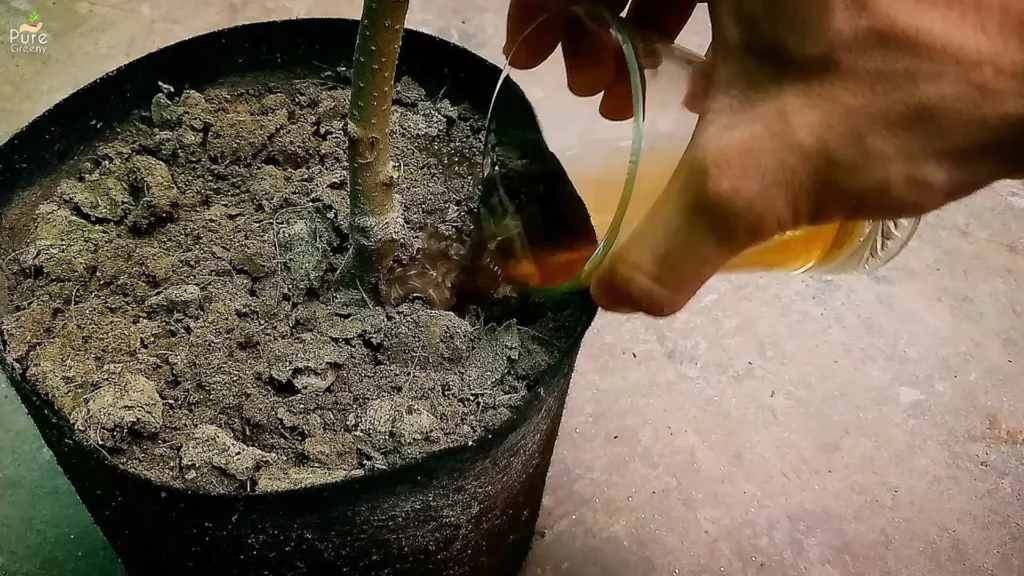
Now here is the most important part. The best time to use seaweed fertilizer for a fast growth response is when your plant is already producing new leaves. New leaves are a sign of active growth.
On the other hand, when the plant is under dormancy or stress, even the best fertilizer won’t show strong results.

So timing is everything. I used this same seaweed fertilizer on my rose plant during active growth, and within a week it produced a flower bud that bloomed fully and vibrantly. So try to use seaweed fertilizer when your plant is actively growing and showing new shoots.
Can we Use Seaweed on All Plants?
By following the correct method, you can use seaweed liquid fertilizer on most plants, ranging from small seedlings to vegetable plants, permanent houseplants, seasonal flowering plants, and even cacti and succulents in small doses. All plants need trace elements. Just make sure not to overuse it.
Side effects Of Seaweed liquid?

Wrong or excessive use of seaweed fertilizer can also harm plants in certain ways. Here are some common side effects beginners face and how to avoid them.
Frequent use of seaweed fertilizer increases trace elements in the soil, but if you are not providing other nutrients like NPK, this can create nutrient imbalance.
When some nutrients are high while others are missing, plants struggle to grow properly. You may notice slow or abnormal growth, yellow leaves, or curling leaves.
Soil should contain a balance of nutrients, so don’t rely only on seaweed fertilizer. Along with it, you can also use compost, cow dung, and other organic fertilizers from time to time. A detailed list on different organic fertilizers is added Here.
Seaweed fertilizer is slightly acidic, which can slowly lower the soil pH over time if overused continuously. And when the soil becomes too acidic, plants struggle to absorb nutrients properly.
You can use a pH meter like this to monitor your soil pH, or simply avoid excessive use of seaweed fertilizer.
So these are the benefits and side effects of seaweed fertilizer. Some of these points are simple to understand, while others take time and experience.
I learned many of these things over the years by making mistakes and improving continuously. I wish you success and happy gardening.


