
Em1 Liquid; Solution To 100+ Plant Diseases! SECRET RECIPE

Yellow leaves, stunted growth, little or no flowering, small-sized fruits, and more pest attacks can all happen for one reason: your soil media.
In this Post, I’ll explain exactly why these problems appear so frequently on our plants and a very simple liquid solution that helps solve these soil issues from the root. So let’s begin.
Why Our Plants Really Struggle?
Besides improper care, plants often suffer from nutrient deficiencies, which lead to many common problems.
Whether it’s yellowing leaves, curling leaves, small-sized fruits, or stunted growth, most of these eventually turn out to be a nutrient deficiency. But you might wonder, we fertilize so often, so how does this still happen?
Here’s the interesting part. We keep using different fertilizers, organic as well as chemicals. But many times, those nutrients never actually reach the plant roots.
Fixing this one small yet extremely important detail can result in abundant growth, lush greenery, healthier plants, improved harvests, and much more.
So, one of the biggest reasons our plants struggle for nutrition is degraded microbial activity in the soil.
What Is EM1 & How Is It Helpful?
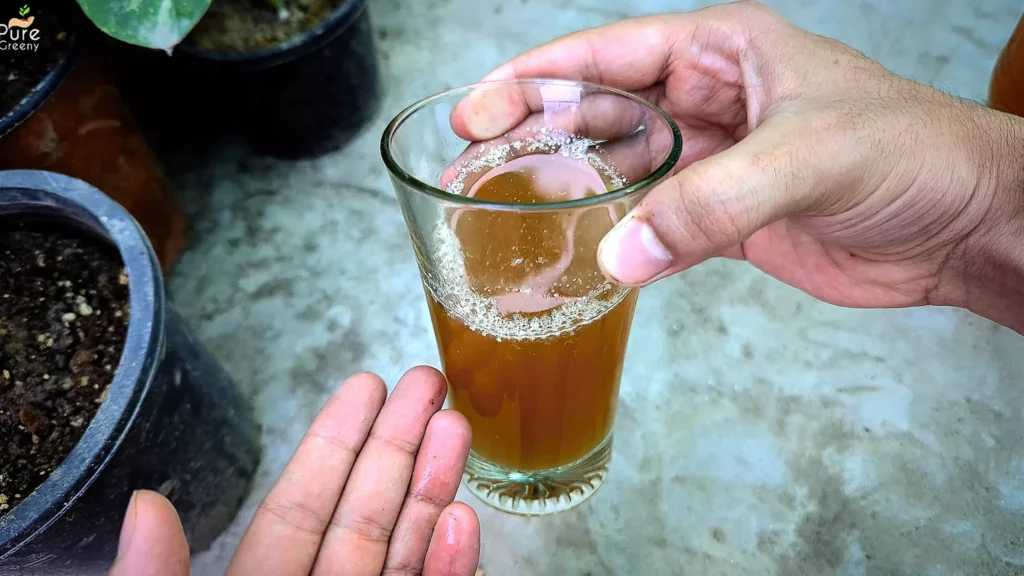
We apply fertilizers. They enter the soil but often become locked there. The nutrients are still present, yet the plant cannot absorb them because many of them are not readily available. Beneficial microbes help convert these nutrients into forms that plants can absorb.
Microbial activity gradually declines for several reasons, such as excessive chemical fertilizer use, salt buildup, poor-quality water, and unhealthy soil conditions.
One way to restore these microbes is by regularly adding compost. But I know that takes time. So today I’ll show you a recipe I’ve personally used for several months with excellent results. I was able to grow vegetables and flowering plants very successfully.
This liquid is called an Effective Microorganisms (EM1) culture. Nothing complicated—making it is almost as simple as compost tea and requires just this one main ingredient.
This liquid is simply a colony of beneficial microbes. They enter the soil, gather around the roots, help break down locked nutrients, and make them easier for plants to absorb. You can think of it as probiotics for plants.
If your soil’s microbial life is strong, you’ll definitely notice better growth, healthier plants, bigger harvests, and even fewer pest attacks.
And I’m not just saying that—you can see the results on your screen. As the microbial life improves, the results start appearing on our plants.
How to Prepare It at Home?
So now, let’s prepare EM1 liquid at home.
We need to increase the microbial population in our soil. One way is to use an EM1 culture that you can buy, but in just a moment I’ll also show you a free substitute.
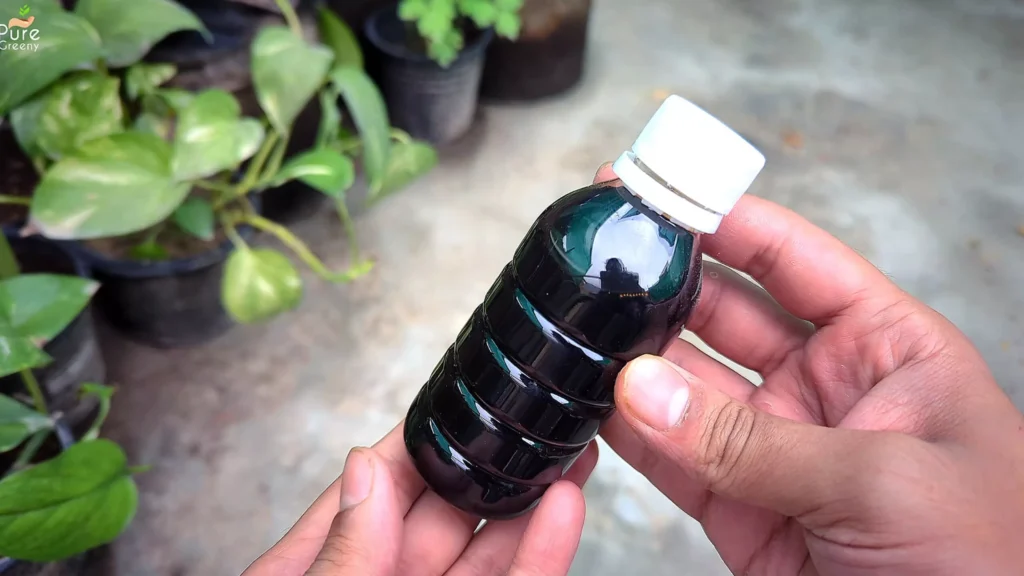
Here I have an EM1 culture. It’s simply a collection of beneficial microbes grown under controlled conditions. Now we can multiply them quickly and add them to our soil.
I’ve added the EM1 culture link Here, if you’d like to buy it at a low price.
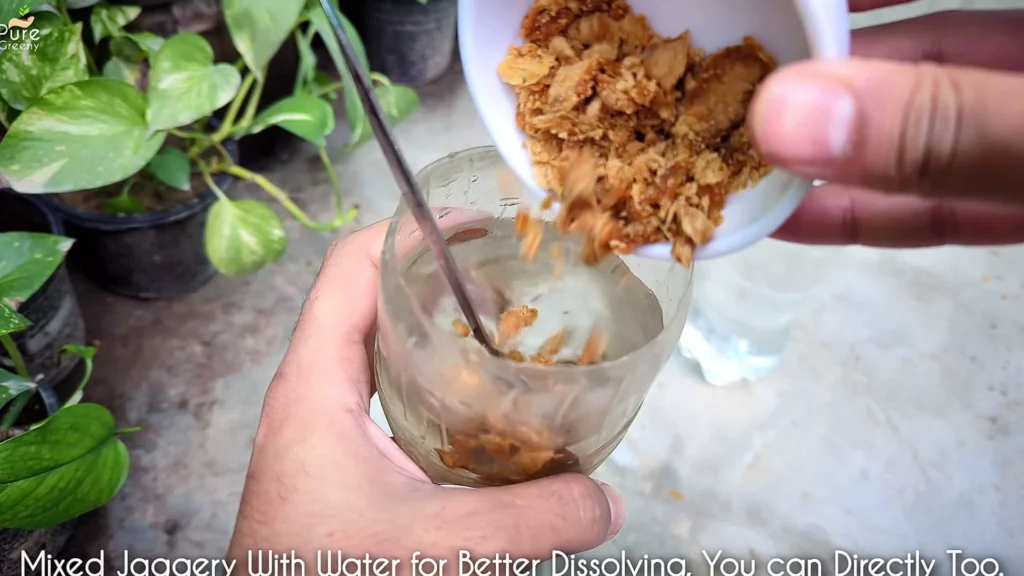
Take one liter of plain water and let it sit uncovered for one day. Then add 20 mL of EM1 culture along with 20 grams of jaggery or molasses as food for the microbes. These sugars help them multiply rapidly.
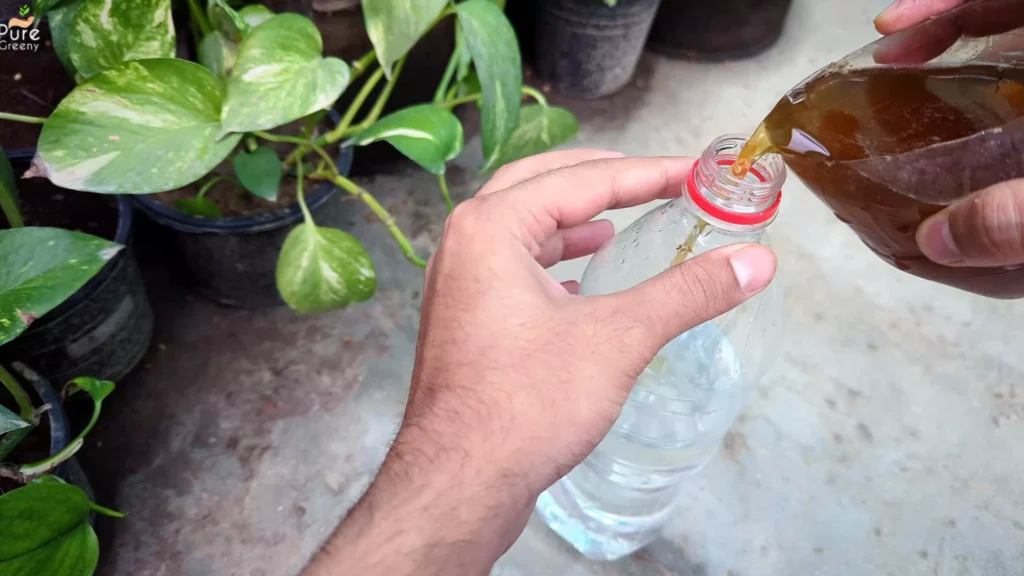
Cover the container loosely so air can circulate, then place it in a warm, dark spot.
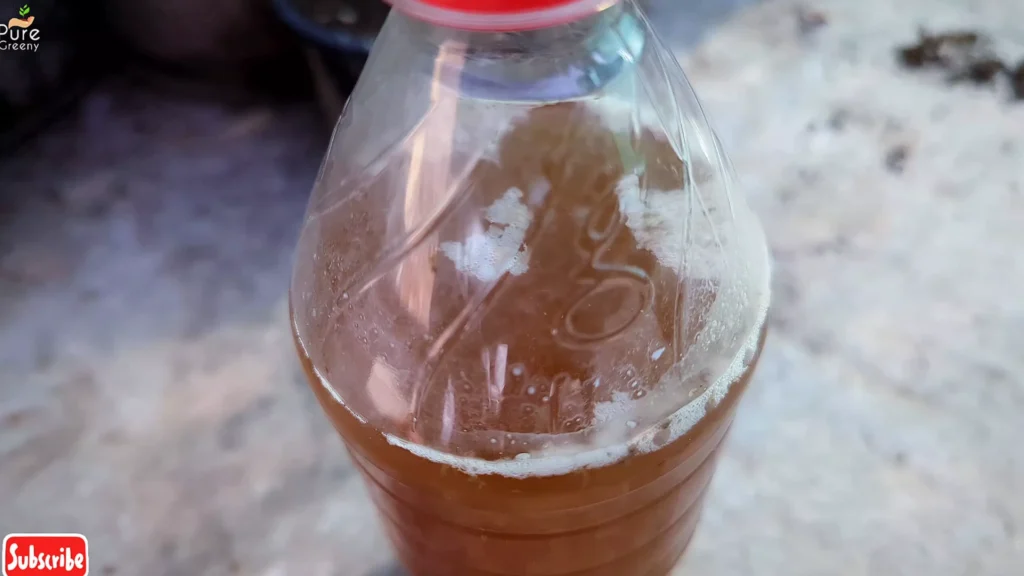
After a few days, you may notice a thin white layer forming on the surface. That’s completely normal. Shake the container well.

Within 2 to 4 days, you’ll see plenty of bubbles forming, which is a sign of active microbial growth.
After 4 to 5 days, your culture is ready.
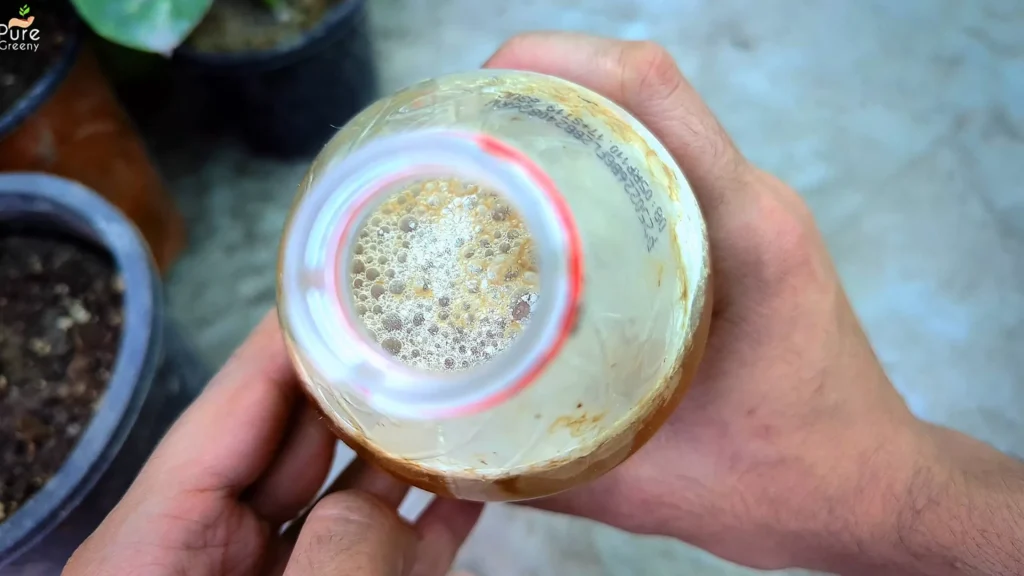
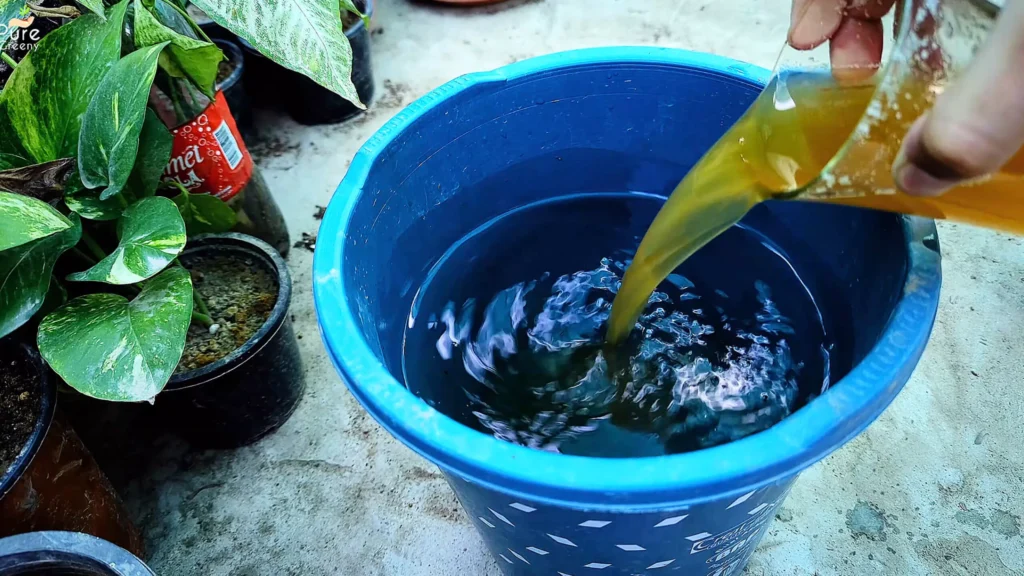
Before using it, dilute it with 20 parts water, which means 1 mL of EM liquid in 20 mL of water. And just like that, your diluted EM solution is ready to use.
Proper application is just as important.

But before that, did you know that nurseries have an incredibly diverse microbial ecosystem right beneath your feet? This healthy soil biology is one of the reasons their plants stay so lush and vigorous.
Over the past few years, while visiting many nurseries, I had the opportunity to learn their methods in depth.
Along with rich microbial diversity, they also benefit from practices like natural mulching, composting, bottom watering, protection from extreme weather, and much more.
I’ve explained all of these methods in my short book. I encourage you to check it out if you’d like to learn more.
How to Use It Regularly?
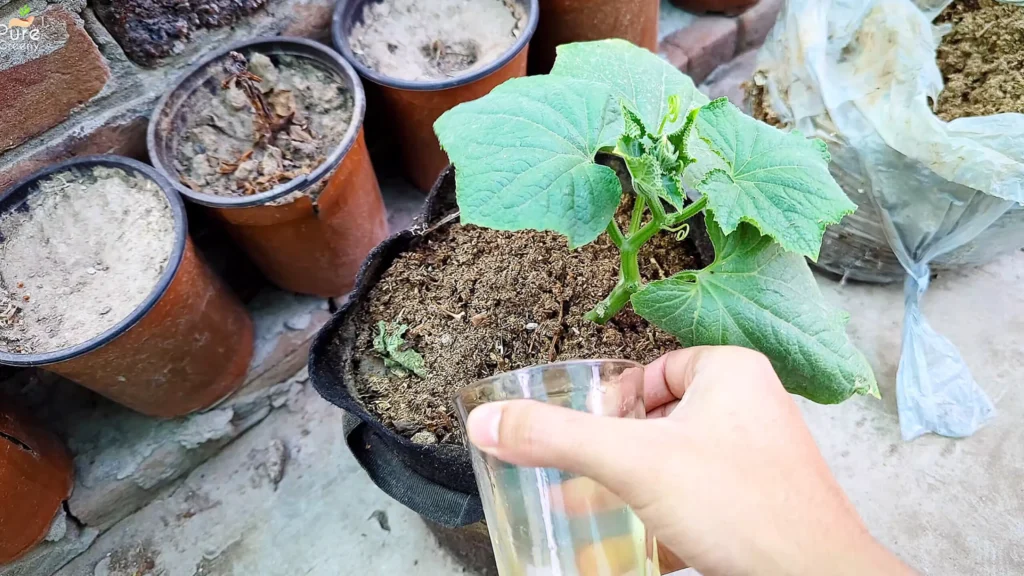
You can use this liquid both in potting mixes and directly in garden soil.
Apply about 100 mL of the diluted solution to a 10-inch pot once or twice a month. For raised beds or garden soil, simply use a larger amount according to the area.
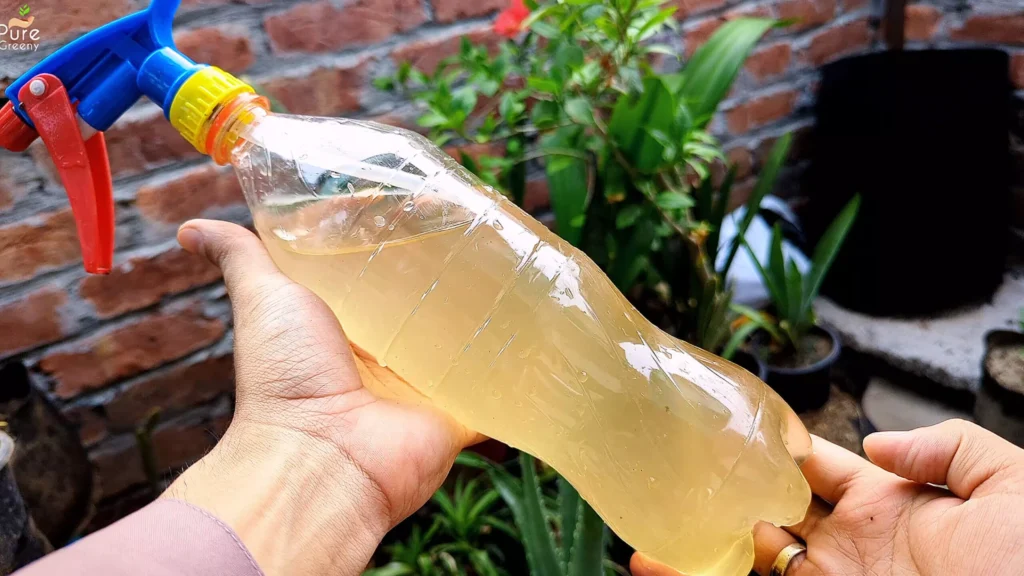
You can also spray this solution on plant leaves, preferably in the early morning or evening.
Whether your plant is under stress or transplant shock, you can still use this liquid safely.
Instead of applying a large amount once, make it part of your regular routine. Keep supplying your plants with their probiotics.
The Free Alternative To Em1
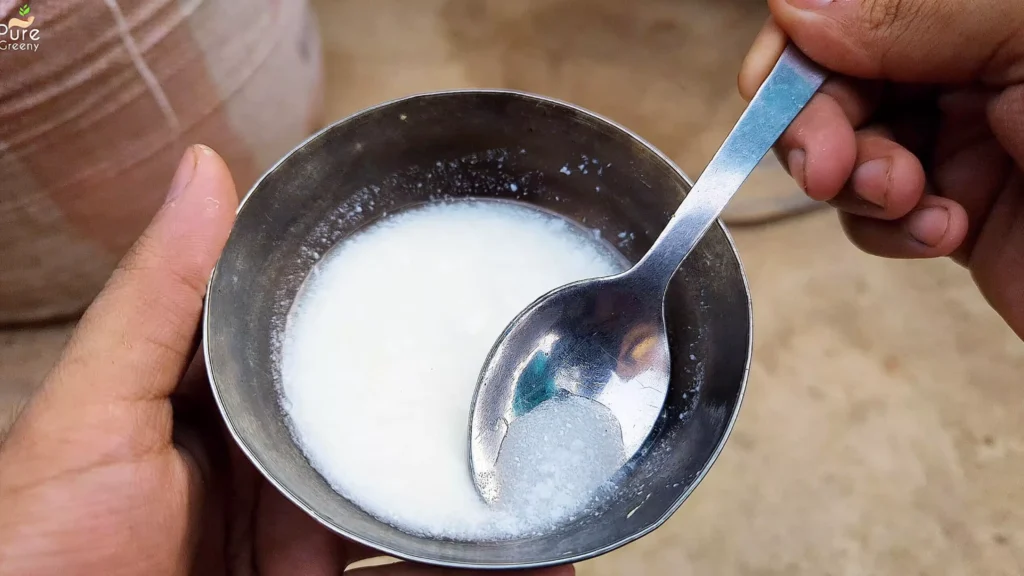
Now here’s another simple and almost free recipe that you can use instead of EM1 culture.
I won’t say it’s exactly as good as EM1 because EM1 contains carefully selected beneficial microbes grown under controlled conditions.
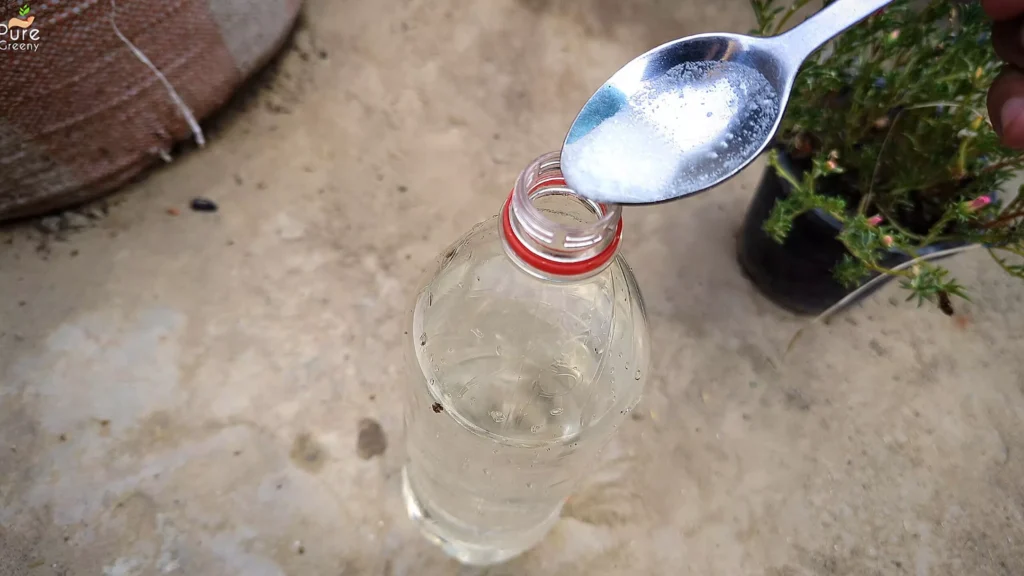
For this recipe, take freshly made yogurt and collect the watery liquid that separates at the bottom. This liquid is rich in lactic acid bacteria (LAB).
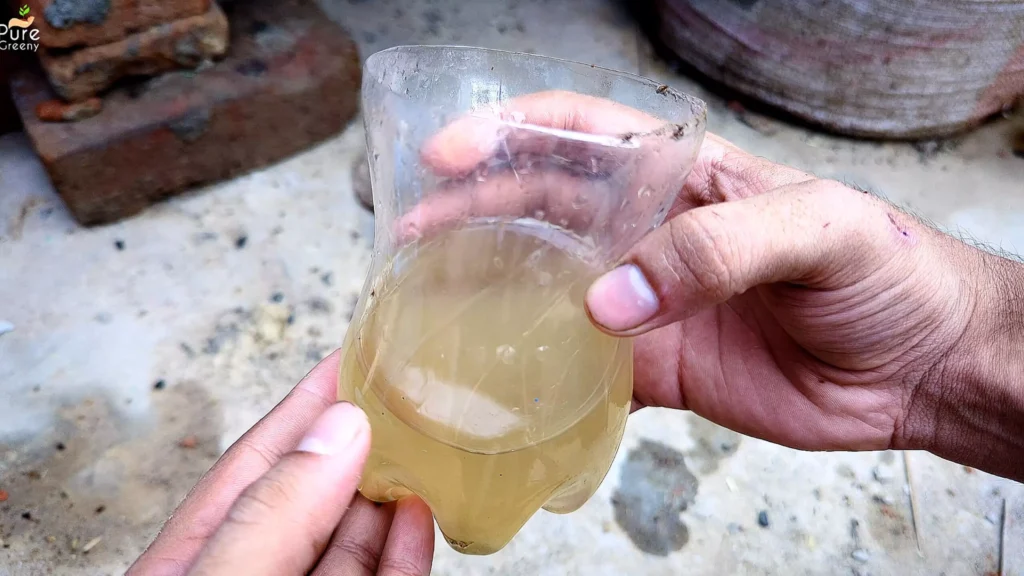
Add this liquid to one liter of plain water and let it ferment for 2 to 4 days.
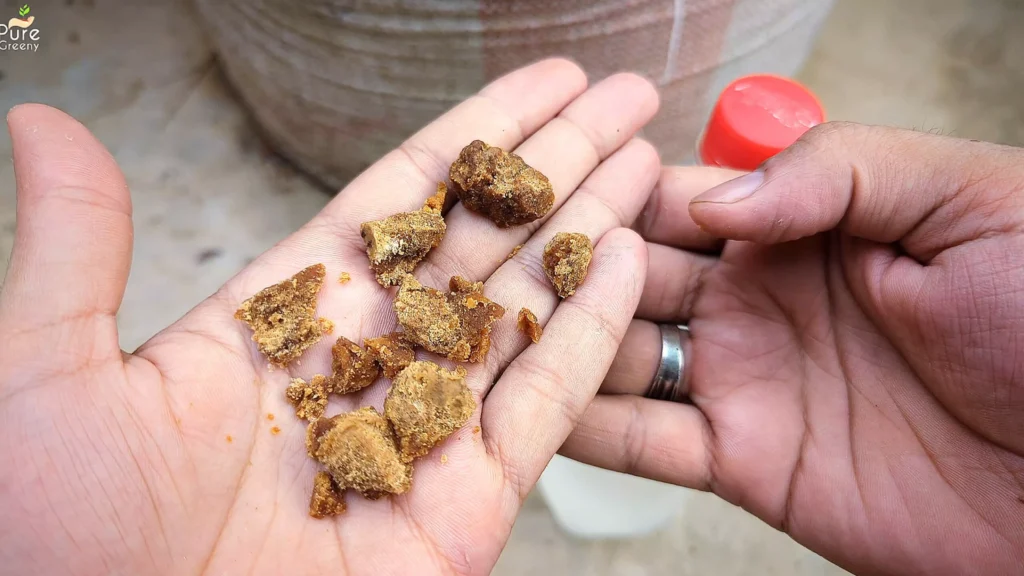
Once the fermentation is complete, add 20 grams of jaggery or molasses. Let it ferment for another 4 to 5 days.
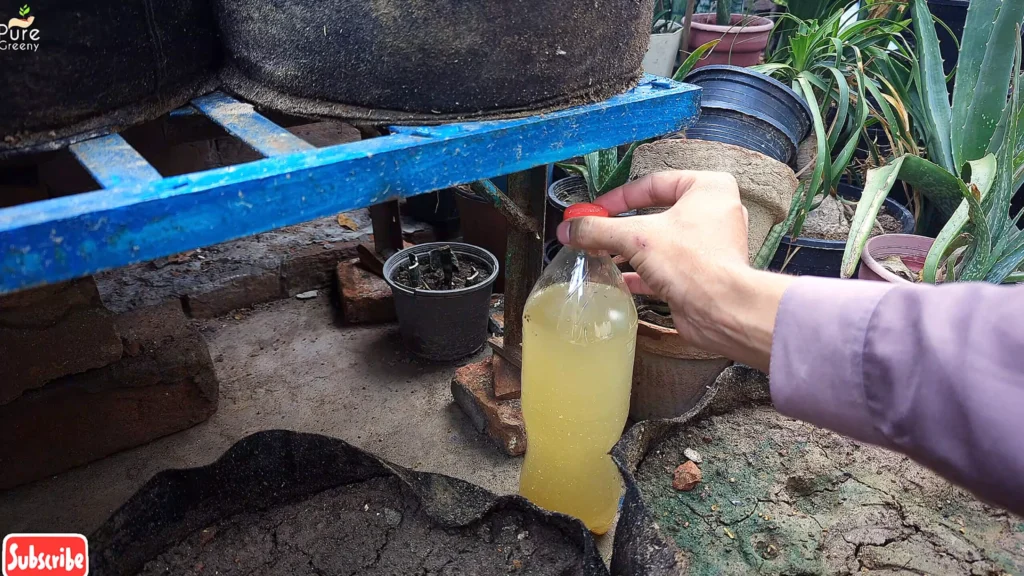
You’ll notice the same bubbling stage, showing that microbial activity is taking place.
Dilute it exactly the same way—1 part culture with 20 parts water.
Apply around 100 mL to a 10-inch pot once or twice a month, preferably during the evening. You can also spray it on plants or apply it to raised beds.
But remember, both of these liquids are rich in beneficial microbes, not nutrients. You still need to apply fertilizers regularly. These microbial solutions improve the efficiency of your fertilizers—they don’t replace them.
This liquid mainly increases the population of lactic acid bacteria in your soil, which is beneficial for plants. Over time, many other beneficial microbes will also establish themselves.
Keep using compost and different organic manures like cow manure, chicken manure, and others to build a healthy soil ecosystem. Detailed list on These Organic Fertilizers is Linked here.
Another excellent alternative to EM1 is compost tea.
I’ve already made a detailed Guide showing exactly how to prepare microbe-rich compost tea at home. Feel free to Follow it.

![How to Make Compost Tea Liquid Fertilizer At Home? [7-BENEFITS*]](https://www.puregreeny.com/wp-content/uploads/2023/08/png-20230815-195240-0000-64db9221c38d6-390x205.webp)