Hibiscus Plant Secret Growing Tips For Max. Flowering!
If your hibiscus plant is not growing or producing flowers, keep Following this Guide because we’ll go through a few hibiscus growing tips that can fill your plant with lots of buds and flowers. So let’s see them point by point.
1-Follow This Season!
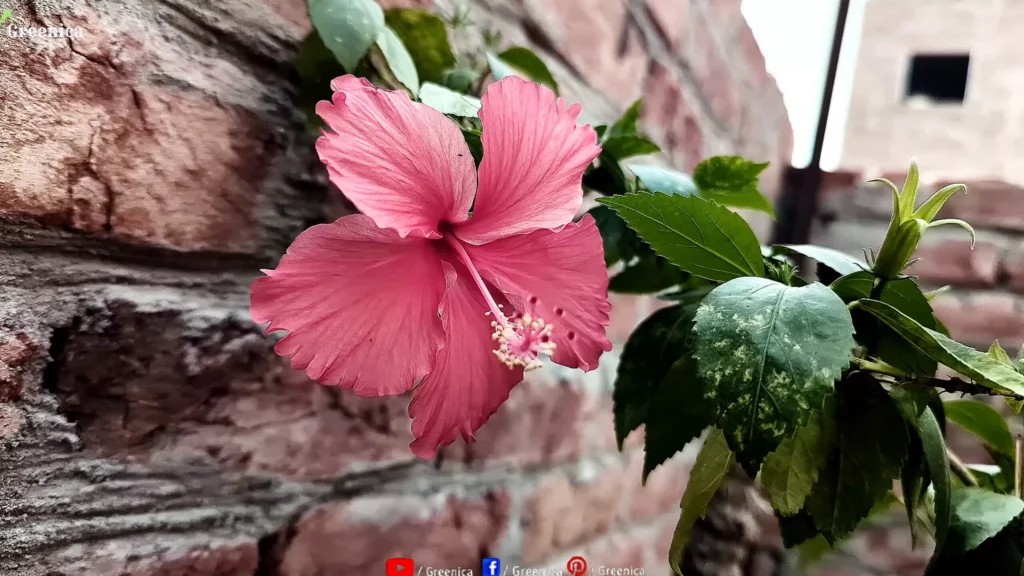
The first and most important thing while growing a hibiscus plant is choosing the correct season. And it’s often missed by most beginners. But don’t worry, I’ll tell you exactly when to grow a hibiscus plant to get maximum flowering.
But first, understand that it’s a rainforest plant and likes a warm and humid environment. As soon as the spring season starts, the temperature begins to rise, and along with it, the hibiscus plant gradually starts growing.
When the temperature is between 25°C and 35°C, it produces a lot of new buds that bloom into beautiful and vibrant flowers. So overall, this season supports quick growth and flowering.
Ideal soil, pot size, and proper placement all help, but the season is the most important. So if you live in a colder or temperate climate, the summer season is the peak growing time for hibiscus plants. So grow it as soon as the spring season begins.
2-Soil Media Matters?
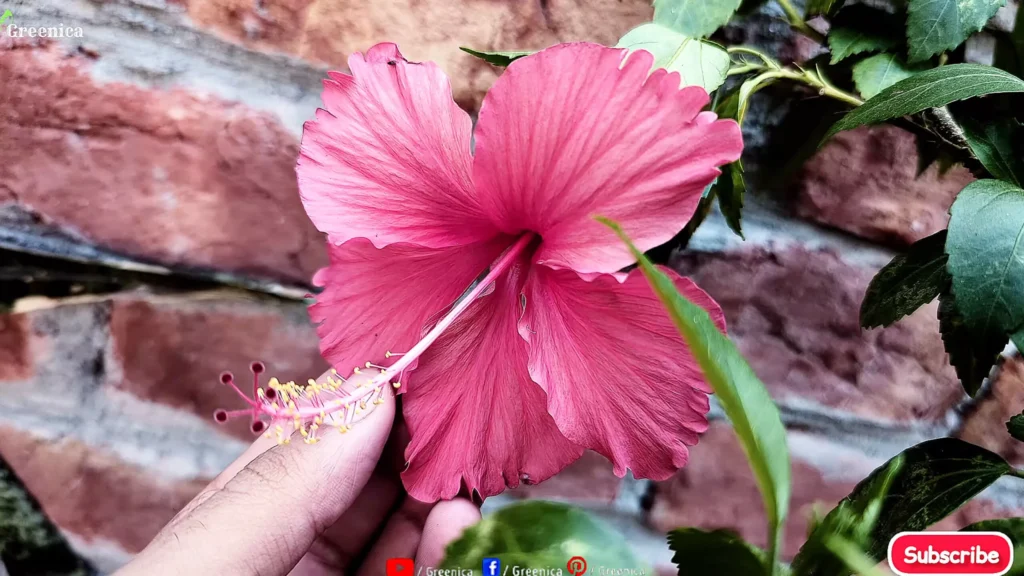
One thing that plays a crucial role in the healthy growth and flowering of a hibiscus plant is the soil media. In an ideal soil mix, the hibiscus plant tends to grow a lot of new roots.
The soil also provides nutrition to the plant, and for beginners, an ideal soil mix can greatly reduce the problem of overwatering. So here is what I use. It’s the best mixture for hibiscus plants.
It drains extremely well, so even if I overwater, the moisture doesn’t stay for long. When I first started growing plants a few years back, I often struggled with this same issue.
The soil became compact, or sometimes the water got blocked. My plants struggled, yellow leaves appeared, and sometimes the plant even died. But I kept trying. Then finally, I learned what kind of mixture a hibiscus plant needs, and now I prepare it at home. Here is its recipe.
- Sand – 1 part:
- Garden Soil – 2 Parts:
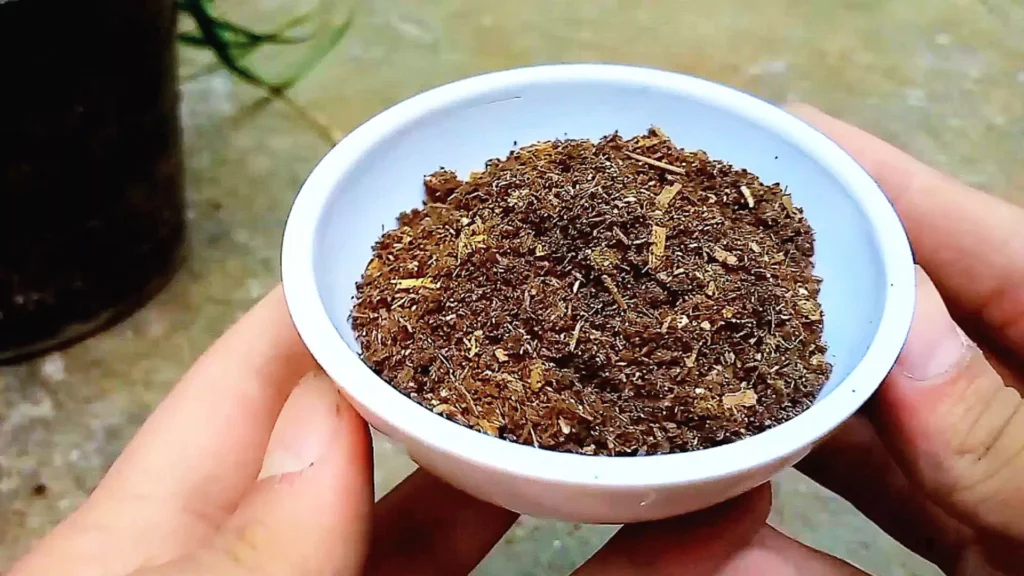
- Cocopeat – 1 part:
- Compost – 1/2part:
- Cow dung – 1 bowl:
You can also follow it. A guide on this is also linked Here if you’d like to follow it.
3-Pot Size?
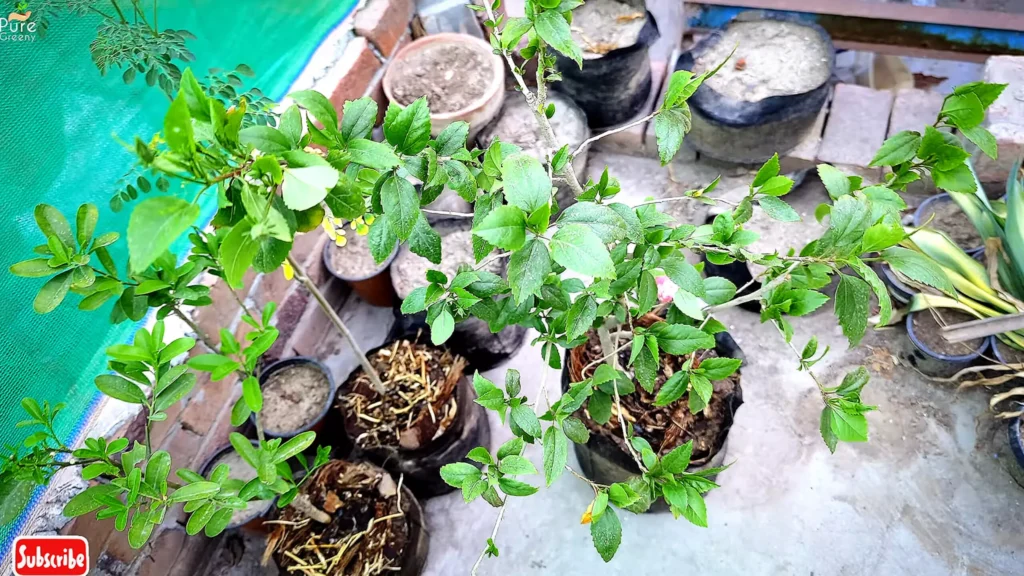
If you want consistent and healthier growth all year long, you have to make sure your hibiscus plant has enough space for root growth. Because even if everything else is right, if the space is limited, after some time the plant will stop growing.
You’ll see a lot of yellow leaves and stunted growth. So here is how I deal with this issue. First of all, I use grow bags. They have the advantage of porous walls. They improve aeration as well as reduce the chances of overwatering.

Several months back, my hibiscus plant stopped growing, and when I removed it from the pot, here is what I found. There were so many roots on the surface. It was simply root-bound.
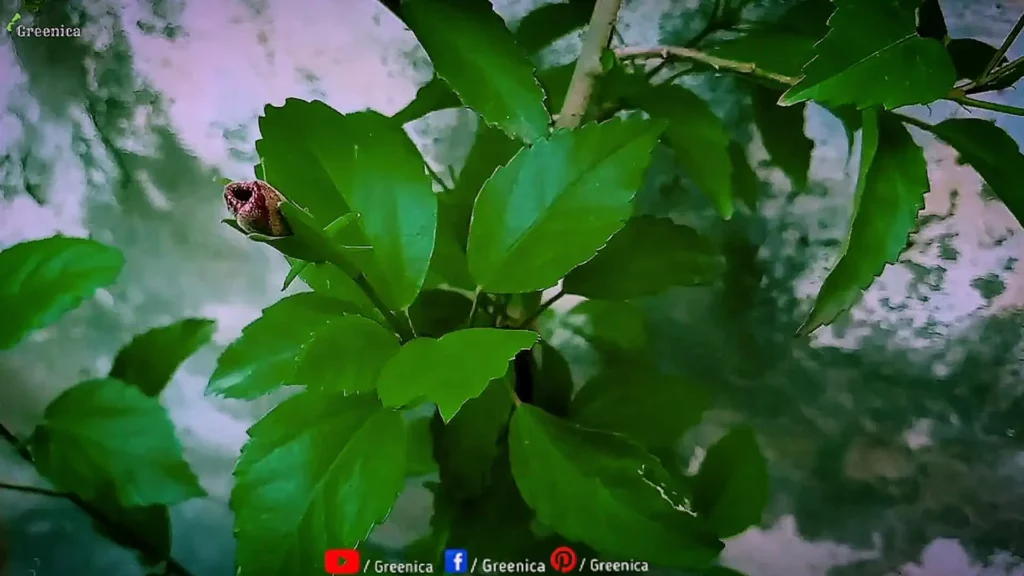
So as soon as I shifted it into a grow bag —you can also buy grow bags from Here—after a short recovery time, my plant started producing new buds again.
It’s always recommended to repot your plants either at the beginning of the season or during the rainy season. A guide on the proper repotting method is also linked Here, if you’d like to follow it.
4-Place It In…?
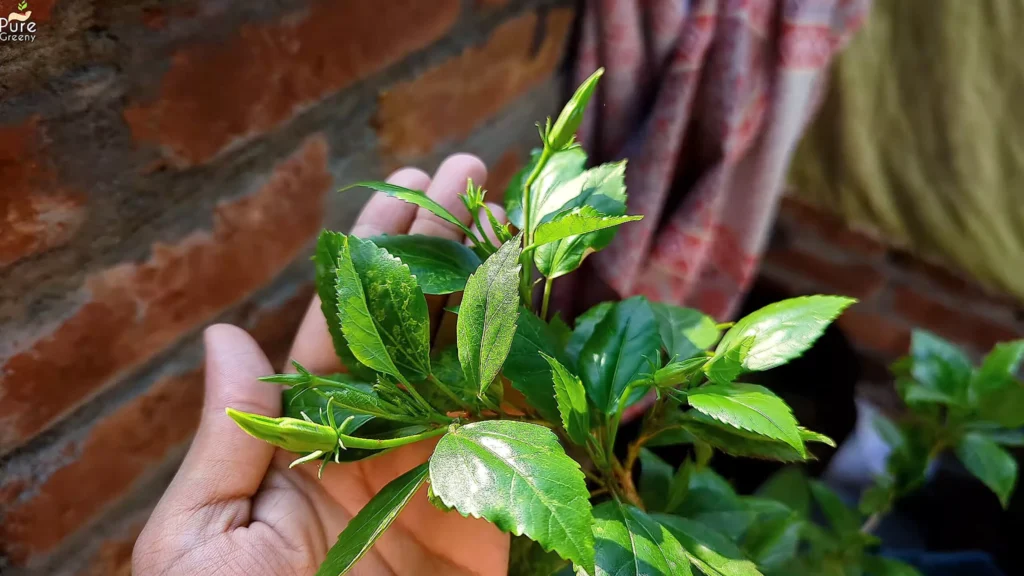
So the season, soil, and pot are all ideal. Still, your plant may not grow properly if it’s placed in the wrong spot. Hibiscus plants like a lot of sunlight. If they’re placed in a dark spot, you’ll often see yellowing leaves, slow growth, and more pest attacks.
But you might have noticed that even when we keep the plant in a sunny spot, its growth can still slow down, especially during peak summer.
But here I’d like to share a secret with you that nurseries often use. And we all know how well nursery plants grow and flower. What they do is really simple. They keep their hibiscus plants grouped together.
This keeps the humidity a little higher while still placing them in a sunny spot. So you see, the peak summer heat is shared by a group of plants. You can follow this same routine.
Keep your hibiscus plant with other plants, and don’t place it in a fully sunny spot. Try to find a spot with a little shade and a little sunlight.
There are a lot of such practices that nurseries benefit from. And while visiting many nurseries over the years, I tried to gather these secret tricks. Here is the book that I prepared to help home gardeners like you and me. Feel free to take a look through Here.
5-Pruning Benefits?
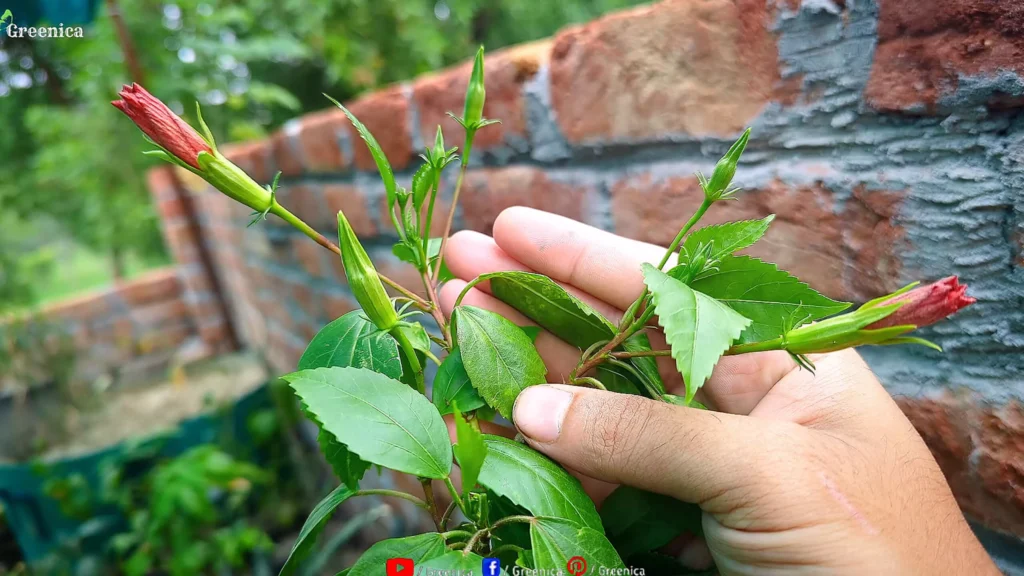
If your hibiscus plant is growing rapidly, one thing you should do to enhance its growth and flowering even more is proper pruning. I know some of you have tried pruning your hibiscus plant, but it didn’t help.
Here I’ll tell you why. We all have heard about the many benefits of pruning, like better branching, better flowering, and a stronger plant. But here’s what nobody tells you about pruning.
Pruning benefits only actively growing plants. If your plant is under some kind of stress or shock, you won’t see good results. In fact, pruning at such a time can make the problem even worse.
So if your plant is producing new leaves, it’s the best time to trim some of the new shoots. After that, you should fertilize it to provide nutrition for more branching.
6-Flowering Fertilizer!
Here’s the result of this fertilizer. This is my hibiscus plant. You can see how many buds are growing on this single branch, and I had just started using this fertilizer.
That’s because it contains a mix of nutrients that flowering plants need. But before I tell you the fertilizer ingredients, here’s the science behind it.
When I started growing plants, my biggest problem was fertilizer. There were so many options, and I had no idea which one to use. And here’s another problem. Suppose you’re using cow dung regularly.
Over time, your plant will grow bigger, but it may not flower because flowering nutrients are simply not present in cow dung in sufficient amounts. So when I realized this problem, I instantly started searching for what was ideal.
It turns out that plants need balanced nutrition more than anything else. Then I made this fertilizer recipe. It contains nitrogen, phosphorus, potassium, along with many trace elements. It’s a simple mix of leaf compost for balanced nutrients, cow dung for nitrogen, dried potato peels for potassium, and some eggshells.
You can also prepare it at home and use it for your hibiscus plant once a month. A detailed guide on this fertilizer is also linked right here if you’d like to learn more.


