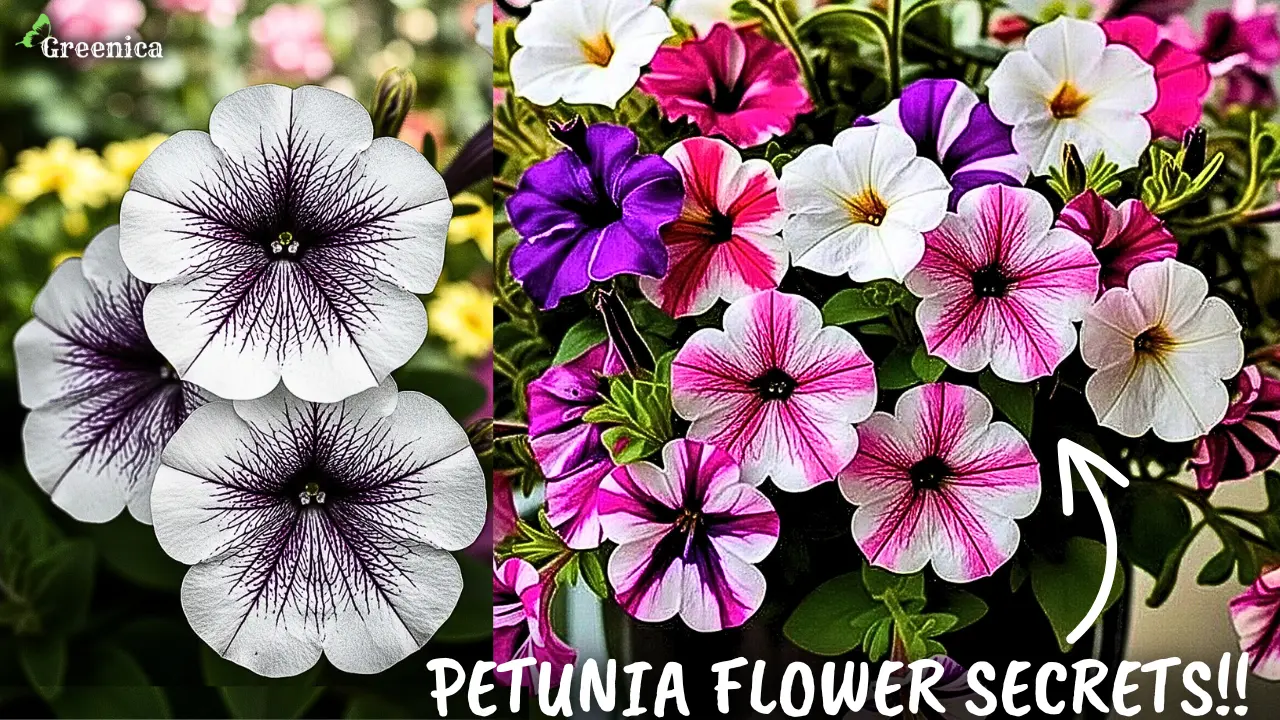
6 Secret Tips For a Petunia Flower Plant Care!
Petunias are one of the most beautiful and easiest flowering plants of the winter season. Even if you have never grown this plant before, you can still plant petunias and enjoy lots of beautiful flowers throughout spring.
In this Post, we will see how to grow petunias properly, where to place them, what soil medium to use, and which fertilizer works best. So let’s begin.
1-Growing in the Right Season:
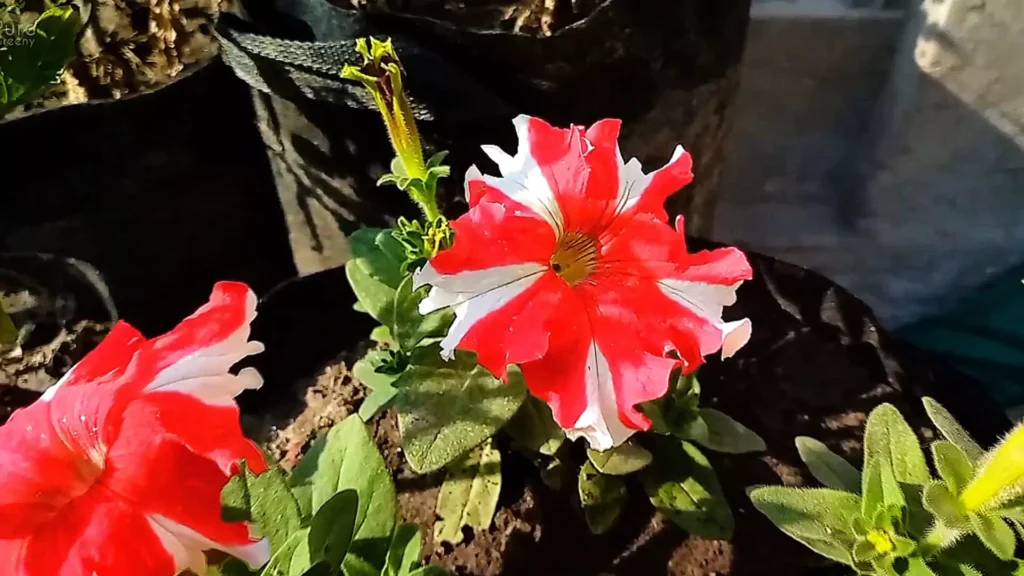
The first and most important factor in petunia plant care is the growing season. If you plant your petunia seedlings during the ideal season, they will perform very well. The season plays a major role in their fast growth. You will see buds forming, plants recovering quickly from transplant shock, and spreading all over the pot within days.
All of this happens because the season is perfect for their growth. For petunia plants, a cool environment is ideal. If the temperature is below 25°C, you can easily plant petunia seedlings. However, if you live in a very cold region where temperatures drop below 5°C, your petunia seedlings may suffer.
In extremely cold climates, it is better to grow petunias during the summer season. But if winters are only mildly cool, you can safely plant petunias, and they will continue growing well. Petunias are seasonal flowering plants and grow only for a few months, which is why understanding their growing season is very important.
2-Starting from Seedlings:
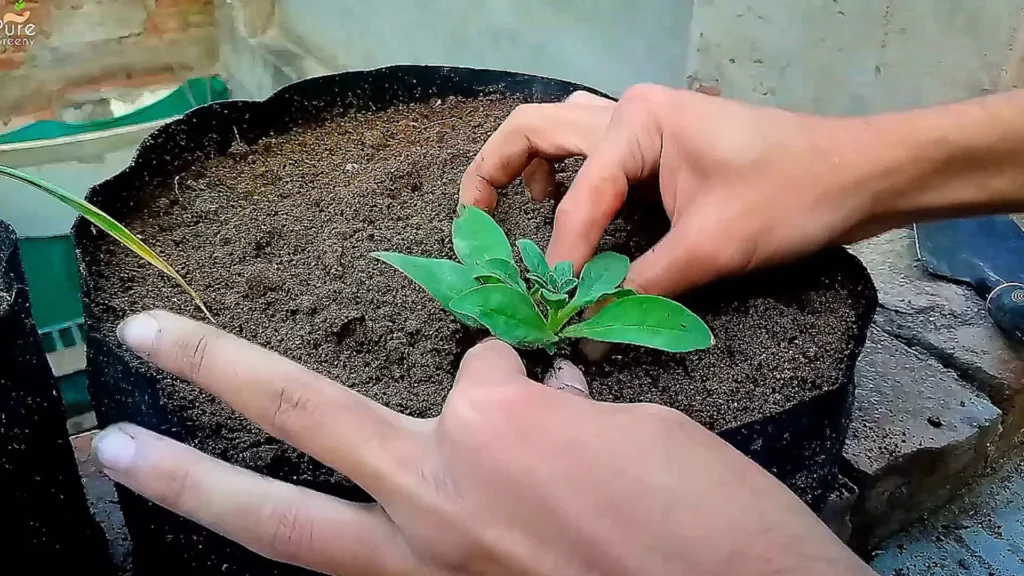
Now let’s see how we can practically grow petunia seedlings at home.
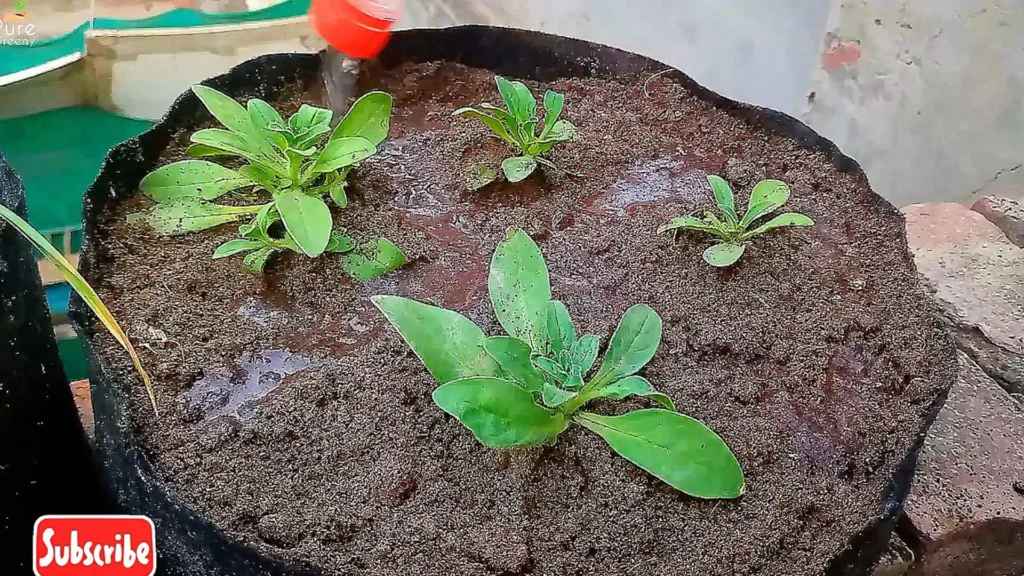
When the growing season starts, simply visit your local nursery and buy a pot of healthy petunia seedlings. Transplant them carefully, preferably in the evening when the weather is cool.
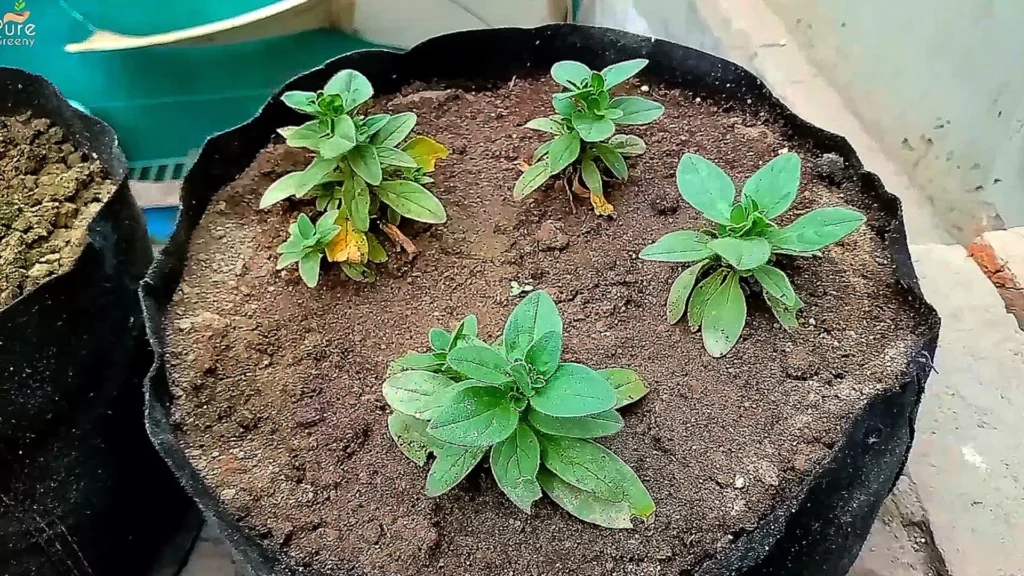
Within a few days, you will notice new leaves growing on your petunia plants. Make sure they receive at least 2 to 4 hours of sunlight daily. Within 1 to 2 months after planting, you will see many buds and flowers forming on your plants.
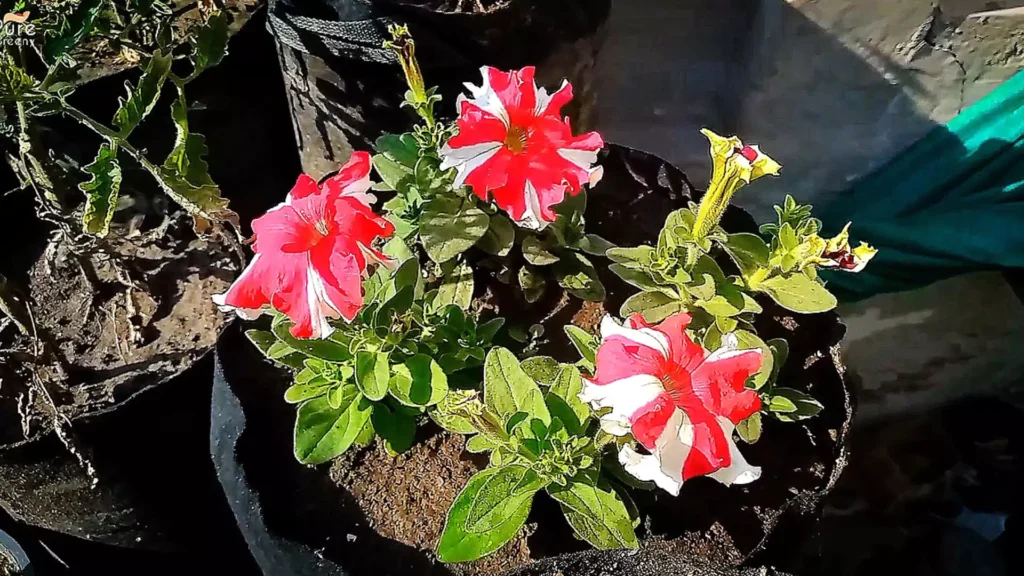
Petunias come in a wide range of colors, so choose carefully. You will also notice pollinators visiting your garden.
3-Using a Good Soil Medium:
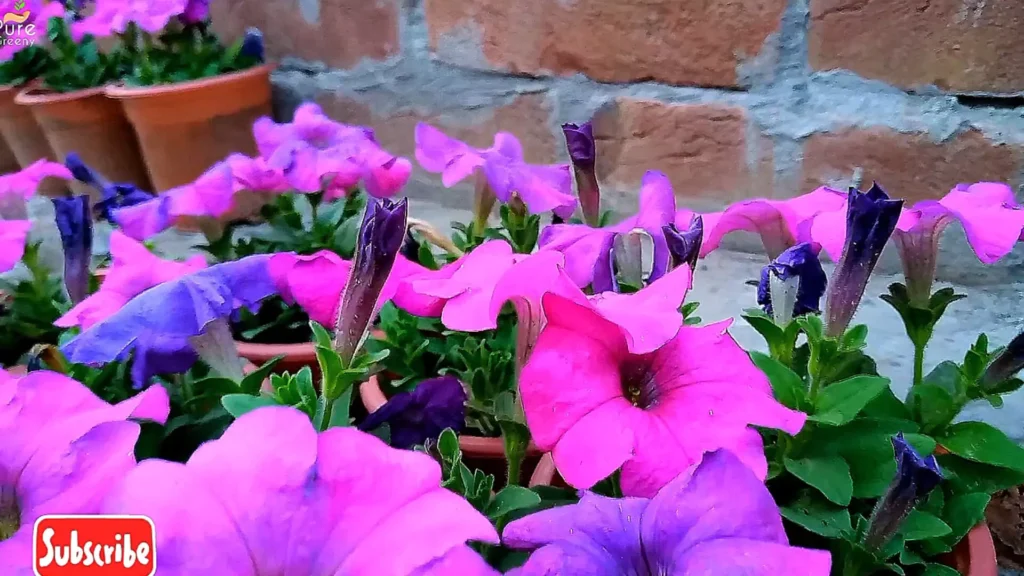
Another important factor for growing lots of petunia flowers is the soil medium. Soil plays a fundamental role in plant growth. If the soil is good, petunia plants will develop strong roots. More roots mean better nutrient absorption, which results in more buds and flowers.
You don’t need a very complicated soil mix. A slightly loose and fertile medium works perfectly for petunias. They are quite hardy plants. Just make sure you are not planting them in compact or hard soil.
If you want to prepare an all-in-one potting mix at home, feel free to follow the guide linked Here.
4-Placing the Plant in the Right Spot:

Another crucial aspect of petunia plant care is choosing the right location. Petunia plants are flowering plants and require plenty of sunlight to grow well. Without sufficient sunlight, you will notice stunted growth and very few flowers.
Sunlight provides the energy needed to produce more buds and flowers. A lack of light may appear as pale yellow leaves on the plant. Make sure your petunia plant receives at least 2 to 4 hours of sunlight daily. More sunlight can be even better, as long as the heat is not extreme. Bright, direct sunlight without excessive heat is ideal for petunias.
5-Pinching for More Blooms:
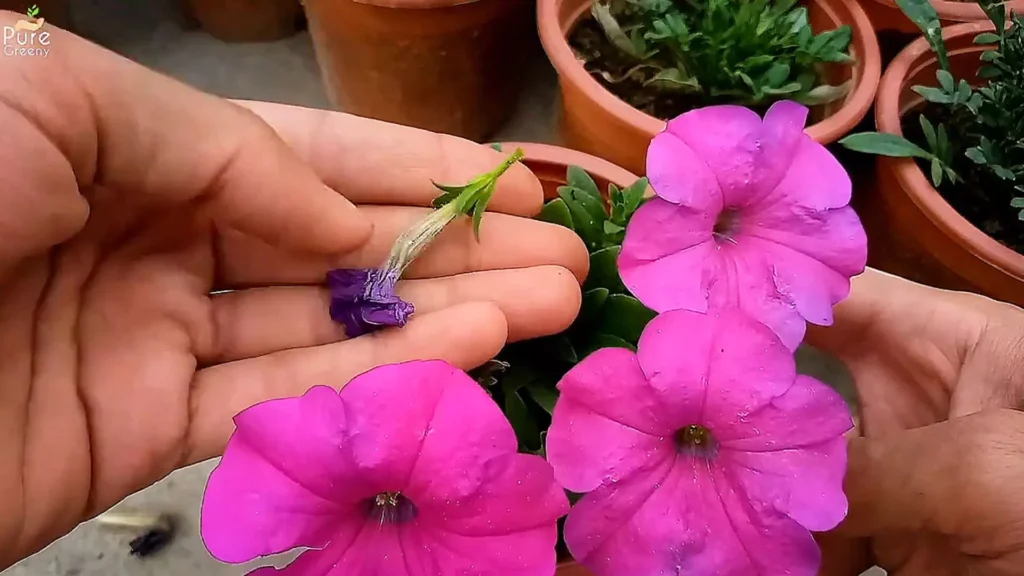
One effective technique to get more blooms during the growing season is pinching. Right after planting petunias in pots, you can pinch off some growing tips and a few early buds. This signals the plant to produce more branches.
With a good-sized pot and fertile soil, pinching greatly improves plant size and flower production. You will get a fuller, bushier plant with many buds that later bloom into vibrant flowers. Simply pinch off a few buds and growing shoots to encourage bushier growth.
6-Fertilizer Is Important:
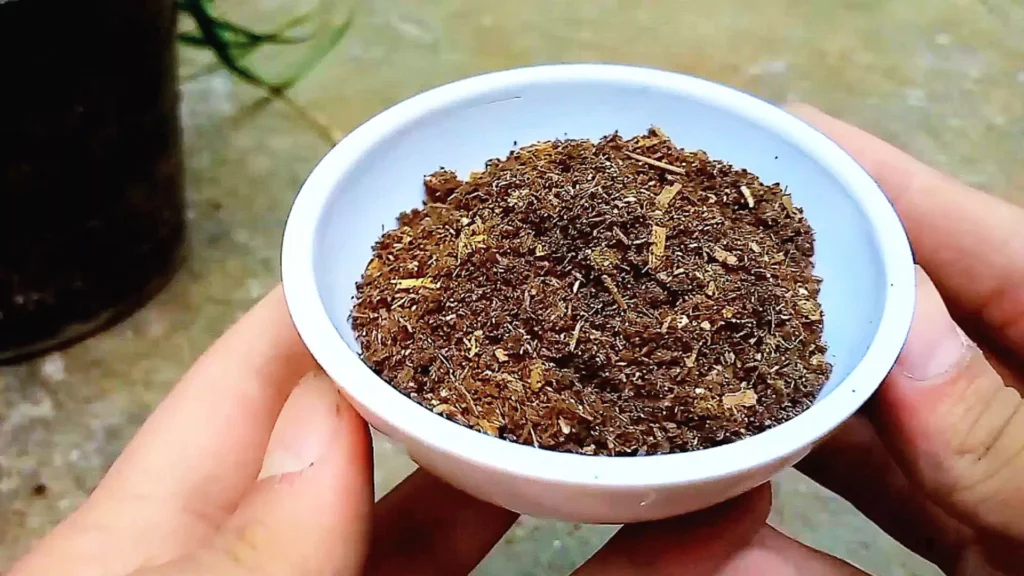
Proper fertilization also helps petunia plants produce more flowers. Fertilizer acts as food for the plant. With proper nutrition, the plant grows healthier and uses extra nutrients to produce more blooms.
Petunias are hardy plants and moderate feeders. You can use compost, well-rotted cow dung, or even liquid fertilizer made from vegetable peels. If you want a single fertilizer that works well for all seasonal flowering plants, the link is provided Here.
This was the complete petunia plant care guide. A detailed Guide on another winter bloomer Cineraria is also linked Here. Feel free to Follow it.