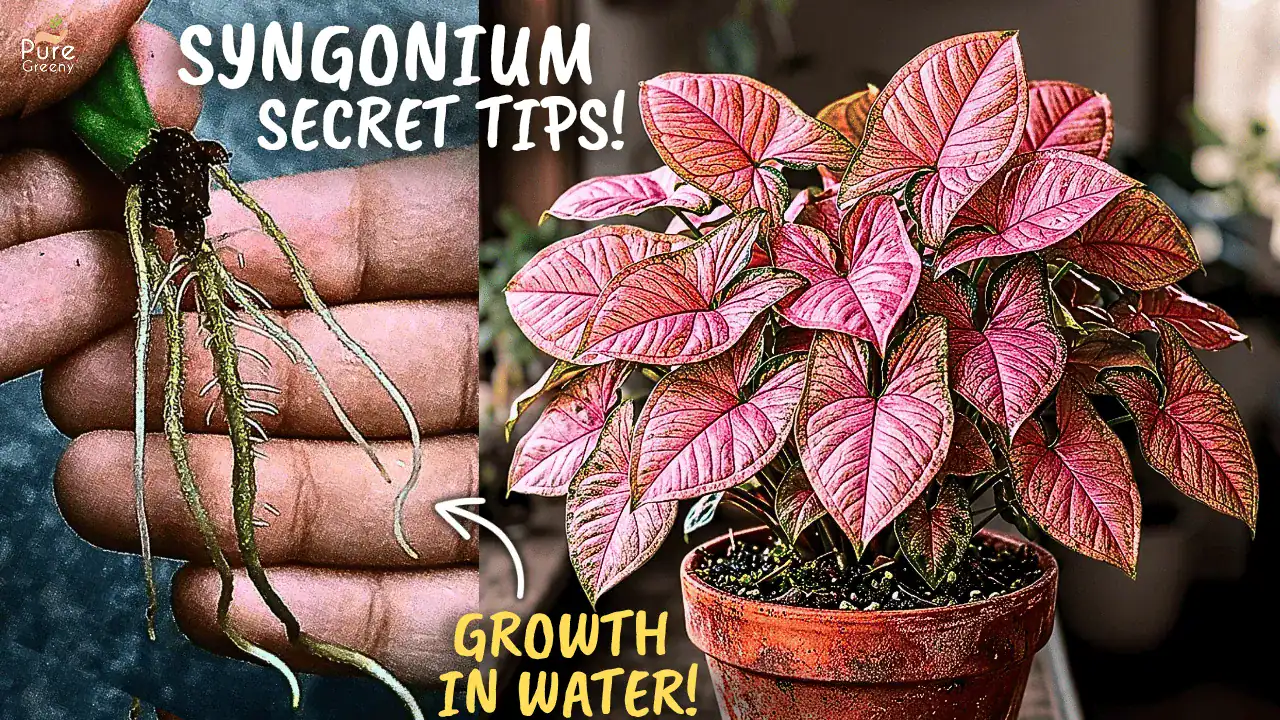
Syngonium Plant SECRET Care Tips, For Maximum Growth!
Syngonium plants are generally easy to grow, but most beginners still struggle because of a few simple care mistakes.
In this Post, I’ll show you exactly how to care for your syngonium plant for faster and healthier growth, and also how I grew syngonium plants in water with surprisingly good results. So let’s begin.
1-What’s The Exact Growing Season of Syngonium Plants?
The first and most important thing people often miss while growing syngonium plants at home is the growing season. One major reason syngonium leaves start turning yellow is unfavorable weather conditions.
Before I tell you the ideal growing season for syngonium plants, understand this carefully: syngonium is a tropical plant. It naturally likes a warm and humid environment.
Whether you are growing it in water or soil, cold winter temperatures can put the plant under stress, which often results in yellowing leaves.
When I started growing syngonium plants a few years back, I frequently faced this same issue.
After a lot of testing and observation, I noticed the plant grows much faster and healthier as soon as spring and summer begin.
So if you are also facing yellow leaves or slow growth, you might be making the same mistake. Try keeping your syngonium plant in a warm and slightly humid environment, and you’ll be surprised how quickly it starts growing again.
As winter starts, it’s better to move your syngonium plants indoors or at least keep them in a protected shaded spot. Otherwise, cold stress can seriously damage the plant, especially if it’s still young.
2-Soil Media They Like?
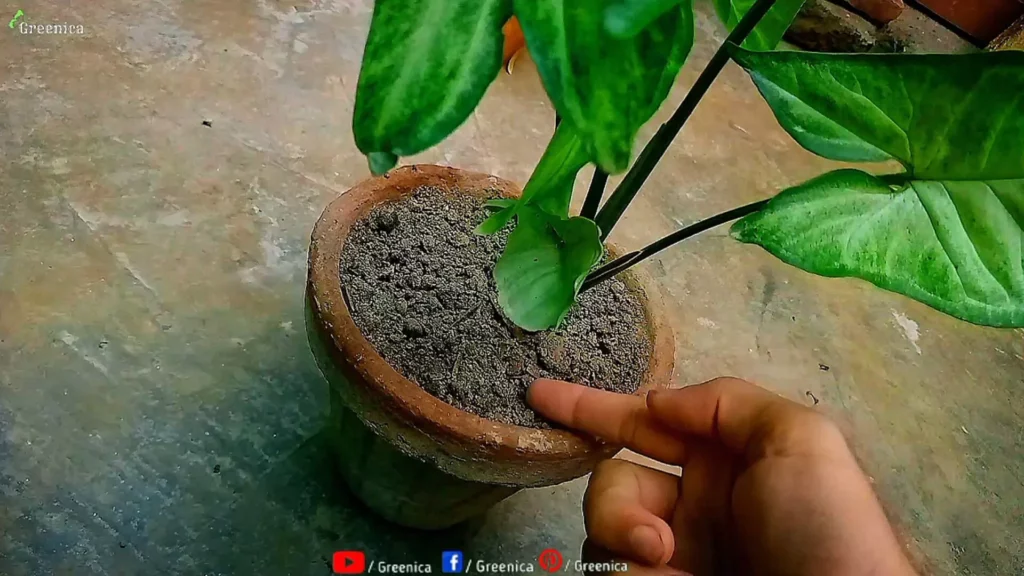
Soil media is another major factor behind healthy and fast syngonium growth. Especially when the plant is growing in a pot, soil quality becomes extremely important. People often use random soil mixes, and this alone can stop plant growth completely.
Hard and compact soil limits root development, which results in yellow leaves, weak growth, and smaller leaves. Syngonium is definitely a hardy plant, but poorly draining soil still creates a lot of problems.
And if you are someone like me who sometimes struggles with overwatering, this issue becomes even more dangerous.
I faced the same problem in the beginning. Then I started using this homemade soil mix, and the difference was surprising. Even if I slightly overwater my plants, this soil media manages moisture much better on its own.
Syngonium plants like a loose, well-draining, and fertile medium. In such a mix, you’ll notice faster growth, healthier roots, and leaves becoming bigger and shinier in size.
And here is another secret. Combine this soil media with the fertilizer I’ll mention later, and your syngonium plant’s growth can become almost unstoppable.
The soil recipe is simple. It’s a mix of;
- Sand – 1 part:
- Garden Soil – 2 Parts:
- Cocopeat – 1 part:
- Compost – 1/2part:
- Cow dung – 1 bowl:
You can easily make it at home, and a detailed guide is also added Here.
3-How to Water Syngonium Plants?

For getting a lot of growth on your syngonium plants, you need to understand the correct watering technique. Most syngonium problems are actually caused by improper watering.
But if you follow this simple method, you can avoid slow growth, yellow leaves, and many other common issues.
One major reason I faced yellowing leaves in the beginning was overwatering. My soil media helped a lot, but correcting the watering method changed everything. After that, my plants started growing really well.
Syngonium plants like moisture in the soil, but excess water should still drain out properly. Whenever the top layer of soil starts drying, you can water deeply. But never water if the soil already feels moist.
Sometimes you may need to water once a week, and sometimes even less. It completely depends on how quickly your soil dries. Just observe the soil instead of following a fixed watering schedule.
And here is another secret most people don’t realize: if your soil dries slightly from time to time, it usually means your watering method is correct.
4-Where To Keep Syngonium Plants?

Another very important part of syngonium care is proper sunlight. This is the trickiest thing for most beginners to understand, but don’t worry, I’ll tell you exactly where you should place your syngonium plant for maximum growth.
You may have noticed that in direct sunlight, syngonium leaves start burning from the edges, while in dark spots, growth slows down badly.
The reason is simple. Syngonium plants belong to rainforest-like regions. They naturally grow under the shade of bigger trees.
And believe me, I tested both extremes myself. Full sun doesn’t work well, and deep shade also slows growth a lot. The ideal spot for syngonium plants is a semi-shaded area with filtered or indirect sunlight.
In such a location, leaves become bigger, shinier, and the plant produces a lot more aerial roots as well.
5-How to Propagate Syngoniums at Home?
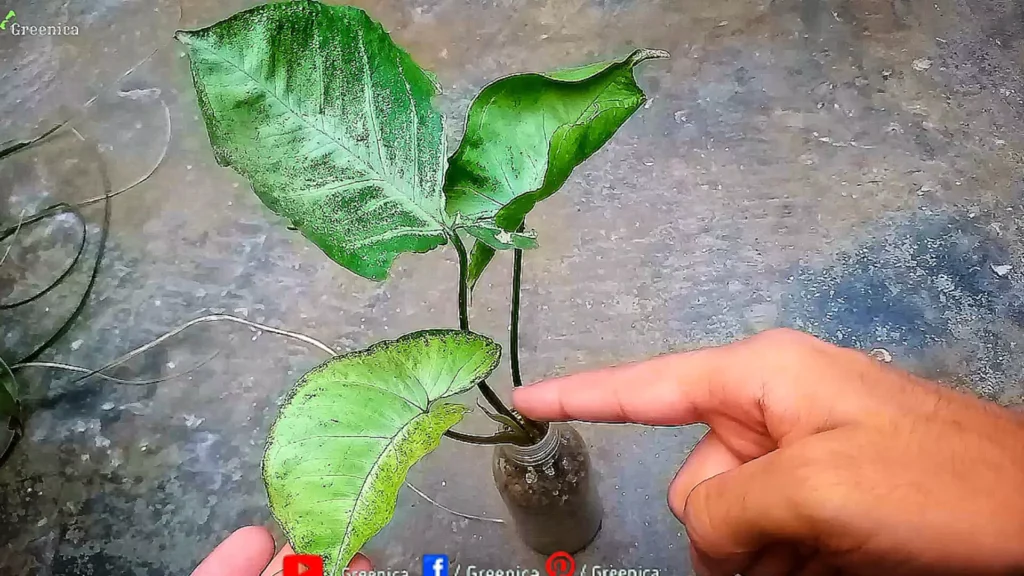
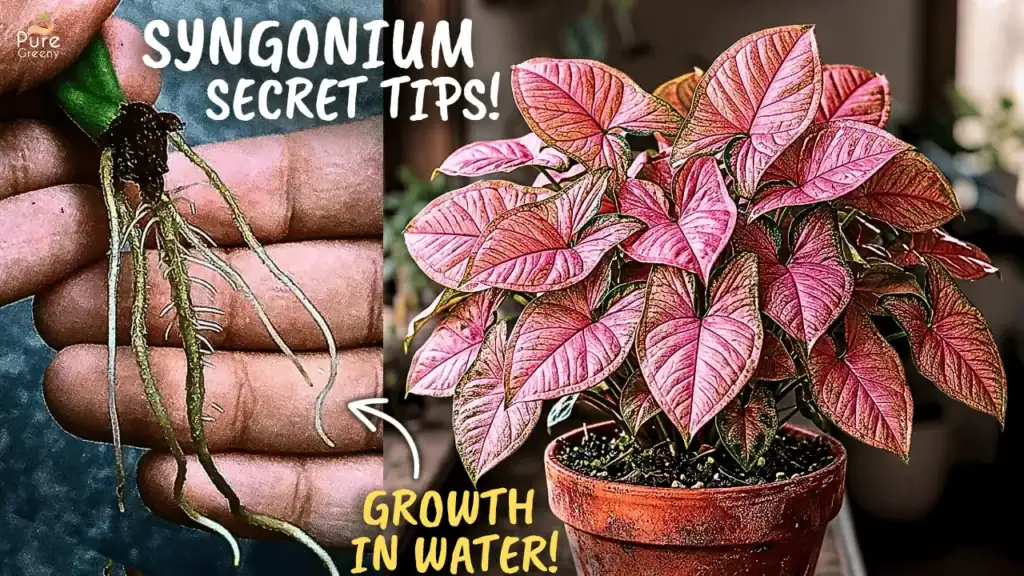
Now let’s talk about how I grew syngonium plants in water, and whether they actually performed well or not.
Last year, I took a cutting from my syngonium plant and placed it in a water bottle in a shaded area.
Within 1 to 2 weeks, roots started growing and the plant even produced new leaves. But after some time, the growth slowed down, leaves started turning brown, and some even fell off.

The main reason was lack of nutrients. Without proper nutrition, syngonium plants cannot maintain long-term healthy growth in water. So eventually, I shifted the plant back into soil.
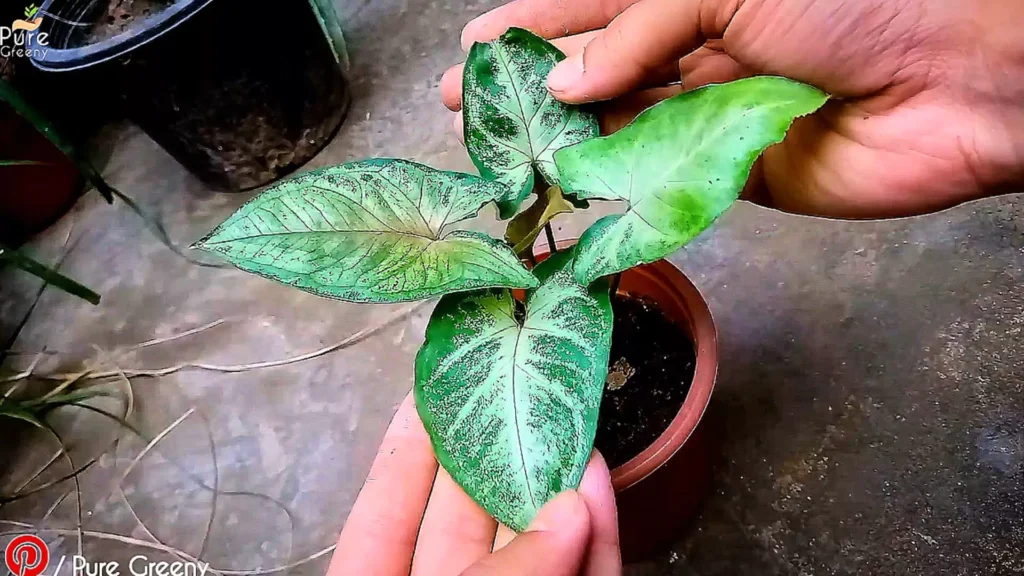
So yes, syngonium plants can grow in water for some time, especially for propagation. But for long-term healthy growth, you’ll need to add nutrients in the form of compost tea or similar liquid fertilizers.
6-The Fertilizer That Works Amazingly.
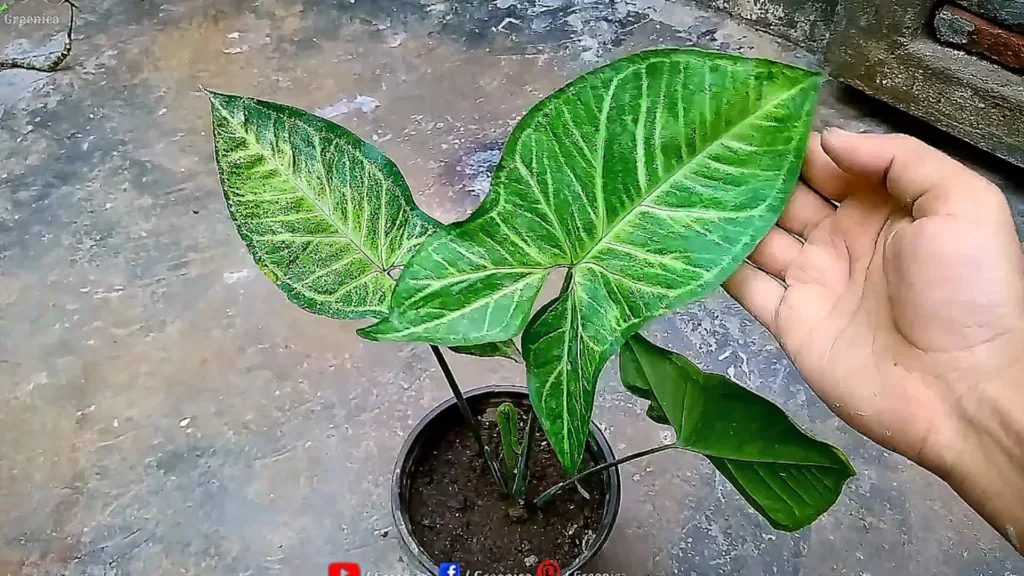
Now comes the important part: fertilization. Syngonium plants like moderate feeding, and over the years I found one fertilizer that worked extremely well for them.
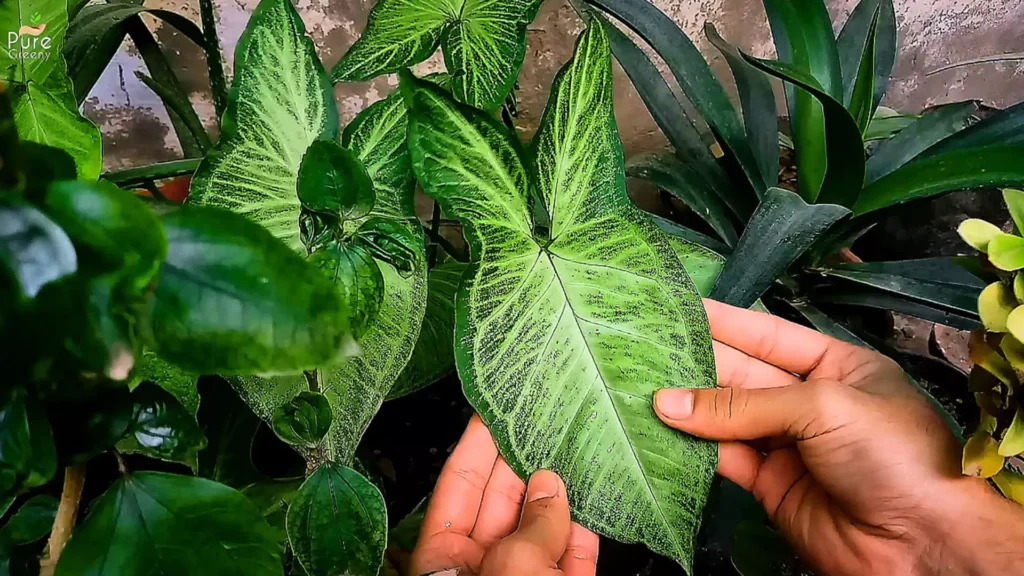
I started using cow dung liquid fertilizer, which is naturally high in nitrogen, and syngonium plants responded really well. Look at the size of this leaf—it appeared after regular use of this fertilizer. Leaves became bigger, shinier, and much more vibrant.
But before I tell you the recipe, understand one thing carefully. Syngonium plants need nitrogen for leafy growth, but they still require other nutrients and trace elements as well. We cannot ignore balanced nutrition.
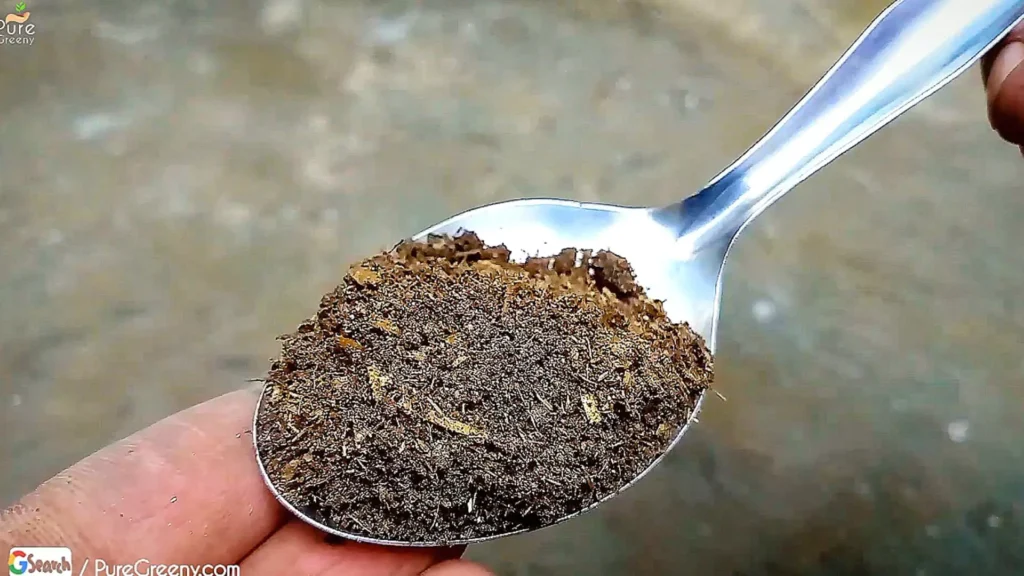
This homemade fertilizer is made using cow dung, leaf compost, and a small amount of rock phosphate. Mix them in proper ratios and use it regularly during active growth. You’ll notice much healthier and long-lasting growth over time.
A detailed guide on this fertilizer is also linked Here. Feel free to follow it.