Nursery Secrets of Growing Hibiscus Flowers In Summers!
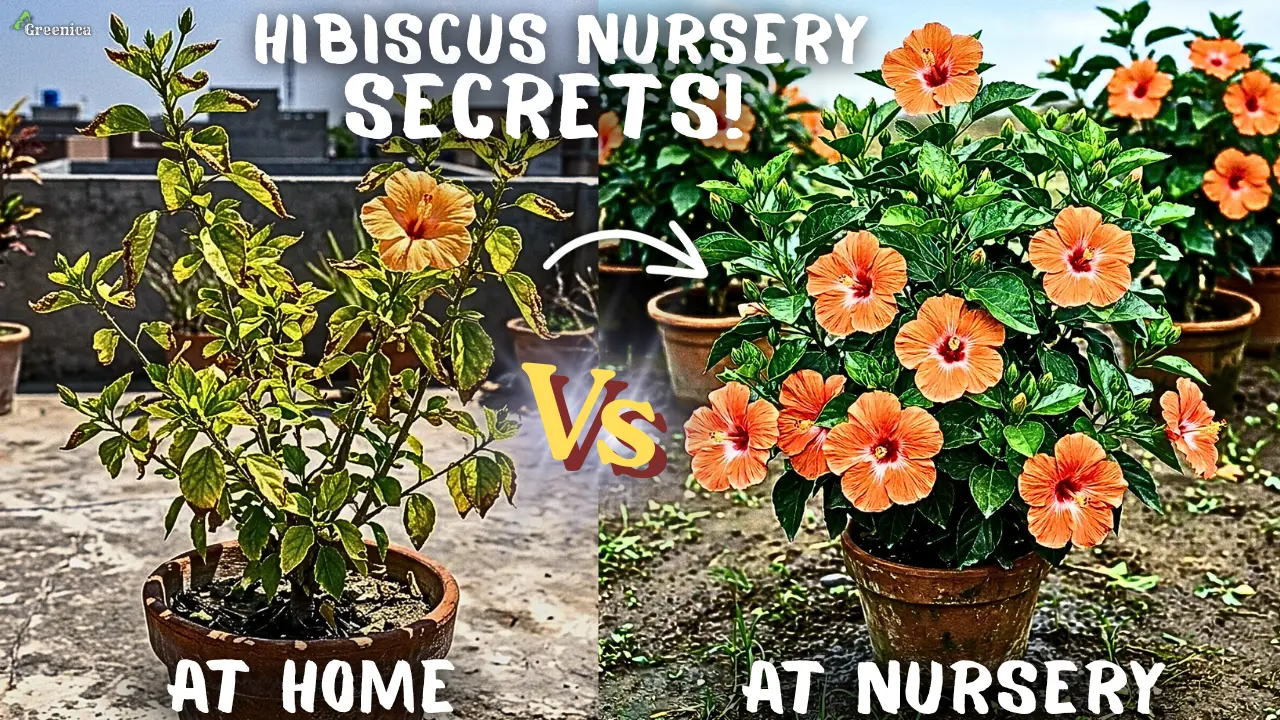
Have you ever noticed that hibiscus plants at nurseries stay healthy, green, and full of flowers even during harsh summer heat? Most people think it’s because of expensive fertilizers or special chemicals, but that’s not the real reason.
In this Post, I’ll show you exactly what nursery growers do differently and how you can use the same simple tips and tricks at home to get more buds, more flowers, and healthier growth on your hibiscus plant. So let’s begin.
Why does hibiscus stop growing in Summers?

The most important thing in hibiscus plant care is the right environment. And this is one thing nurseries do differently, which results in such healthy growth and flowering.
In many home gardens during summer, hibiscus plants suddenly stop growing. You may even start seeing yellow leaves. The same thing happened to me when I first started growing hibiscus.
The plant would grow for some time and then suddenly stop. After a lot of observation, I found the real reason behind it—heat stress.
This summer, I was prepared. I applied a simple solution that I’ll tell you in just a moment, and just look at the results. My hibiscus plant is placed on a rooftop, yet it is still producing a lot of buds and flowers. There are hardly any yellow leaves on the plant.
Before I tell you the nursery secret, understand this: hibiscus likes warm weather, but it also prefers some humidity around it.
In many home gardens, especially during peak summer, these conditions are not maintained consistently. In summers, you may have to change your watering method otherwise Even water can kill your plant overnight. We will talk about this Later.
If you live in a moderate or temperate climate like me, summer temperatures can reach 40–45°C. At that point, the plant starts facing heat stress. And this is often the reason why hibiscus stops growing even during its ideal growing season.
So what do nurseries do differently?
In nurseries, plants are usually kept close together. One plant provides a little shade and protection to another.
Even the air moving between them stays slightly cooler compared to an exposed rooftop garden. As a result, the plants experience less stress and continue growing actively.
This is a simple nursery trick that many people overlook.
You can do the same thing at home. Keep your plants close together in a bright area with some protection from the harsh afternoon sun. You’ll notice the plants handle summer stress much better, stay healthier, and continue producing new growth and flowers.
The Nursery Soil Hack…
Another thing nurseries do differently for hibiscus plants is the soil media.
First, let’s understand the problem. In home gardens, we usually grow plants in pots with limited soil. During summer, moisture evaporates very quickly, and the heat also warms up the pot and soil.
This creates heat stress on the roots. As a result, the plant shows stunted growth, yellow leaves, and very little or no flowering.
Now you might wonder why this doesn’t happen in nurseries.
In nurseries, many pots are placed close to the ground, and in some cases, roots can even grow slightly into the ground through drainage holes. This gives the plant better access to nutrients and also helps keep the root zone cooler during hot weather.
And there is one more important thing nurseries always focus on—mulching. This is something many home gardeners ignore, but it plays a huge role in protecting plants during summer heat.
At the start of this season, I also faced the same issue. My pot soil was drying out twice a day, and it was becoming difficult to manage. Then I added mulch on top of the soil, and the difference was very clear.
Mulching reduces water loss, keeps the soil temperature stable, supports microbial activity, and protects the roots from heat stress.
I strongly suggest mulching on hibiscus plants during summers. A detailed guide on mulching is also added Here if you want to follow it.
No Fertilizing, Pruning, & Repotting!

Why our hibiscus plants actually stop growing in summer?
Most people panic during this stage and start searching for solutions. They try different fertilizers, pesticides, and methods, which is often the opposite of what the plant actually needs at that time.
Let me explain.
Hibiscus grows very fast when the temperature is around 25 to 35°C. But when it crosses 40°C, the plant slows down and enters a temporary resting phase. During peak summer months like June and July, you may notice that the plant stops growing for some time.
This is completely normal.
And this is exactly why you should not over-fertilize during this stage. Some fertilizers, especially strong nitrogen sources like cow dung-based fertilizers, also generate slight heat in the soil, which can increase stress on the plant instead of helping it.
During peak summer, you should also avoid heavy pruning or repotting your hibiscus plant. Think of this period as a natural resting phase for a potted hibiscus plant.
In nurseries, plants are kept in groups, which helps maintain a slightly cooler micro-environment. That’s why they don’t face this problem as strongly as we do at home.
And when hibiscus is grown directly in the ground, it naturally experiences more stable moisture and temperature, so it doesn’t go through as much stress.
For container gardeners, this is where we need to be extra careful and avoid unnecessary changes during peak heat.
Watering Clever!

Now let me show you a very simple but powerful watering technique you should follow during summers.
But first, understand the problem.
Last year, I kept watering my hibiscus plant during the daytime. The plant looked stressed, growth was slow, and I only got a few flowers the entire season.
The reason is simple.
In the daytime, the pot soil is already very hot. When you add water at that time, it suddenly changes the soil temperature and puts stress on the roots. This is not the right way to water at all.
Now here is what nurseries do, and this is the real secret.
They always water plants either early in the morning or in the evening.
In the evening, the soil temperature has already dropped. When you water at that time, the plant absorbs moisture properly and continues feeding overnight.
That’s why even in hot weather, nursery plants stay green, fresh, and active throughout the day.
This is a small change, but it makes a huge difference in flowering and overall growth.
Don’t you think nurseries are actually very smart in how they manage plants? And there is a lot we can learn from their methods.
These are just a few nursery secrets from our new book. It explains 34 similar techniques and how you can apply them in your home garden. The link is Here if you want to check it out.


