Secrets Of Growing Moringa Plants In Pots!
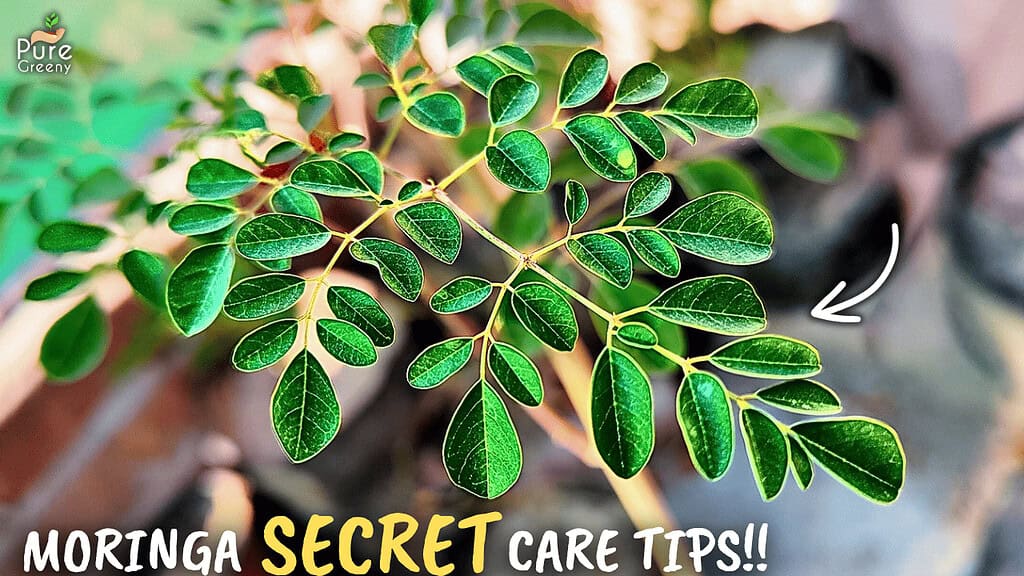
One of the most beginner-friendly houseplants is the Moringa plant. Basically, it is a medicinal plant known as a superfood. You can use its leaves for health benefits while growing it.
It is very hardy and adaptive, and in this post, we will learn all about Moringa plant care tips that you can follow to grow it in pots. So, let’s begin.
1-Their Growing Season…
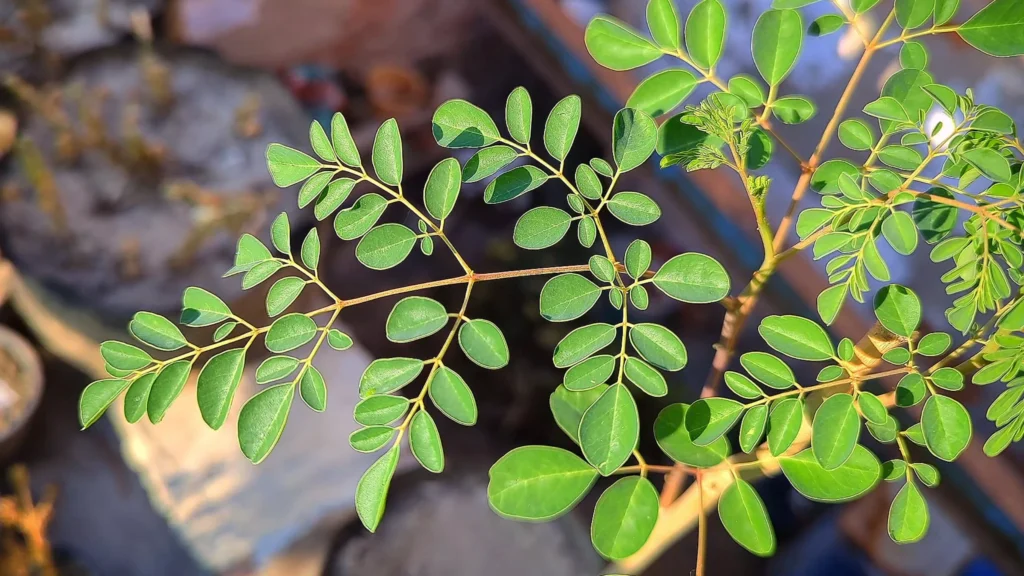
The first and most important thing you need to understand while growing a Moringa plant in pots is the growing season. The Moringa plant belongs to a warm, tropical to subtropical climate.
It grows really fast when the temperature is high; mid-summer is its peak growth time. It starts its growth as soon as the spring season begins and continues throughout the summer months.
Unfortunately, as soon as the winter season begins and the temperature starts dropping, the Moringa plant goes into dormancy. If you live in a moderate climate region, you may not see much effect in winter.
Your plant can easily tolerate mild cold weather, even if you place it in an open space. Obviously, all the leaves will drop, but the plant will stay alive.
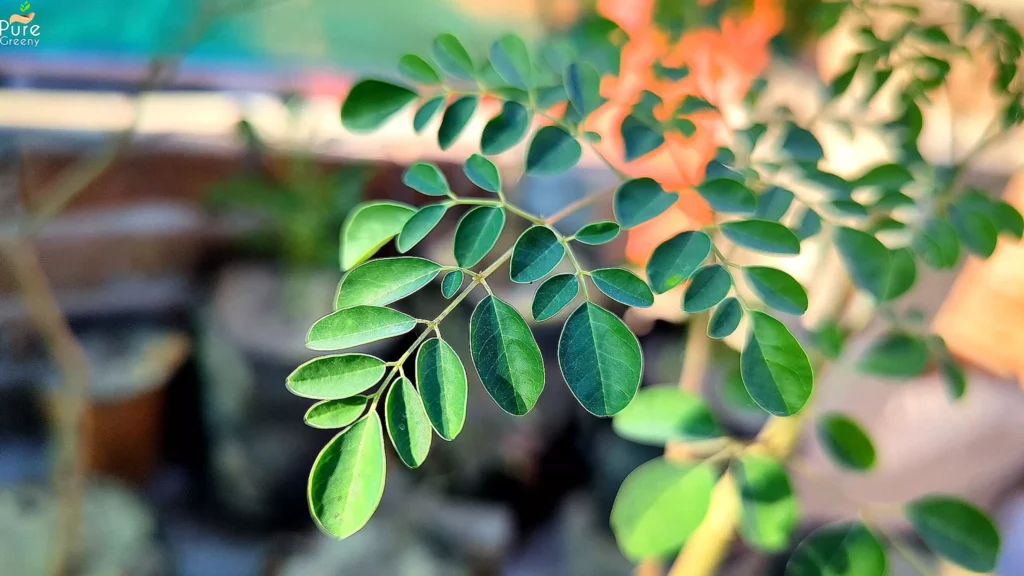
On the other hand, if you live in a cold climate region where the temperature drops below 0°C, you should be concerned. In such severe conditions, a Moringa plant may die, especially if it is young.
You can move your Moringa pot to a shaded or indoor warm location and move it back to an open space as soon as the spring season starts again.
2-The Soil Media They Need?
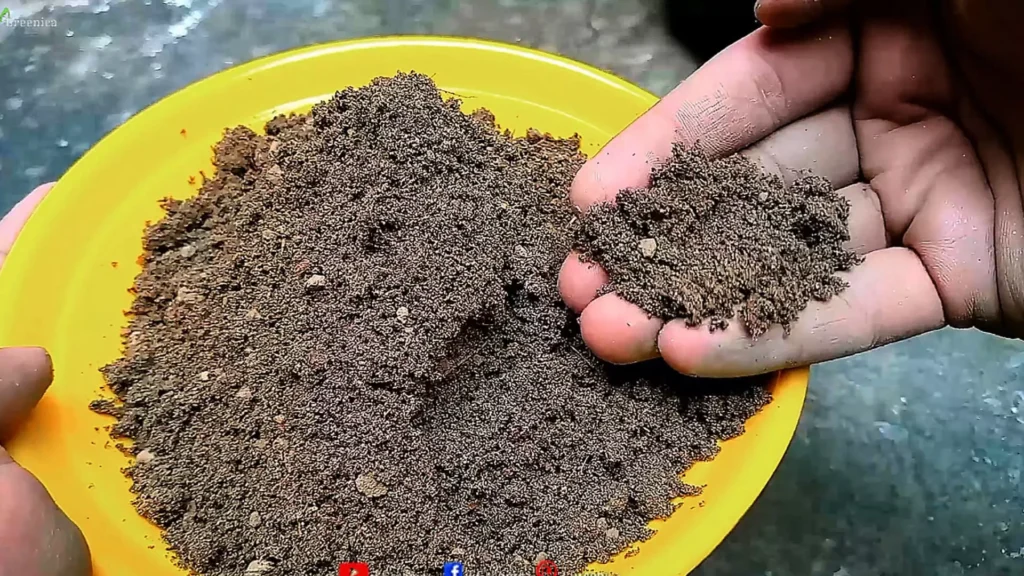
Another key factor for growing a lot of Moringa leaves at home is the soil media. Soil media is fundamental. The plant generally grows very well in the ground, but when you are growing it in a pot, you have to be very careful with both the pot size and the soil mix.
If you are growing a Moringa tree in a pot, you can choose a sandy, loose, and fertile medium. There is nothing to worry about, as the Moringa plant is adaptive and very hardy.
You won’t see much effect if you use a slightly different mixture. Just make sure your soil media is not too hard or compact and that it allows proper drainage.
Ideally, you can use a homemade soil mix for the Moringa tree. It can be a mixture of sand, coco peat, and garden soil. You can easily prepare it at home. I use it personally, and it works really well. Here is a recipe Guide on This Soil Media.
3-What’s an Ideal Pot Size for a Moringa Tree?
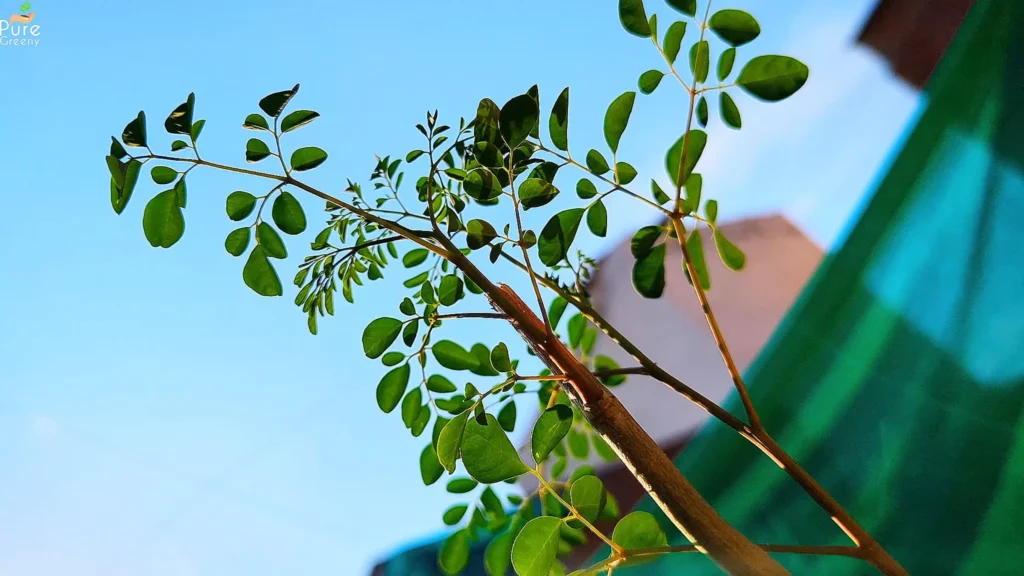
For growing Moringa leaves in pots, you have to understand the required pot size. The size of the pot depends on the size of the plant. If you have just started a Moringa plant from seed, you can grow it in a 5 to 7-inch pot for at least one year.
If your Moringa plant is 2 to 4 years old, you need at least a 10 to 12-inch pot. Another way to understand the required pot size is to analyze the root ball.
If the roots are not very developed, you can start with a smaller pot (4 to 5 inches) and then shift it to a slightly bigger pot (8 to 10 inches).
It may take around 1 to 2 years for the plant to outgrow a 10-inch pot. When the roots become bound and there is no space to grow further, the plant becomes stressed.
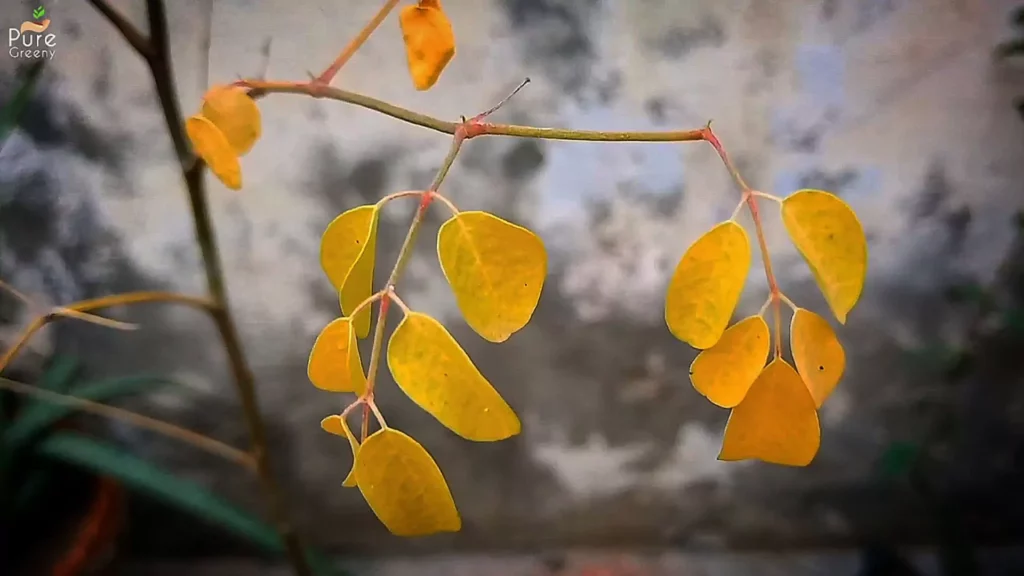
This results in yellowing leaves and stunted growth. Simply provide a bigger pot, and the plant will start growing again.

It is at least 2 to 4 years old, but it was planted in a 6 to 7-inch pot. The roots were bound for almost a year, and there was no growth. As soon as the winter season ended, I repotted it into a bigger grow bag.
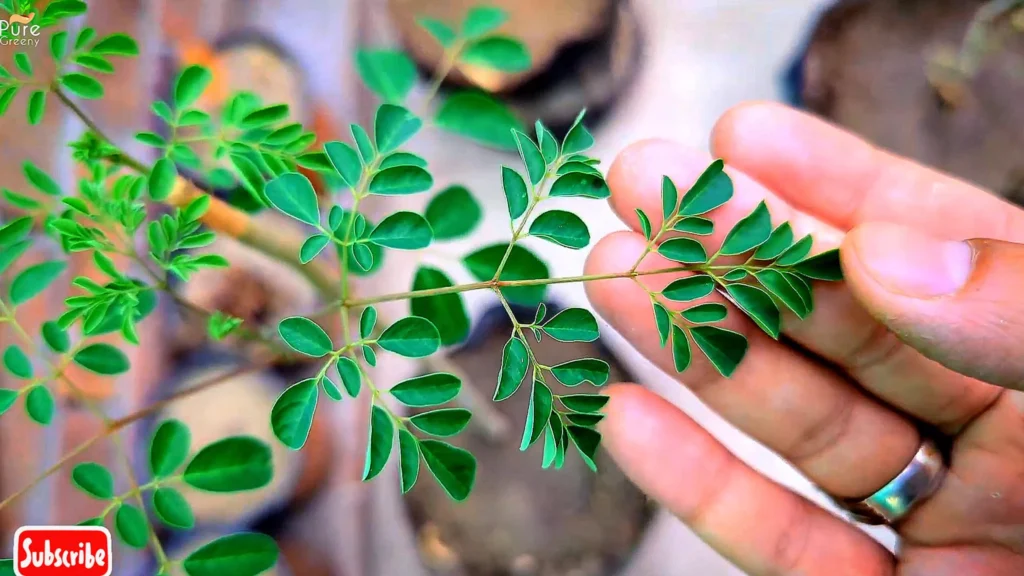
And now it is producing new leaves. This is because the roots now have space to grow again.
4-Where to Place a Moringa Plant for Maximum Growth?
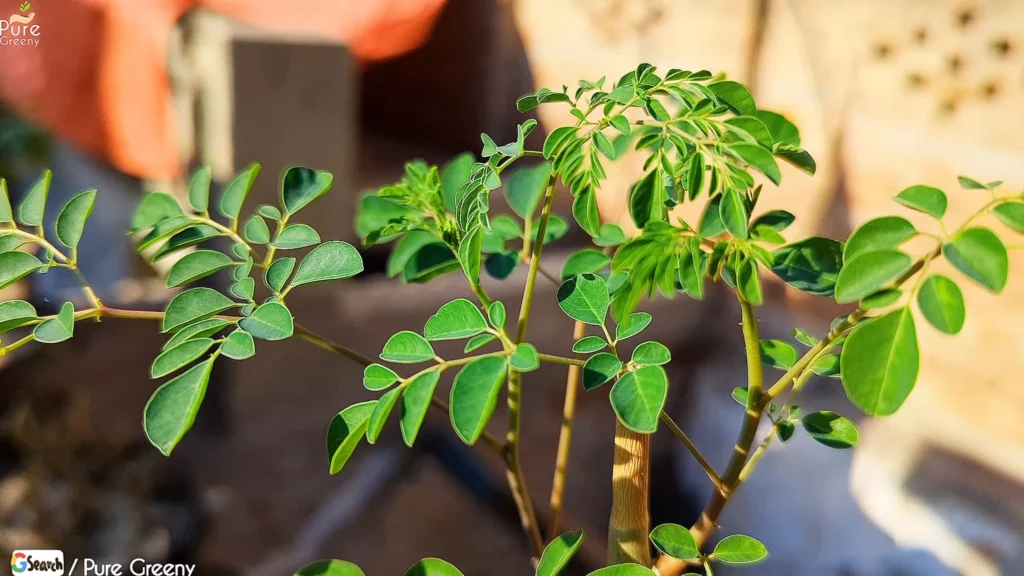
One of the most important factors for growing a lot of leaves on a Moringa plant is sunlight. In its native environment, the Moringa plant grows outdoors with plenty of sunlight. Since it is a leaf-producing plant, sunlight is essential.
If you have at least 2 to 4 hours of sunlight daily, you can grow a good amount of Moringa leaves at home. If you keep your Moringa pot in a bright spot without direct sunlight, the growth will be slow.
For best growth, place your Moringa pot in a sunny location. In low light conditions, you may notice pale yellow leaves.
5-Pruning Tips?
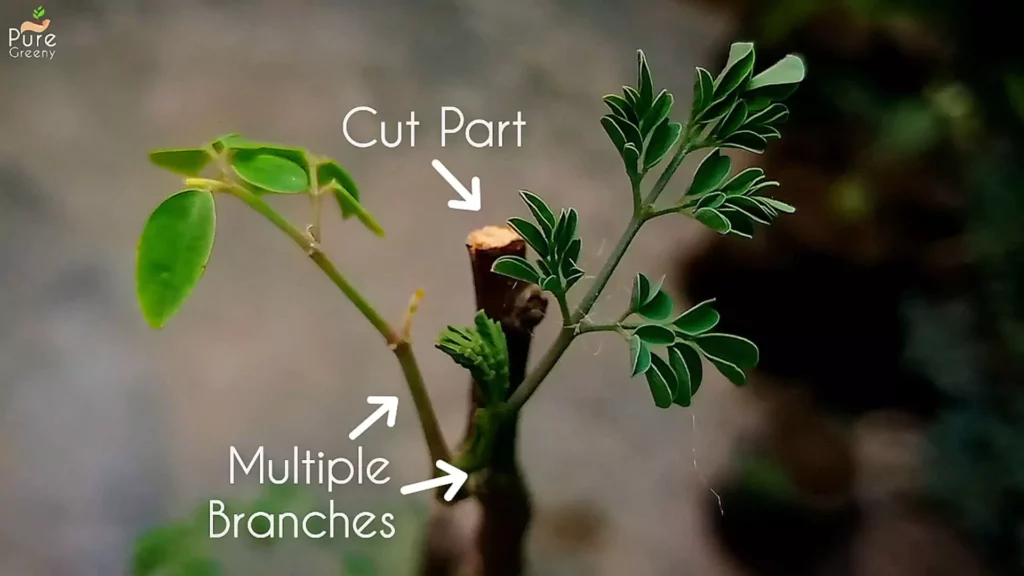
If you are growing a Moringa plant in a grow bag, you may notice that it grows tall and leggy with fewer branches. This is its natural growth pattern. However, it is better to prune it from time to time to make it bushier.
Leave the base portion (about 1 foot) empty and prune the upper branches slightly. This will encourage the plant to produce more side branches and, ultimately, more leaves.
Always use a sharp and clean cutter, and prune only when the plant is actively growing, not during dormancy.
6-Fertilizer You Should Use…
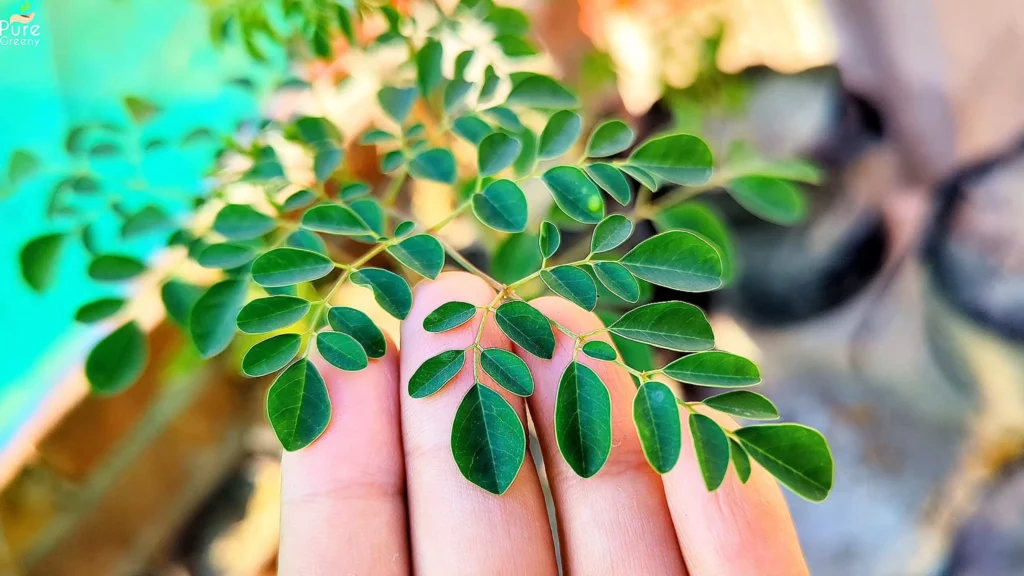
For fertilizing a Moringa plant, you need a good fertilizer. The leaves you see are the result of available soil nutrients. In pots, soil nutrients are limited and get depleted over time, which slows down plant growth. That is why regular fertilization is important.
For a Moringa plant, you do not need a very strong fertilizer. You can use a homemade organic fertilizer once a month during the growing season. A Detailed Guide On This fertilizer is added Here,
Organic fertilizers provide slow and long-lasting growth. You can also use cow manure or compost, as they contain nitrogen, which promotes leaf growth.
However, it is important to provide some variety in fertilizers. Do not rely on a single type continuously. Just like humans, plants also benefit from a balanced and varied nutrient supply.
That’s all about Moringa plant care tips. Feel free to follow this guide on another hardy houseplant called spider plant.