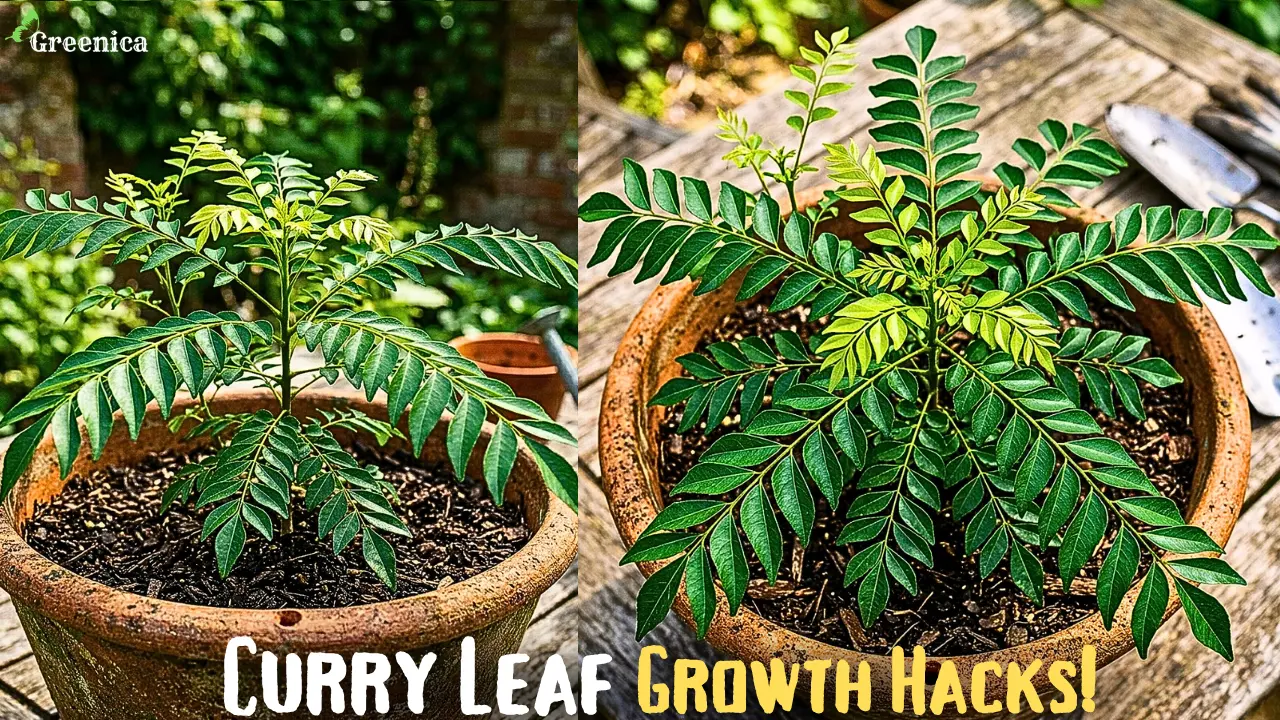
An Ultimate Guide on Curry Leaf Plant Care & Growing Tips!
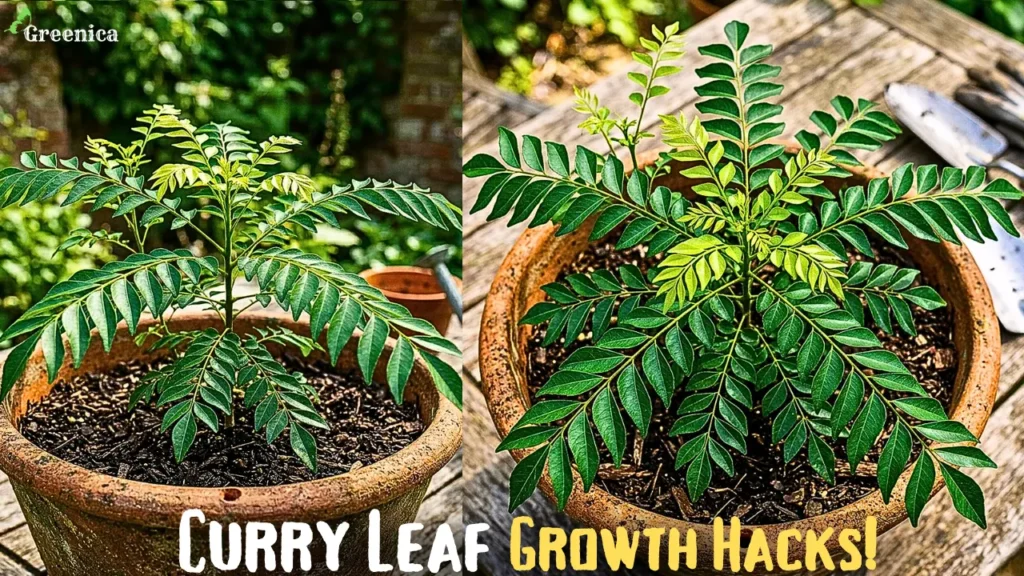
If your curry leaf plant is not growing well, it’s mostly due to the care method. Usually, wrong placement and fertilization stop plant growth completely, and in this post, I’ll tell you exactly how to care for your curry leaf plant all year long and share a secret fertilizer recipe that will boost plant growth even more. So, let’s begin.
1-Understand Its Growing Season!
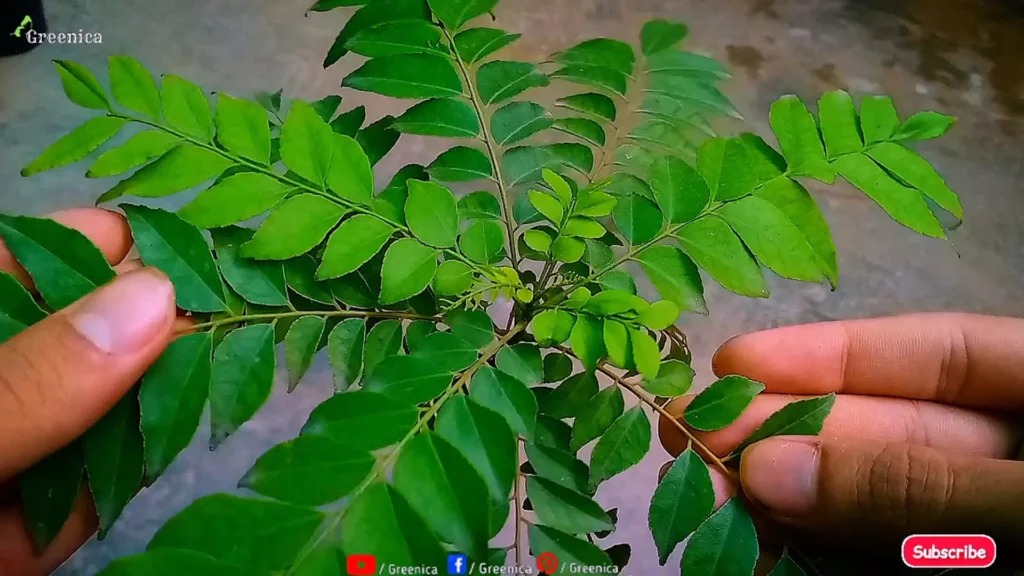
The first and most important thing in curry leaf plant care is the ideal season. When you grow a curry leaf plant in its ideal season, it grows really fast.
Beginners often make the mistake of growing a curry leaf plant at any time of the year, but that’s not correct. Before I tell you the exact growing season of the curry leaf plant, understand this.
This plant belongs to tropical regions and likes a hot environment. You cannot expect a lot of growth in the winter season. On the contrary, it grows extremely well from spring up to late summer.
This is its ideal growing season. As soon as the spring season begins, you can plant it outdoors or in a pot.
And here is another pro tip that will save your curry leaf plant from dying in winter. This is especially done by nurseries for their exotic plants, but you can do the same for your plant, especially if you live in a cold climate region.
As the winter season begins, you will see a few yellow leaves on the plant. But don’t worry. Just keep the plant indoors, and it will survive through.
2-Use Such Soil…

Soil media is another important factor in the healthy and faster growth of the curry leaf plant. I had this issue when I first started growing curry leaf plants in pots.
The plant would grow for some time, then the growth would stop. After deep observation, I found that my soil media wasn’t good enough for the curry leaf plant. It was a bit hard.
This happens very commonly. But don’t worry, I have a solution for this. First, understand that roots cannot develop in a hard kind of mixture, and when root growth stops, the plant stops growing as well.
Here is the soil recipe that I use.
- Sand – 1 part:
- Garden Soil – 2 Parts:
- Cocopeat – 1 part:
- Compost – 1/2part:
- Cow dung – 1 bowl:
It’s made especially for beginners. A guide is also added Here if you’d like to follow it. Nurseries also use similar mixes. They don’t use perlite, peat moss, pumice stones, etc., and yet their plants still grow much better than those of a home gardener.
In recent years, I found some secret tricks they use around their plants that keep them so green and healthy. I tried to compile all of these in this short book. It’s added Here to buy. Feel free to take a look.
3-Prune at This Time!

Pruning is another important factor that keeps curry leaf plant growth going all season long. Many people do prune their curry leaf plant but don’t get a good response. That’s because they don’t follow the correct method.
For example, you may follow all the steps of pruning very accurately, but if you do it during winter or when the plant is under stress, you won’t get any benefits from pruning at all.
Pruning and fertilization both require a specific time to show maximum results. I’ll tell you all about this amazing fertilizer and the secrets nurseries use for fertilization in just a bit.
For now, prune your curry leaf plant when you see new growth on it. This is the most ideal time to prune. Use a sharp and clean cutter. Cut only an inch of the growing tip. You can also fertilize the plant when you prune, as it requires nutrition to produce new branches.
4-Place It in Sun or Shade?

If you miss the ideal spot for a curry leaf plant, it won’t grow no matter how good your fertilizer or soil is. The ideal spot is most important. When I first started growing curry leaf plants a few years back, I kept one in a dark spot. The leaves started turning pale, and I had no clue what to do.
Then I found the ideal spot for a curry leaf plant, and you will be surprised to know that it’s not always a sunny spot. Let me explain. Curry leaf plants belong to tropical regions. When you grow them in a cold climate region, yes, you can keep them in a sunny spot all day. No problem at all.
But when you grow them in a temperate region, the heat of June and July makes the leaves dry and curly, especially on rooftop gardens. Potted curry leaf plants won’t grow properly at all in such heat.
Here is the ideal spot for such home gardeners. It’s the same method used by nurseries. They keep their plants on the ground and in the shade of bigger plants. The plants are protected from both sides and grow very healthy.
You can do the same for your plant. Try to keep the pot in a shaded spot so the soil won’t warm up, and try to make some shade over the plant during such heat. Besides these months, you can keep the plant in the sun. No problem at all.
5-The Fertilizer That Boosts Growth!
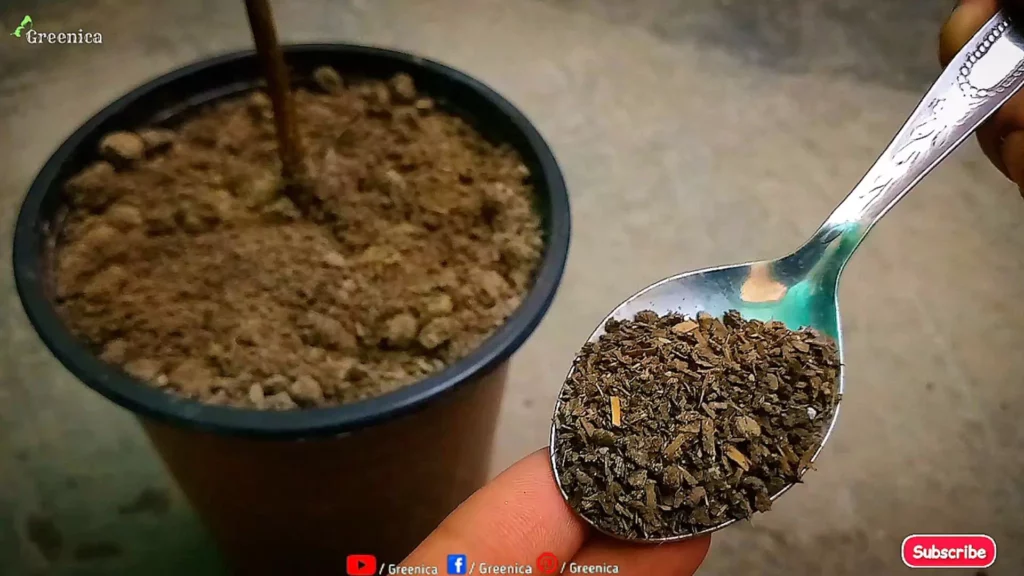
Now let’s talk about the fertilizer that works so well. It’s a complete nutrition source for the plant. It contains all macro as well as micro elements. As soon as the plant absorbs the nutrition from the soil, you’ll see the results yourself in the form of green and healthy growth.
Curry leaf plant is a moderate feeder and requires nutrition on a regular basis. A single dose of this fertilizer once a month can keep the growth going all season long. But before I tell you the fertilizing ingredients, understand the ideal fertilization time.
It’s the same as the ideal pruning time. When you see that the plant is actively growing and producing a few new leaves, you can use a good fertilizer. The plant will absorb the nutrition and show results very soon.
This fertilizer is a mix of cow dung for nitrogen, leaf compost for mixed nutrients, and a small amount of rock phosphate for phosphorus. Make it at home and use it for your plant. A guide on this fertilizer recipe is also linked here.
If you’d like more instructions, don’t forget to check out the eBook I suggested.