6 Secret Curry Leaf Plants Growing Tips!
Curry leaf plant is one of the easiest house plants to grow. Even a beginner can plant it and get good growth just by following a few care tips. & In this Post, we will see these curry leaf plant growing tips that you can follow. So, let’s begin.
Its Growing Season & Planning?
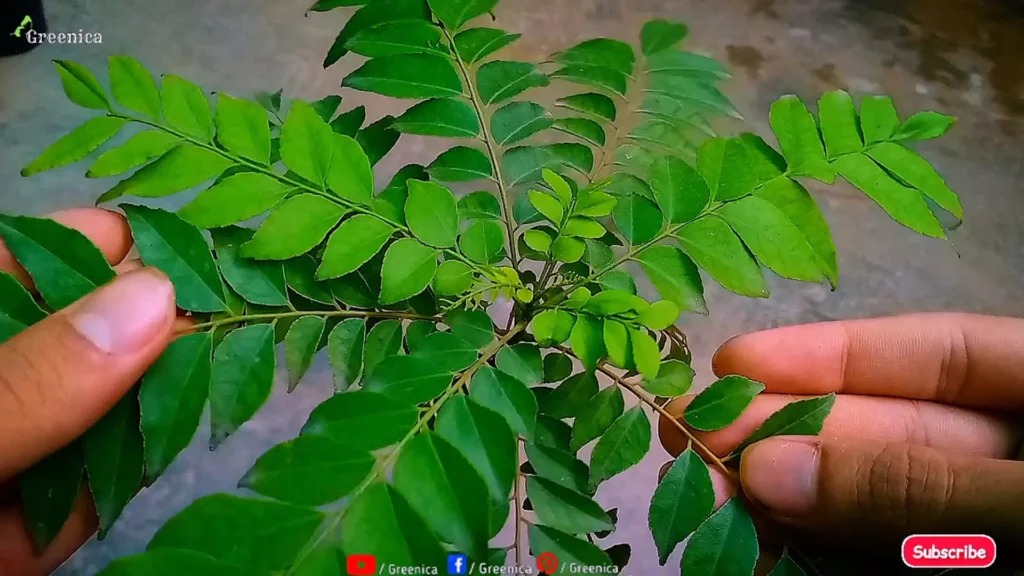
The first and most important thing you need to understand for growing a lot of curry leaves is the ideal season. When the season is ideal, curry leaf plants grow really fast, produce a lot of leaves, make side branches, get bushier, develop a strong immune system, and much more.
That’s all because of a favorable season. The temperature and humidity are just ideal for the fast growth of curry plants, and that’s why when the plant is actively growing, it automatically repels most diseases and problems on its own.

I have been growing curry leaf plants for almost 3 years now. After multiple trials, the most important thing I concluded is the ideal season. I live in a moderate climate region where the temperature in winters drops to 5 to 8°C, and in summers it exceeds 40°C.
In such a region, even in mid-summers when the temperature is above 40°C, the curry leaf plant did not stop growing. Yes, winters in such regions are a little bit hard for the curry leaf plant, but the plant is very adaptive and resistant. Besides a few yellow leaves, there is no major harm to the plant.
If you live in a similar region, simply plant your curry leaf outdoors as soon as the spring season begins. You will see the plant growing throughout spring and summer.
When the summer season ends and winters begin, you’ll see the plant slow down and go dormant. You can place it outdoors if the plant is mature, but if it’s young and small, place it in the shade of bigger plants to protect it from harsh weather.
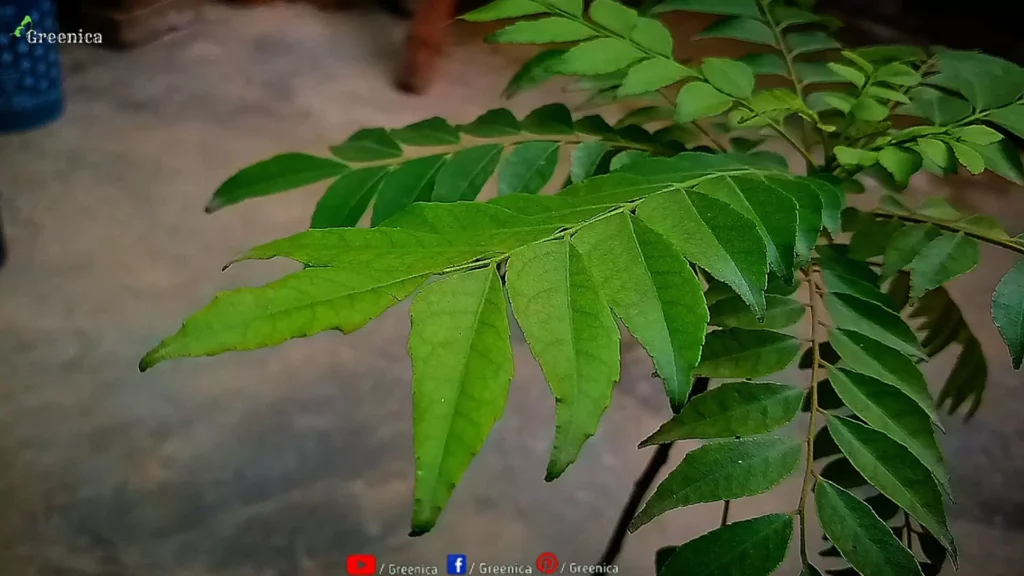
On the other hand, if you live in a cold climate region where winter temperatures drop below 0°C and snow falls, you should move your curry leaf plant indoors to save it. If a small plant is placed outdoors under the open sky, it will most probably die.
If your plant is mature, it can bear outdoor conditions. It will drop all its leaves but stay alive, and as spring begins, it will start growing again. The real problem is for young plants; otherwise, bigger plants can be grown outdoors.
Overall, curry leaf plant is a pure summer-growing plant, so make sure to plant it during spring or summer, not in winter.
Pot Size Matters?

Another key thing you need to understand for getting a lot of curry leaves is the pot size. Curry leaf plant is a tree. It can grow as tall as 40 to 50 ft when planted in the ground.
But when growing it in a pot, you have to be extra careful with the pot size. Otherwise, as soon as the roots get bound, the plant will stop growing and may even die.
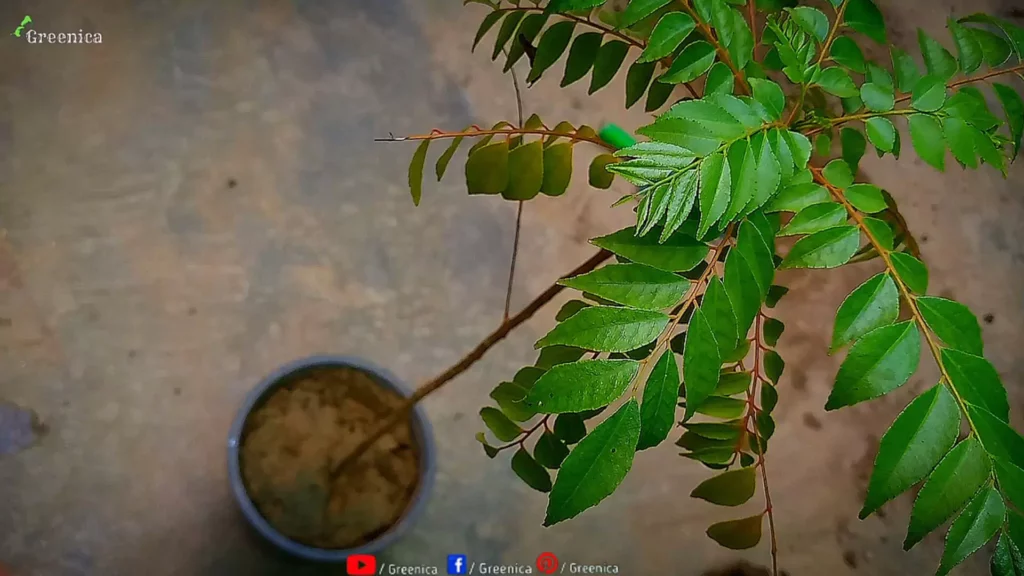
I brought this plant home from a nursery. It was in a small poly bag. I chose a grow bag, which is at least 12 inches in size, and this is enough for 2–4 years of curry leaf growth.
To understand the ideal pot size, follow this rule: if the plant is growing in a 5-inch pot and you suspect root binding, shifting it to a 10-inch pot is good enough for at least 1–2 years.
There is no fixed ideal pot size for any plant. As long as the roots keep growing, you are good to go. When root growth stops, problems start appearing, and a neglected plant can even die.
The Ideal Soil Media Is…?

Another thing you should pay attention to is the soil media of your curry leaf plant. If the soil is hard, compact, or blocking water drainage, you will see many problems.
First, yellow leaves will appear, then the plant will stop growing, and it can even die. Curry leaf plant likes a well-draining, soft, and loose mixture. A compact and hard mixture limits the growth of new roots, which puts stress on the plant.
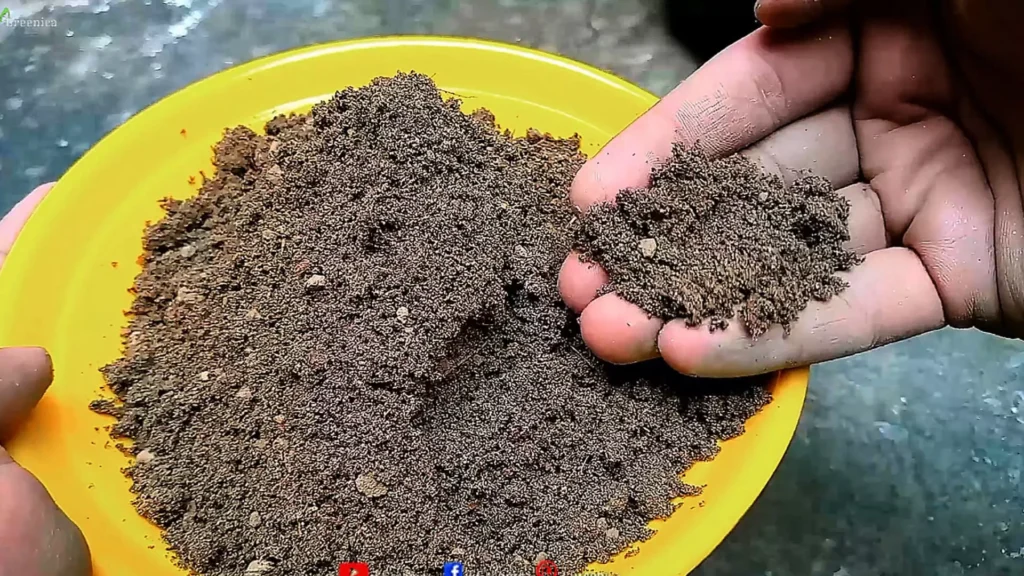
So, make sure your soil is loose and well-draining. I am using my own homemade mixture, and it works really well. It is a mix of coco peat, garden soil, and sand—no special ingredients.
A detailed guide on this soil recipe is also added Here; you can follow that. In poorly draining soil, curry leaf plants do not grow well. To check drainage, observe the top layer—if it dries out from time to time, it’s a sign of good drainage.
Keep It in Sun or Shade?

Another key factor for growing curry leaf plants in pots is the ideal spot. Curry leaf plant is a complete outdoor plant in its native region. It grows in open spaces and loves full-day direct sunlight.
It belongs to tropical regions where sunlight is abundant. When growing it in a pot, the soil can heat up quickly in peak summers. To manage this, you can do light mulching and still keep the plant in a sunny spot—there is no harm in it.
If you don’t have full sunlight, make sure your plant gets at least 2–4 hours of direct sun daily. Otherwise, you may see stunted growth. If you notice pale yellow leaves, it is a sign of low light.
Use This Fertilizer for Max Growth!
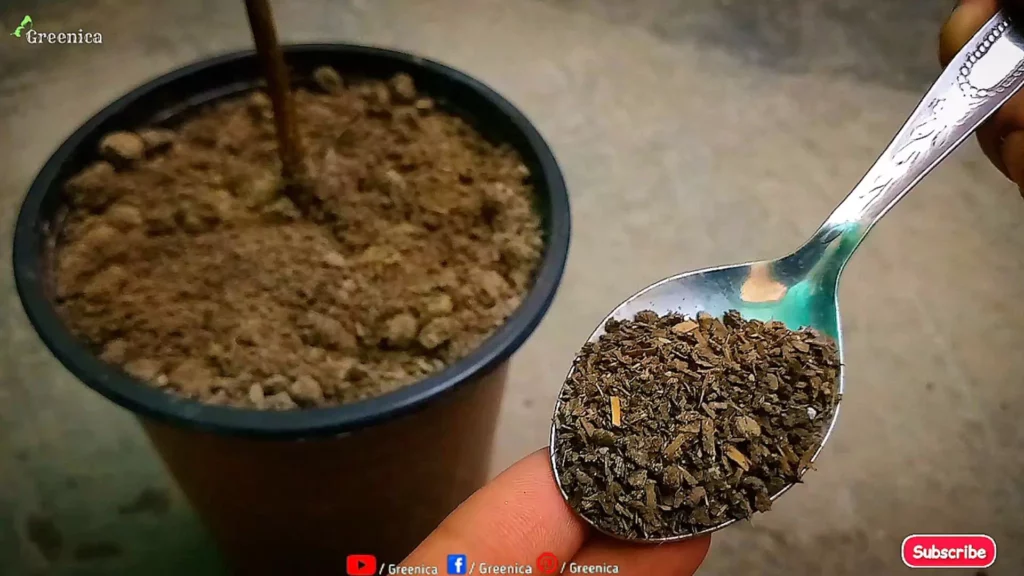
For fertilizing the curry leaf plant, you can use a homemade organic fertilizer. I made it myself, and it works really well for such perennial plants. Curry leaf plant is a moderate feeder.
It doesn’t require heavy fertilization, but it still needs nutrients to grow properly. At the end of the day, soil nutrients convert into leaves, stems, and fruits.
So, your soil should always have some nutrients. You can use this fertilizer, a Detailed guide for making it is added Here. Apply it at least once a month during the growing season. The best time to apply fertilizer is in the evening.
Pruning Does Help!

Another thing that can promote a lot of growth in curry leaf plants grown in pots is pruning. The plant does not produce many side branches when left on its own.
That’s why light pruning is very beneficial. It helps the plant become bushier and stronger over time, and the main stem becomes thicker.
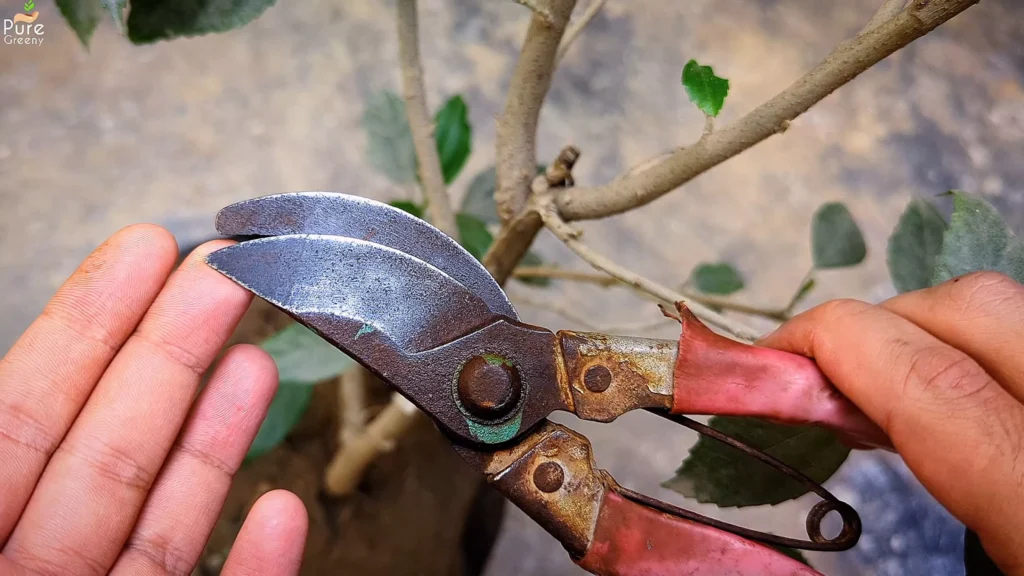
All you need is a clean and sharp cutter. You can also disinfect it with hydrogen peroxide. My pruner is old but sharp. Simply cut about 1 inch from the growing tip, and that’s it. Do this only when the plant is actively growing, not during dormancy.
In recent years, I have learned that the curry leaf plant is very hardy. These are the only things that matter. Work on these, and you will definitely get good growth.
Also, here is a detailed guide on the Moringa plant, which is another low-maintenance addition to your garden. Feel free to check it out.